



Scalla Naturale natural stone and underfloor heating
References
We are in the middle of spring, and in the construction and interior design industry, this means one thing: the best time for renovations and planning them. Although our thoughts are now circling closer to holiday trips than snowy days, this is the best moment to calmly think through the issue of underfloor heating and choose materials for the colder seasons. Imagine a frosty winter morning. Snow is falling outside the window, and you walk barefoot into the kitchen or bathroom and feel a pleasant, enveloping warmth under your feet. If you are wondering whether such an effect is possible when you plan to furnish your home with natural stone, this article will dispel any doubts. Natural stone is very often associated with elegance, but the cool and raw kind. In practice, however, coupled with underfloor heating, it can become the cosiest and most comfortable element of the entire home. In the Architype range, we will find varieties ideal for such applications.
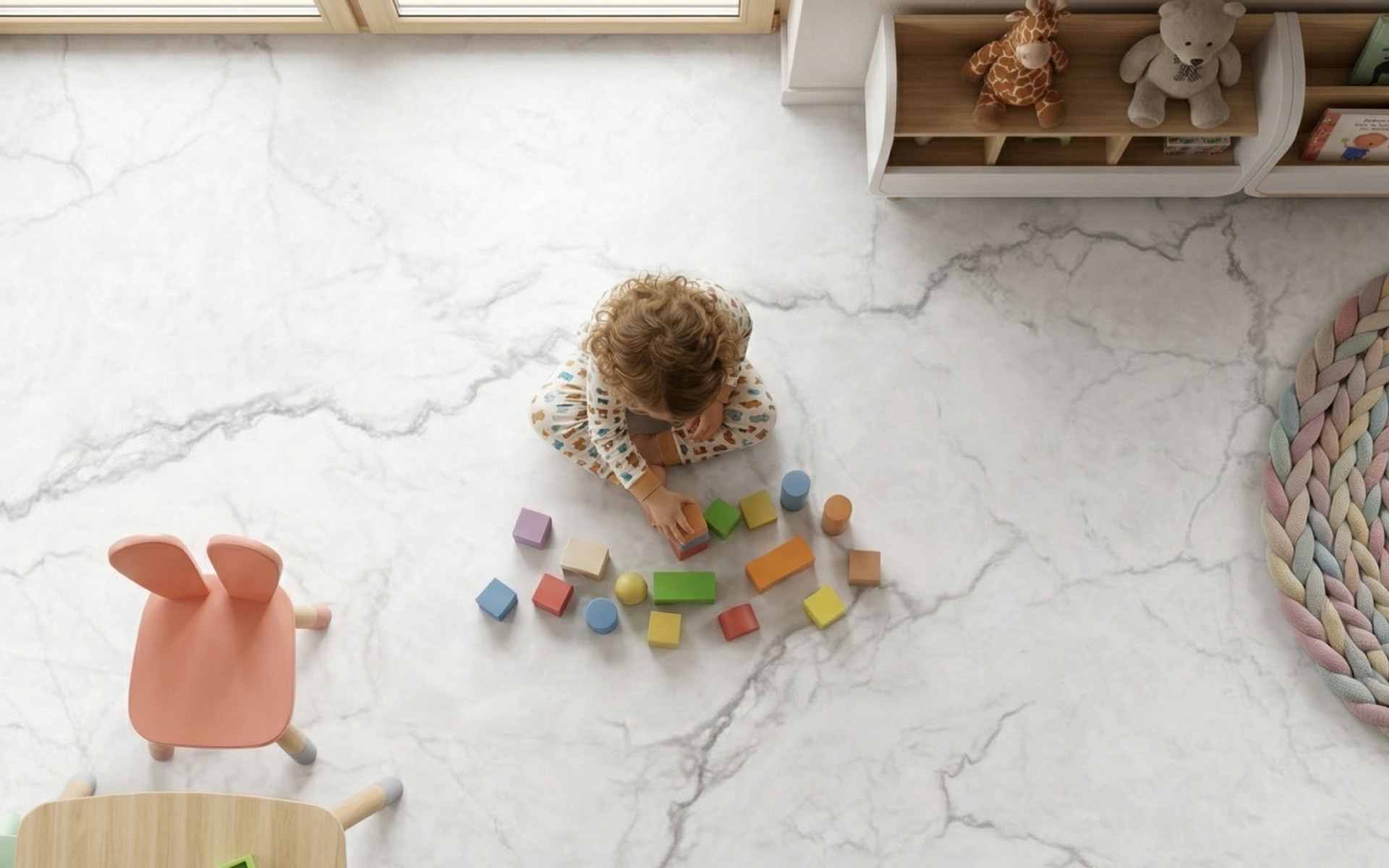
From the point of view of physics, natural stone is characterised by an excellent thermal conductivity coefficient. Instead of blocking the energy flowing from the heating installation under the floor, it absorbs it very efficiently, and then slowly and evenly releases it to the surroundings. This means pleasant warmth underfoot and very high efficiency of the heating itself. Nature, however, loves diversity, which is why each rock behaves slightly differently in contact with high temperatures.
Granite and underfloor heating
Scalla Naturale granite stands out with the highest technical parameters in this category. It is an exceptionally dense, compact, and hard rock, which directly translates into its high thermal efficiency. It heats up at an optimal pace and can retain this heat for a long time after the power is turned off. As a flooring material, granite is furthermore characterised by an almost indestructible structure and the highest resistance to abrasion and scratching. If you are looking for a material for an intensively used living room, open-plan kitchen, or a representative hall, granite will work perfectly. It is unaffected by temperature fluctuations, does not deform or crack under the influence of heat, and does not dull over the years. It is an investment that does not force you to make any quality compromises.
Quartzite and underfloor heating
Scalla Naturale quartzite is a proposition for people who expect the technical parameters of granite but dream of an even more phenomenal, extravagant pattern of the slabs. Its structure guarantees highly effective cooperation with underfloor heating systems. It conducts heat as efficiently as granite, and thanks to its compact build, it is extremely resistant to thermal damage. Furthermore, due to its hardness, quartzite laid on the floor is highly resistant to mechanical damage. It is difficult to scratch or wear down, which guarantees a flawless appearance of the floor for many years, even in heavily exploited zones of the house. Additionally, its crystalline form can beautifully reflect light, which, combined with the soothing warmth underfoot, creates a luxurious and very cosy atmosphere in the interior.
Marble and underfloor heating
Scalla Naturale marble is the absolute synonym of elegance, and its classic veining has been impressing architects for centuries. Is it suitable for a warm floor? Yes, because it conducts temperature very well. Marble, however, is a slightly softer rock compared to granite or quartzite. For a marble floor to stand the test of time and the continuous operation of the heating installation, it requires perfect preparation of the substrate. The screed must be perfectly even and stable, and the installation carried out using the highest quality flexible adhesives. Otherwise, thermal stresses can lead to the formation of microcracks over time. In terms of the actual use of the floor, it is also worth remembering that marble is susceptible to scratching and the action of acids. For this reason, as a flooring, it works best in areas with less traffic, such as private bathrooms or bedrooms, where it will less frequently come into contact with hard footwear or sand particles brought in from the outside.

Onyx and underfloor heating
Not every type of rock will work well on a heated floor, or a floor in general. An example of a material that we advise against in this role is onyx. Although it impresses with its phenomenal appearance, it is quite a delicate and fragile stone. From a technical point of view, onyx shows a high sensitivity to thermal stresses. Cyclical heating and cooling of the substrate can lead to the formation of structural cracks, which cannot be easily repaired. Additionally, onyx has a low resistance to abrasion and mechanical damage, due to which on the floor it could quickly lose its shine, become dull, or simply crack. If you care about using the beauty of onyx in your home, we definitely recommend it as a luxurious decoration, e.g., as an illuminated wall panel.
Why is it worth entrusting the installation to professionals?
Choosing the ideal stone is only half the battle - equally important is professional installation that takes into account the specific nature of the material's work under the influence of temperature. Underfloor heating makes the entire floor work continuously - it heats up, i.e. expands, and then cools down and contracts. Natural stone, regardless of the chosen variety, is by nature a hard and rigid material. If it is glued with ordinary mortar to an uneven substrate, then as a result of continuous volume changes and thermal stresses, it will not have a way to "work" together with the floor and may ultimately be damaged. Employing a qualified team is therefore essential. Experienced professionals know perfectly well that with underfloor heating, a rigorous building standard is the use of special highly flexible adhesives. Such deformable binders effectively absorb micro-movements of the substrate and protect the slabs against damage, giving a guarantee that the floor will survive intact for many years.
As you can see, combining natural stone with heating systems hides quite a few technical nuances. Our experts will be happy to advise and help you get through this entire process, matching a solution perfectly tailored to the requirements of your home.
Share:


Other publications
All publications
Architype at Marmomac 2026. Backlit novelties, the return of travertine, and a look at the trends
References
Where to buy large-format sintered stone for the bathroom with high stain and water resistance? A guide to selection and purchase
References
White, cream, or beige? Choosing light large-format sintered stone available instantly
References