



The most popular Architype materials chosen by the B2B sector. Parameters, logistics, fabrication, and practical aspects - a guide.
References
The selection of appropriate finishing materials is a decision that carries significant responsibility for an architect, furniture studio, or developer - both in terms of image and finances. An incorrect matching of the physical and chemical parameters of a surface to the specific requirements of a given project can result in investor disappointment, increase the risk of premature material wear, and potential claims. Examples are numerous: applying a material sensitive to UV radiation on a highly sunlit shop window, choosing a scratch-prone surface for the floor in a heavily trafficked hotel lobby, or specifying cladding with low resistance to thermal shocks directly behind an open-flame zone in a kitchen. In any of these situations, even the most spectacular project can quickly lose its original appeal.
The truth is that there are no absolutely universal materials in architecture - there are only those flawlessly matched to their function. Investors often ask designers one fundamental question: what will ultimately work better? The requirements placed on finishing materials are equally rigorous in both private and commercial projects, but they differ in their specific nature. While in domestic spaces experts analyse materials through the prism of long-term, everyday use, in the B2B sector, the specification must cover a completely different scale and type of loads. This involves heavily used surfaces in the HoReCa sector, office spaces, or multi-stage development projects.
In the face of such diverse requirements, objective material advice becomes crucial. As a distributor with a wide range of solutions in its portfolio - encompassing various types of natural stone and its technologically advanced alternatives, such as large ceramic slabs, quartz surfaces, HPL laminates, or acrylic solid surfaces - Architype provides a full cross-section of market possibilities. This position allows our experts to advise in a fully impartial manner. Instead of limiting options to a single technology, we focus on the precise selection of a material that will optimise the investment budget and meet the challenges in the target space.
Avant Quartz quartz surface - robustness and logistical challenges
One of the most frequently chosen materials in demanding interior projects is the Avant Quartz quartz surface. This material consists of 93% natural quartz, which provides it with high hardness at level 7 on the Mohs scale and very high resistance to scratching and abrasion. From the point of view of design and logistics, however, the key parameter of the quartz surface is its weight. This material is supplied in a jumbo format of 3200 x 1600 mm, which yields 5.12 m2 of working area in a single slab. A slab with a standard thickness of 20 mm weighs 240 kg, which translates to around 47 kg/m2. Such mass clearly dictates the installation setup - it requires an appropriate number of workers, specialised lifting equipment, and at the design stage, it necessitates very precise load-bearing calculations for islands with a long overhang or suspended assemblies. The advantage of this massive structure, however, lies in its excellent mechanical parameters, including high flexural strength ranging from 44.8 to 74.3 MPa (per EN 14617-2; confirmed by independent SGS tests) and a safe reaction to fire classification of B-s1, d0 or B-s2, d0.
Under conditions of intensive commercial and domestic use, Avant Quartz stands out with an almost zero water absorption rate of 0.05%. Thanks to the complete lack of pores, this material does not absorb stains from coffee, wine, or juices, and unlike natural stone, it does not require any periodic impregnation. The surface of engineered quartz is also highly resistant to domestic acids and solvents (such as acetone or isopropanol). When designing a space, however, certain chemical limitations must be borne in mind - the surface must be protected from prolonged contact with strong alkalis with a pH above 10 (such as oven cleaners or drain unblockers) and hydrofluoric acid, which can permanently etch the material's structure. Regarding resistance to thermal shocks, this material withstands the short-term impact of moderately high temperatures without damage, nevertheless, the manufacturer recommends the preventive use of trivets under hot items. A design limitation may be its resistance to UV radiation - Avant Quartz is a material intended exclusively for interior applications.
For the investor and the contractor, the perspective of long-term maintenance, including repair possibilities, is important. A quartz surface can be repaired in part. Minor surface defects and dull patches can be successfully polished out, whereas deep chips on the edges are repaired by local filling with a dedicated resin. The effect of such restoration, however, is strictly dependent on the chosen decor - with plain and fine-grained colours, the retouch is almost invisible, but in the case of marble imitations with thick, distinct veins, achieving a perfect pattern match is rarely successful. It is also worth mentioning the fabrication process itself in the stonemasonry workshop. Due to the presence of crystalline silica, cutting and grinding quartz strictly requires the use of dust extraction or wet cutting to prevent occupational diseases among workers.
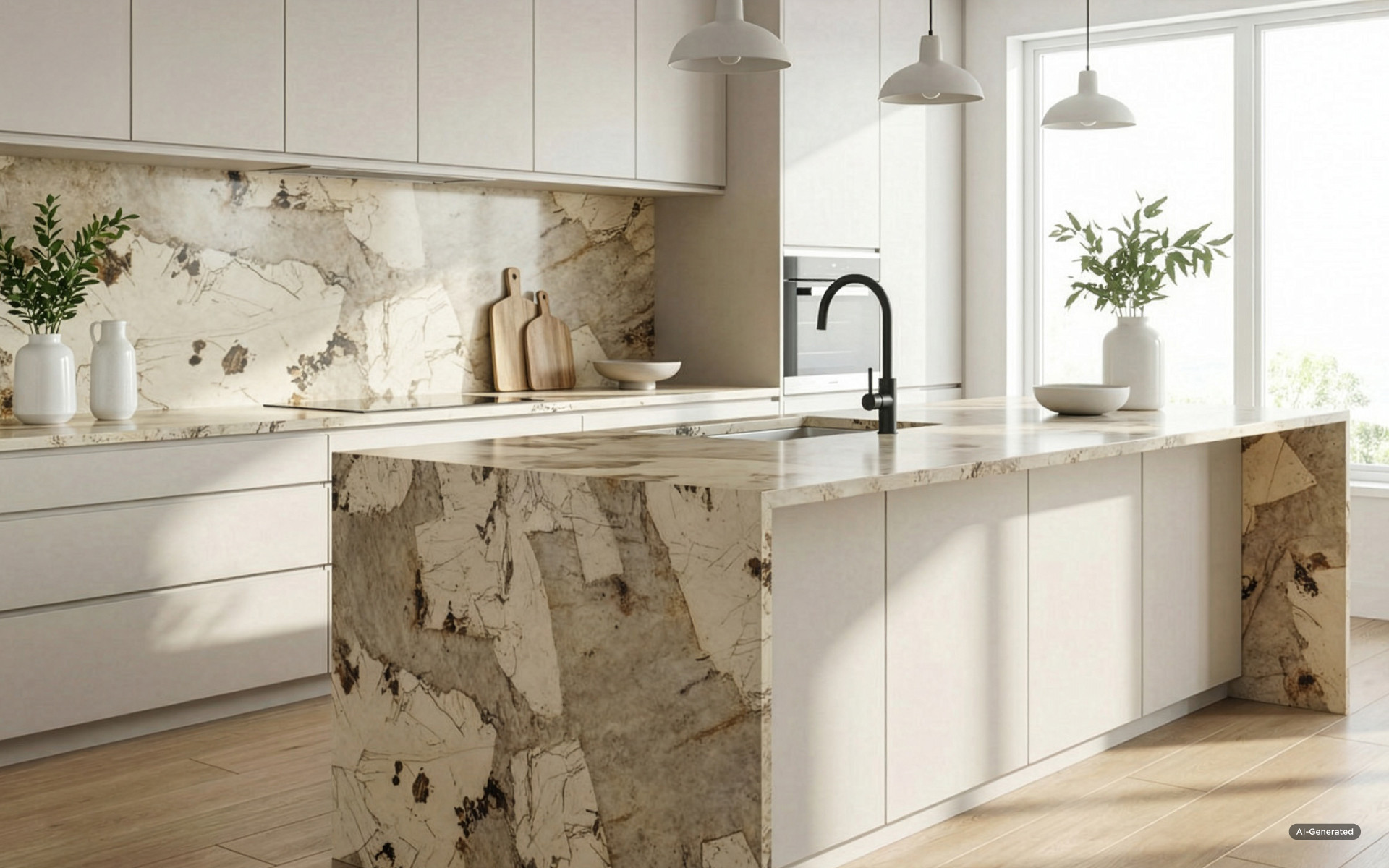
Keralini large ceramic slab - technical parameters and fabrication specifics
In commercial and residential projects with high usage requirements, Keralini large ceramic slabs are a frequent choice. This material is offered, among others, in a standard format of 3200 x 1600 mm, which facilitates the covering of large planes with a minimal number of joints. From a design and logistical angle, the weight of the slabs is crucial – for a thickness of 12 mm, it is around 29 kg/m2, which translates to around 147 kg for a full slab. This load requires appropriate planning of transport and installation, including strict storage and handling of the slabs in a vertical position (on edge), because lifting the material flat can cause it to break. During the fabrication phase, it must also be taken into account that ceramic requires wet cutting using plenty of running water - dry cutting is not recommended.
Keralini ceramic is characterised by physical and chemical parameters that allow for its very wide application. The slabs demonstrate resistance to thermal shocks confirmed by tests (UNI EN ISO 10545-9). They are also fully resistant to light and UV radiation in accordance with the DIN 51094 standard, which allows them to be safely used outdoors and on highly sunlit facades without the risk of colour change under the influence of the sun. In terms of mechanical damage, this material features high hardness and resistance to abrasion, with a volume loss of ≤ 145 mm3 (UNI EN ISO 10545-6). In everyday use, the practically zero water absorption (≤ 0.1%) is of great importance, effectively protecting against the formation of permanent stains, which is confirmed by the spotting resistance class 3-5 (UNI EN ISO 10545-14). The surface shows resistance to many chemicals (classification UA, ULA, UHA per UNI EN ISO 10545-13), however, in the technical documentation, the manufacturer explicitly rules out the use of hydrochloric acid concentrates, caustic soda, and any substances containing hydrofluoric acid.
When calculating long-term operating costs, it must be borne in mind that a large ceramic slab is a material that is effectively unrepairable. Although the surface itself generally does not require restoration due to its hardness and resistance to absorbing dirt, in the event of a mechanical break or a chipped edge, the damaged fragment cannot be restored and the given piece must be replaced with a new one. To minimise the risk of mechanical damage and cracks, the manufacturer's guidelines must be followed during the design and fabrication stage - for example, internal corners at cut-outs for a sink or hob must have a radius of at least 5 mm.
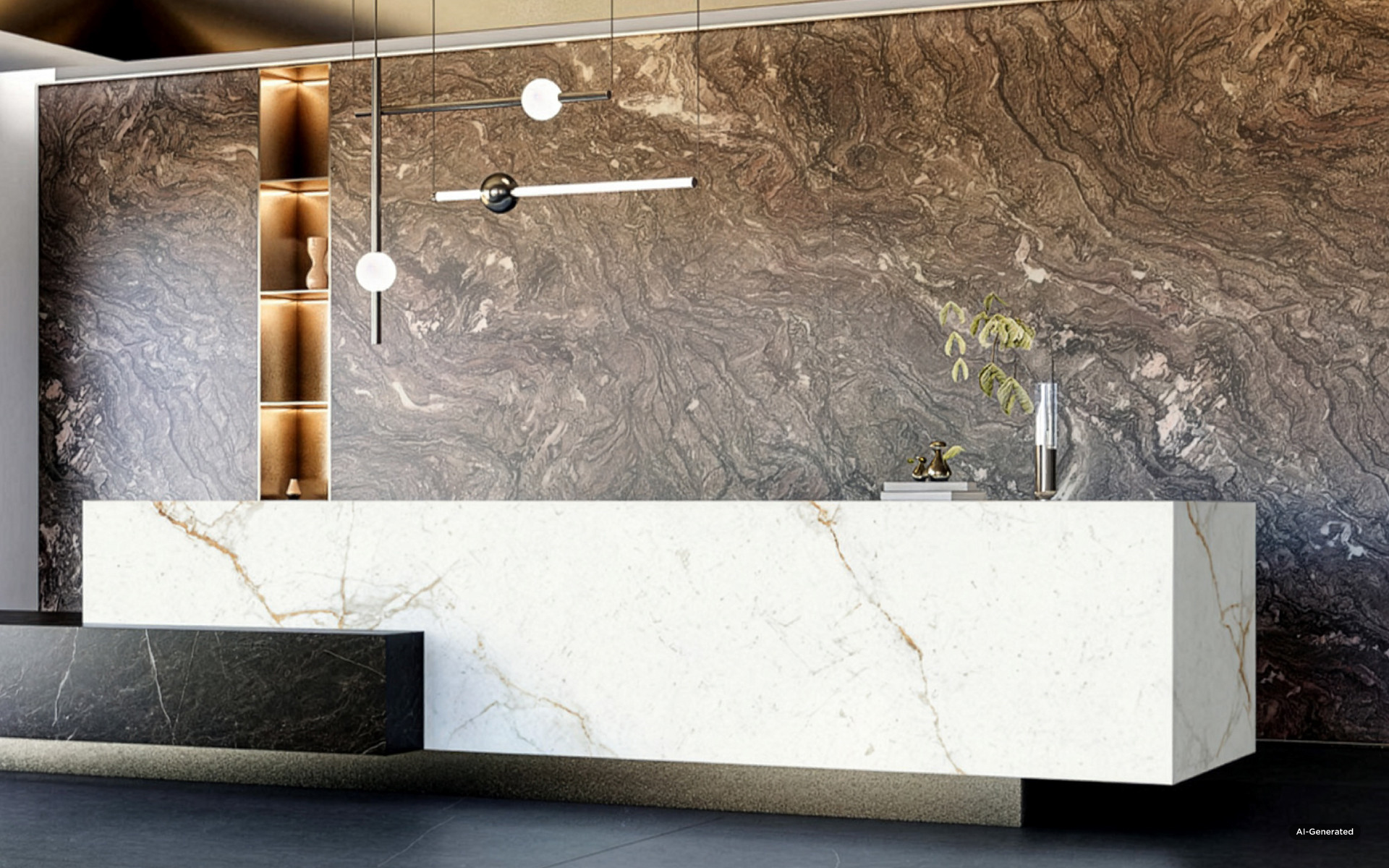
Puricelli HPL - versatility and structural lightness
In projects requiring a material of high density that is simultaneously relatively light, HPL laminates from the Puricelli range perform well. As the name suggests (High Pressure Laminate), materials from this group are made of layers of kraft paper impregnated with thermosetting resins, pressed under high pressure. In the manufacturer's portfolio, they are represented, among others, by the K&B collection, intended for worktops and wall claddings. As a result of the production process, a solid, non-porous material is obtained with a density of at least 1.35 g/cm3 (EN ISO 1183), a flexural modulus of at least 9000 MPa and a high flexural strength of ≥ 80 MPa (per EN ISO 178), which surpasses the parameters of quartz stone or acrylic solid surface. In design and logistical terms, a significant feature of Puricelli HPL laminates is their weight - a 12 mm thick worktop weighs around 16-17 kg/m2. For a panel measuring 4200 x 1620 mm, this translates to a weight of around 110-118 kg. The low weight combined with large formats (e.g., 4200 x 1300 mm and 4200 x 1620 mm) allows for the creation of expansive surfaces, minimising the number of joints and facilitating the design of lighter substructures (e.g., based on profiles or battens with a 12 x 40 mm section at centres of up to 300 mm). For technological reasons, the manufacturer recommends using vacuum lifters for moving full-size panels. HPL panels must be stored strictly flat on pallets in climate-controlled rooms with a humidity of 50-60% to avoid their deformation.
In daily use, Puricelli HPL panels demonstrate resistance to most standard loads. They are resistant to scratching (force ≥ 2 for smooth finishes and ≥ 3 for textured finishes, per EN 438-2:2016) and to impact by large diameter items. They meet the requirements for resistance to dry heat up to 160°C and wet heat up to 100°C. They exhibit resistance to a range of chemicals and cleaning agents, although the manufacturer stipulates that abrasive, corrosive, or caustic agents (including concentrated acids) must be avoided. Furthermore, no phenolic resins are used in the production of the K&B collection. Standard laminates (CGS) have a reaction to fire classification of D-s2, d0, while the flame-retardant versions (CGF) are B-s1, d0. The N.EXT collection features a UV protection coating, making it suitable for facades and other exterior applications.
In the analysis of long-term costs, the fact that HPL panels cannot be repaired in depth must be considered. Surface soiling and scratches on the materials can be removed with a melamine sponge, whereas deep structural losses - e.g., chips caused by driving a fixing screw in too deep - are irreversible and mandate the replacement of the entire panel. For this reason, an advisable practice during design and costing is to include the ordering of a spare panel from the same production batch, which reduces logistical costs and the risk of colour deviations should an item need replacing.
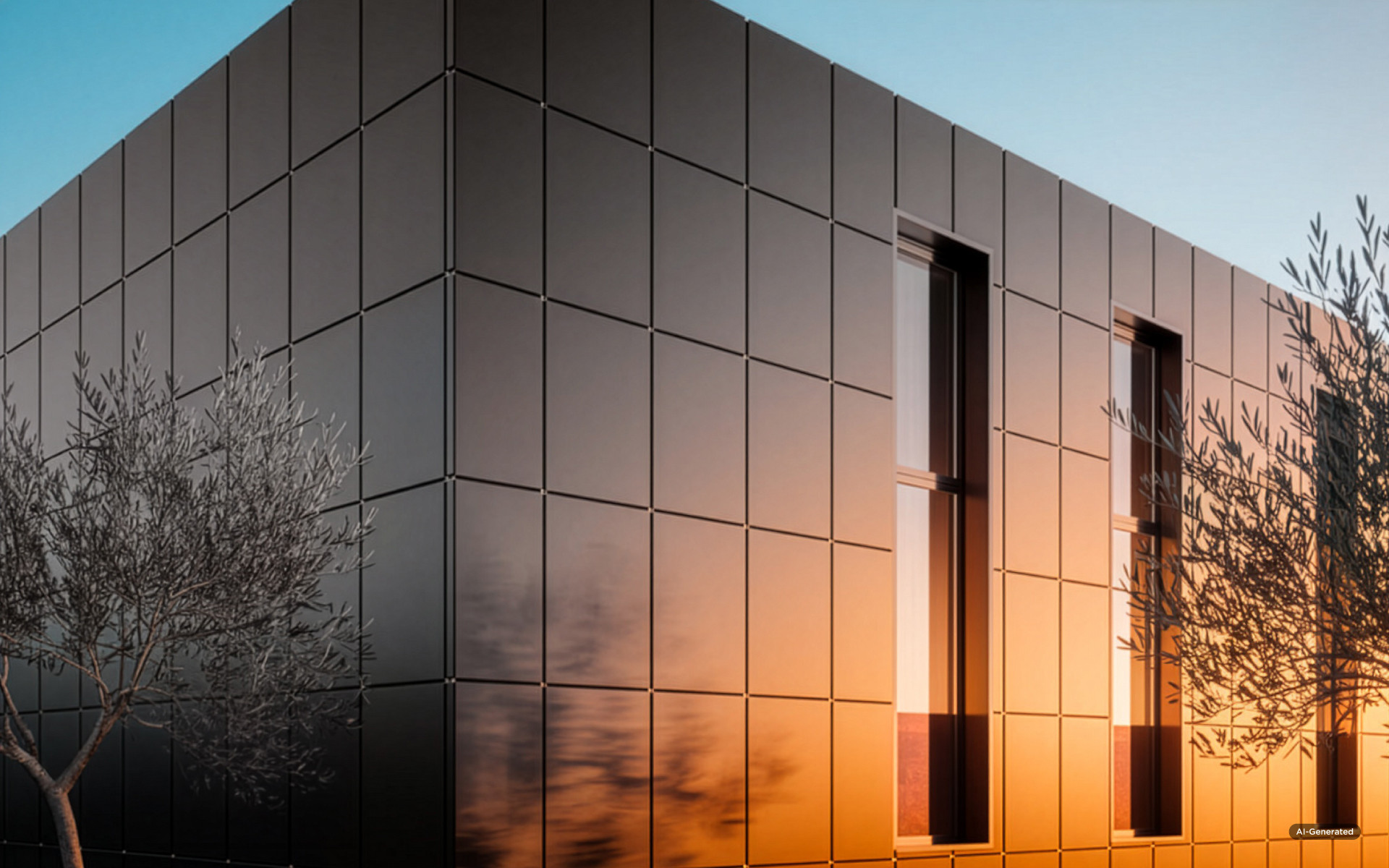
GRANDEX acrylic solid surface - reliable restoration and high standards
Another material playing a significant role in complex interior projects is the GRANDEX acrylic solid surface. These slabs are characterised by a different dimensional specification compared to large ceramic slabs or quartz surfaces - they are supplied in a format of 3680 x 760 x 12 mm. As highlighted in the guidelines, this narrower dimension is not a flaw, but a feature conditioned by the production technology and offset by the possibility of creating fully seamless, reinforced joints (50 to 100 mm wide from underneath) that provide the joint with the strength of the slab itself. An important advantage of the acrylic solid surface is its low weight of just around 21 kg/m2, which gives around 58 kg for a full slab. This parameter facilitates both transport (no need to use specialised lifting equipment, such as vacuum lifters or forklifts) and the actual installation of finished elements on the investment site. Unloading a full pallet of 15 slabs of material, which means a load of around 900 kg, is an indicator that simplifies the planning of logistical operations for workshops and installation crews.
The physical and chemical properties of GRANDEX meet stringent standards. Density is 1.76 g/cm3, while water absorption is at an almost zero level of ≤ 0.1% (EN ISO 62:2008), preventing the absorption of liquids. Resistance to bending is ≥ 66 MPa (EN ISO 178:2011), ensuring safe use. In the material's production process, the ecological and safety aspects were treated as a priority - GRANDEX boasts Greenguard and Greenguard Gold certificates (confirming minimal harmful substance content), ISO 45001 certification for rigorous occupational health and safety management, and ISO 9001 for its quality management system, as well as a Hygienic Certificate. An undeniable distinguishing feature of this acrylic solid surface in public spaces and transport are the certificates of conformity with the MED 2014/90/EU directive (Module B, including MED/3.18a and MED/3.18c) issued by RINA Services, approving it for use on ships and yachts due to meeting strict fire safety standards. Additionally, impact tests (EN ISO 179-1:2010 and EN 13245-1:2013) confirm resistance to impact by a hard body without the formation of defects. Resistance to ageing under artificial UV radiation (colour change expressed by the formula dE*ab ≤ 1 per EN ISO 4892-2:2013 and ISO 7724) confirms shade durability. It is also worth mentioning the manufacturer's technical note regarding the specifics of natural colouring: slabs with very deep, dark tones (like black or brown) may show scratches and dust more quickly than light and textured ones - caution is advised when selecting such colours for heavily used worktops.
Investment life-cycle cost management shows the greatest potential in the acrylic solid surface, which is a material capable of being completely restored. GRANDEX is a homogeneous material with a consistent structure throughout its full thickness. Shallow scratches, discolouration, or minor chips, typical of long-term use in the HoReCa sector (e.g., on bar tops or reception desks), can be sanded and re-polished at any time within the target interior, without the need for removal. This property ensures that a worn bar counter or bathroom unit returns to a state of newness, rather than burdening the budget with an expensive procedure of replacing entire elements, as would be the case with ceramic or HPL panels. The rule of colour control just needs to be maintained - due to the specifics of the process, slight differences in tones between separate batches of material are a common phenomenon; to avoid problems on site, it is recommended to use colour codes assigned to a single batch and to carry out a colour matching test before bonding begins.
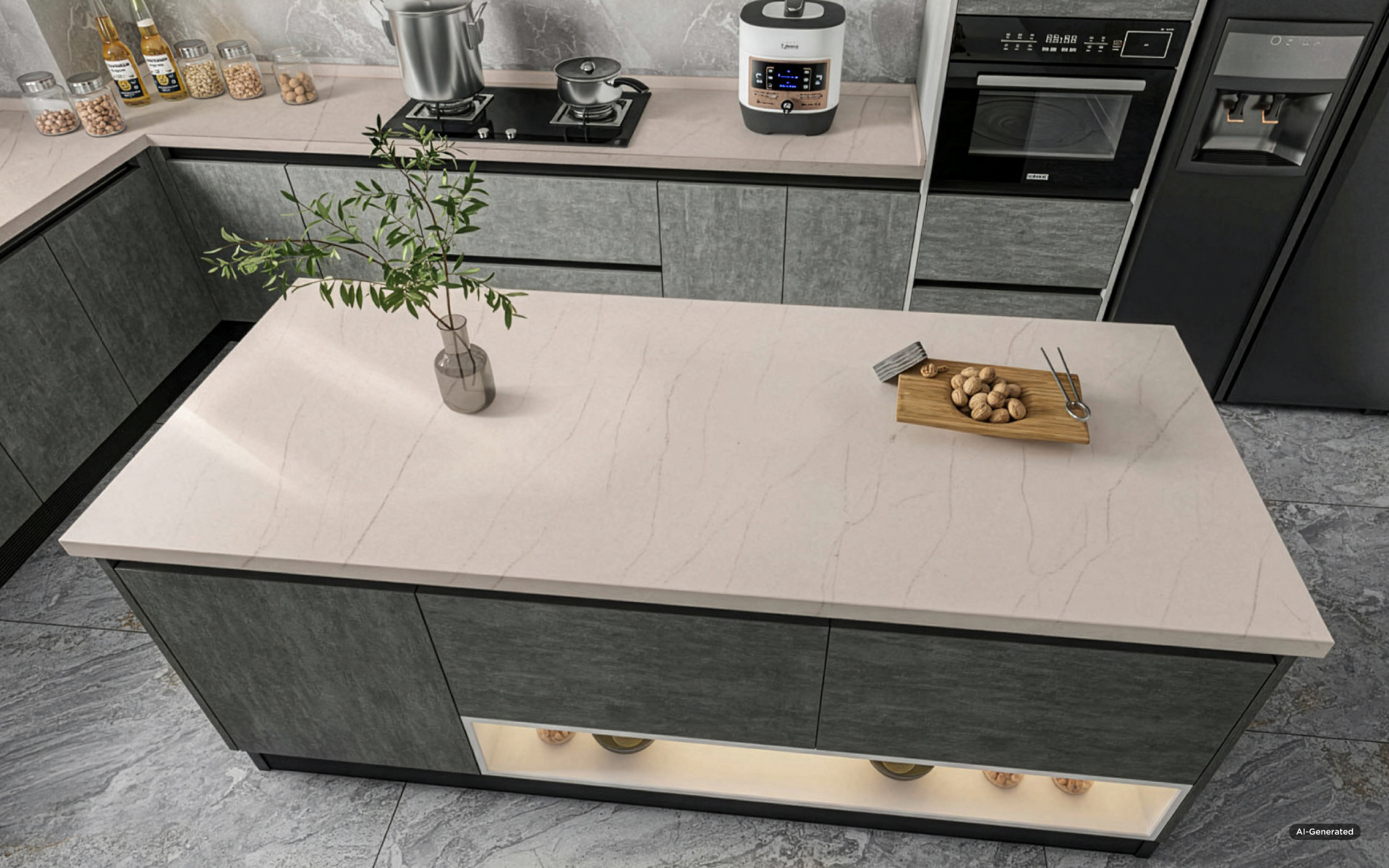
KRAFFTEN compact laminates - large-format optimisation
In the HPL materials category, the KRAFFTEN brand also plays a significant role. It is a compact laminate made from kraft paper impregnated with resin and pressed under high pressure. This process yields a solid, non-porous material resistant to water, mould, and fungi, which can be successfully used both indoors and outdoors. From an architectural standpoint, this material works well for designing furniture, doors, partitions, wall and ceiling claddings, as well as in commercial and sanitary spaces.
The key optimization parameter of KRAFFTEN panels is their size. The material is supplied in a single catalogue format measuring 4300 x 1830 x 12 mm, which provides 7.87 m2 of working area in a single panel. The width of 1830 mm offers a noticeable design advantage - on large vertical planes and door leaves, this translates directly into a smaller number of joints and a lower waste percentage after cutting.
The brand's portfolio includes decors reflecting the structure of wood (oak, walnut, ash), stone (marble, granite), and metal (steel, bronze). A significant technological convenience for fabricators is the availability of part of the range with the FULL BODY option. This means that selected panels have a core coloured throughout, so after fabrication and cutting, the exposed edge does not contrast with the main surface and requires no additional covering.
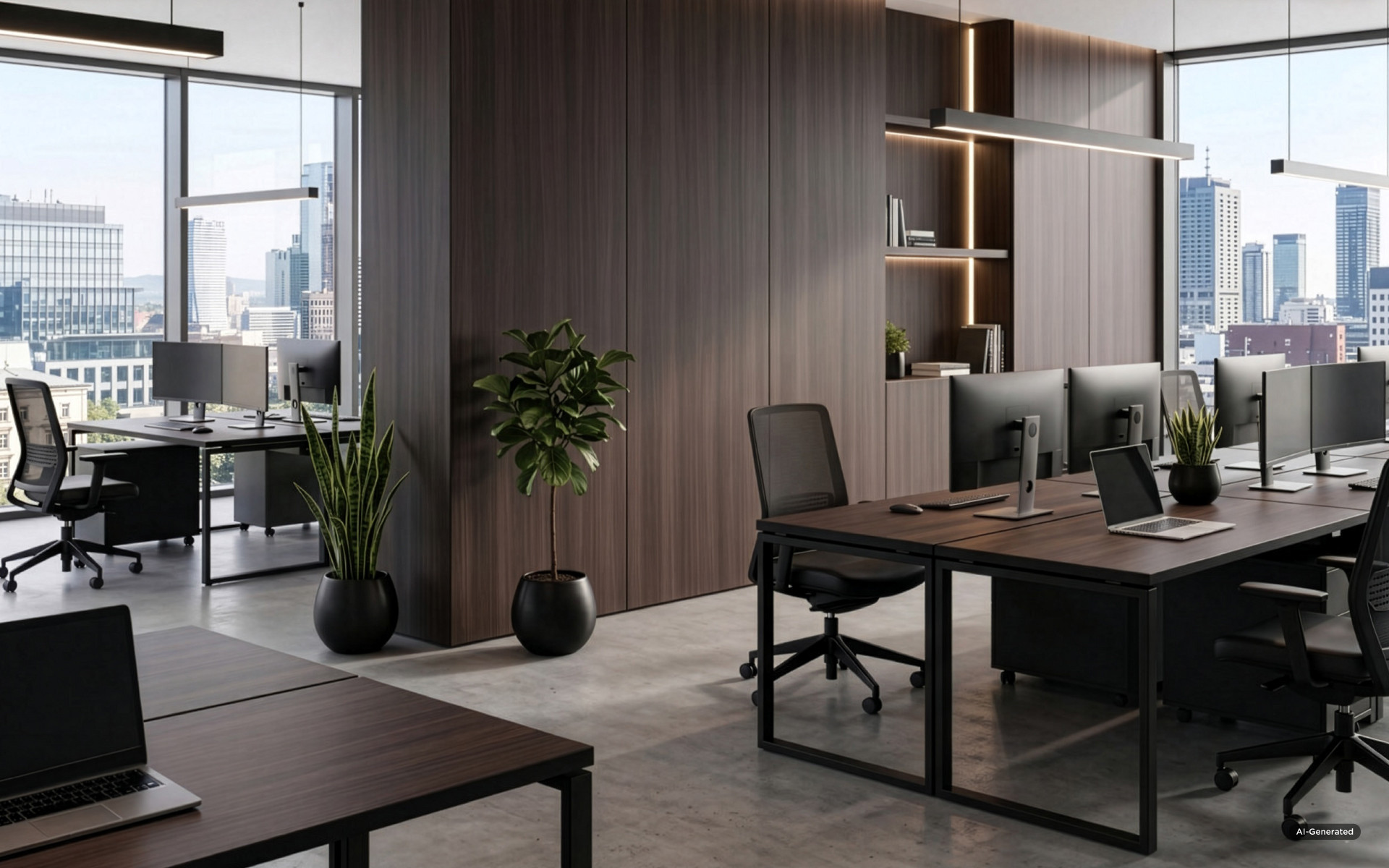
The selection of the optimal material is a process requiring the analysis of multiple variables - from physical and chemical properties, through logistics, to fabrication specifics and repair capabilities. The above compilation provides a substantive foundation, but we are aware of the complexity of each investment and the multitude of specialist data accompanying the decisions made.
Since it is impossible to include all precise laboratory parameters, certificates, installation guidelines, and technological instructions in a single text, the Architype team of experts provides full technical support. We approach each project individually. Upon request, we will gladly compile and send additional, in-depth informational materials, precisely tailored to the character, loads, and requirements of a specific project. We invite you to contact our B2B advisors directly to jointly analyse the investment assumptions and select solutions that guarantee durability, cost optimisation, and peace of mind for years to come.
Share:


Other publications
All publications
Architype at Marmomac 2026. Let's meet in Verona!
References
The application of Puricelli HPL panels in commercial interiors - where does this material have an advantage over other solutions?
References
Timeless materials - what to choose for a gracefully ageing interior?
References