



Partial light transmission, a unique feature of onyx. How can it be used in interior design?
References
One stone and many design possibilities – this is how we would briefly describe onyx. It is a unique material which, thanks to its unique properties, allows you to achieve an effect that will delight even the most demanding lovers of good architecture.
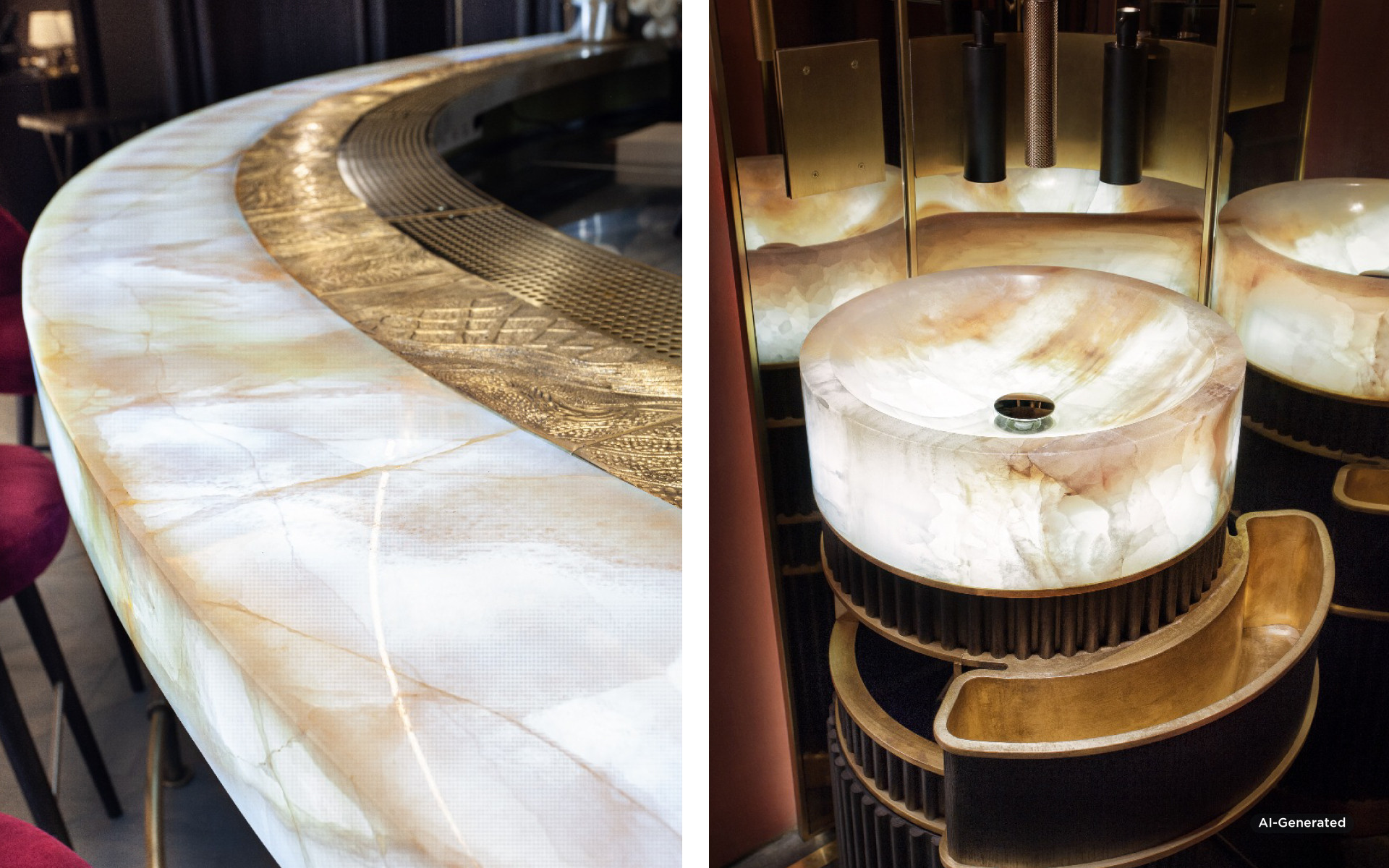
Partial light transmission is a feature that distinguishes onyx from quartzite, granite or travertine. It results directly from its structure and the crystallisation of minerals in conditions conducive to the formation of layers of varying density. Thanks to this, onyx slabs can ‘catch’ light and guide it deep into the stone, bringing out veins, new colour transitions and unique patterns that look completely different or are even almost invisible under standard lighting. The moment when the stone completely changes after the lighting is turned on is very impressive.
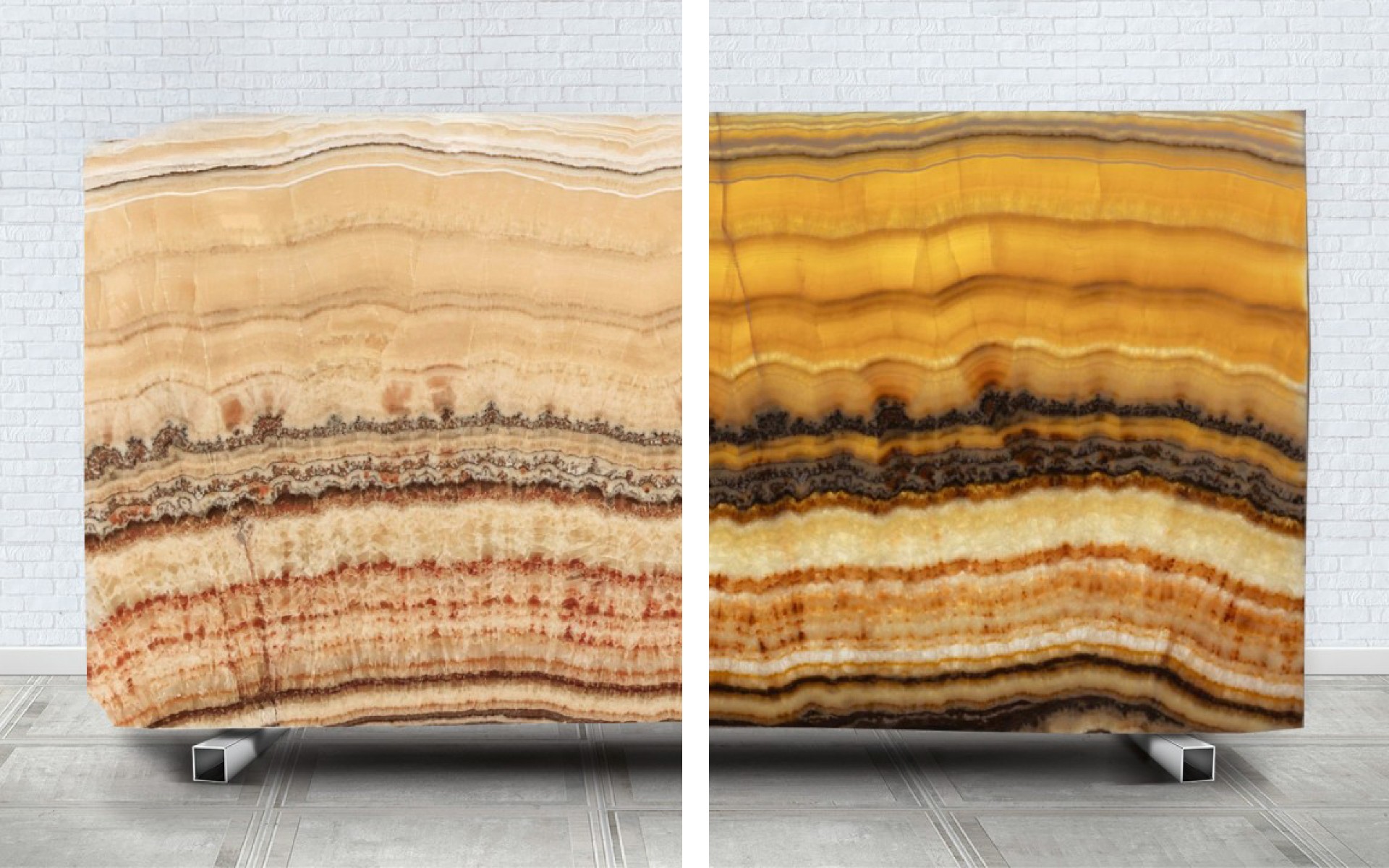
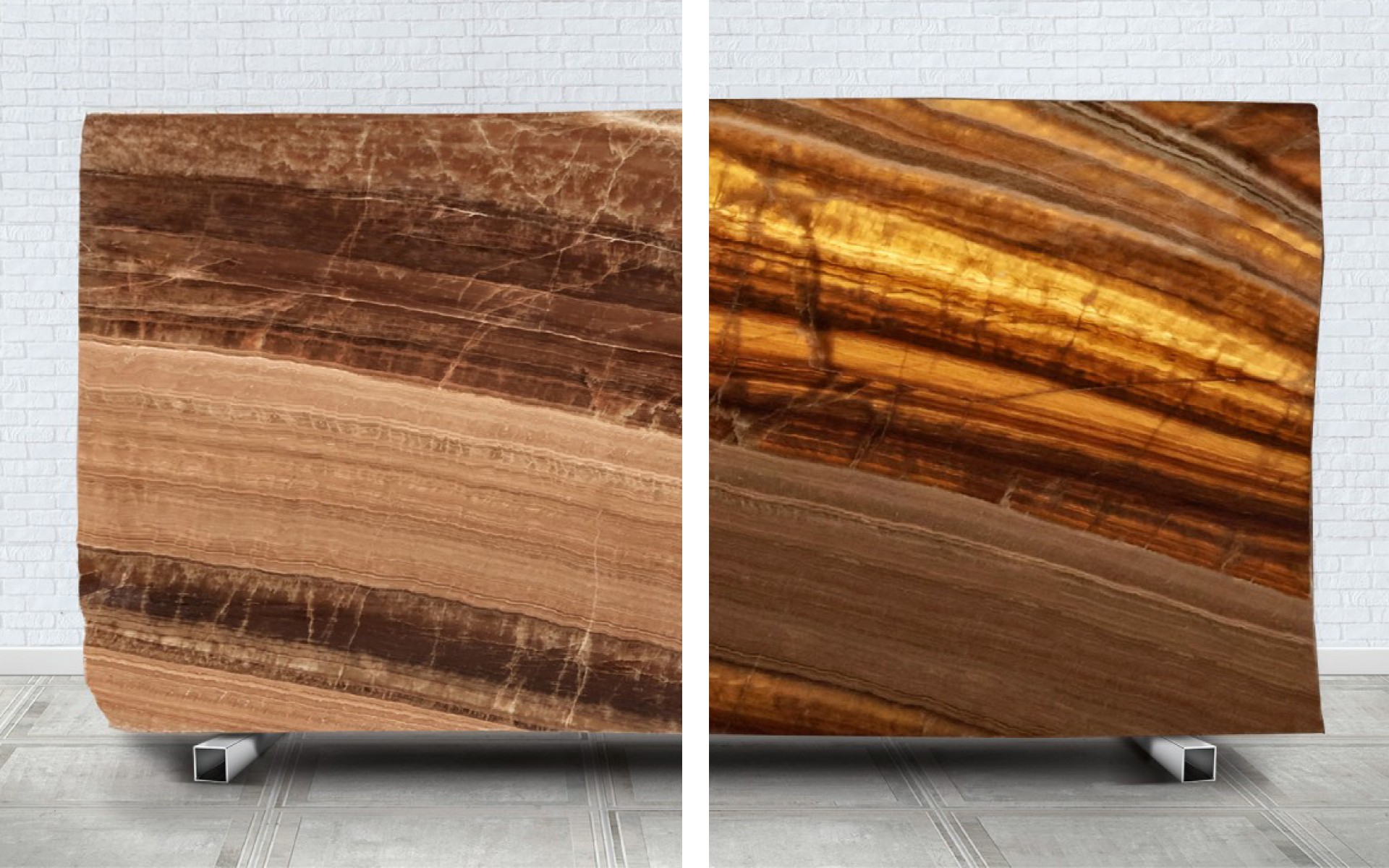
Natural onyx is never uniform. Each slab is a record of the conditions in which it was formed - the temperature and acidity of the water, the presence of minerals, the rate of crystallisation. Therefore, light penetrates it unevenly, emphasising the contrasts and depth of the structure. In some places, the stone glows almost white, while in others it remains more saturated and darker. This effect makes even simple details, such as a wall panel or countertop, attract attention and serve as sufficient decoration.
Onyx offers a wide range of possibilities when it comes to interior design. It is most often used in the form of illuminated wall panels in living rooms, entrance areas, hotel and restaurant receptions. It also works well on bar counters, kitchen island casings or built-in elements, where light becomes an integral part of the composition and the surface is not used intensively. In private spaces, it often appears as an accent: a fragment of a wall, a background for a mirror, a detail in a bathroom or a decorative table.
Onyx is more delicate than other types of natural stone, such as granite or quartzite. Its structure makes it more sensitive to scratches and mechanical damage, so it is crucial to choose the right place for its application. It works best where it is not heavily used or exposed to heavy or sharp objects. Equally important is the issue of processing and installation. Illuminated onyx requires precision, experience and a well-designed lighting system. The light source must be even, stable and matched to the thickness of the slab, otherwise, instead of an elegant effect, there will be gaps or stains. This is one of those materials where it is definitely worth relying on proven solutions and experienced contractors who understand the specifics of natural stone. Caring for onyx is not complicated, but it does require consistency. Gentle pH-neutral agents, regular impregnation and avoiding aggressive chemicals allow you to preserve both the surface of the stone and its ability to work with light. With proper use, onyx retains its appearance for years, and the backlighting continues to bring out its most valuable features – its natural pattern and unique effect.
Its partial light transmission gives onyx a special place among natural stones. It does not compete directly with more resistant utility stones, because its strength lies elsewhere. It is one of the few materials that gives two completely different effects depending on whether it is used with or without backlighting. In practice, this means that one element of the design can function in two ways – subdued on a daily basis and impressive when you want to create a mood or make an impression on guests.
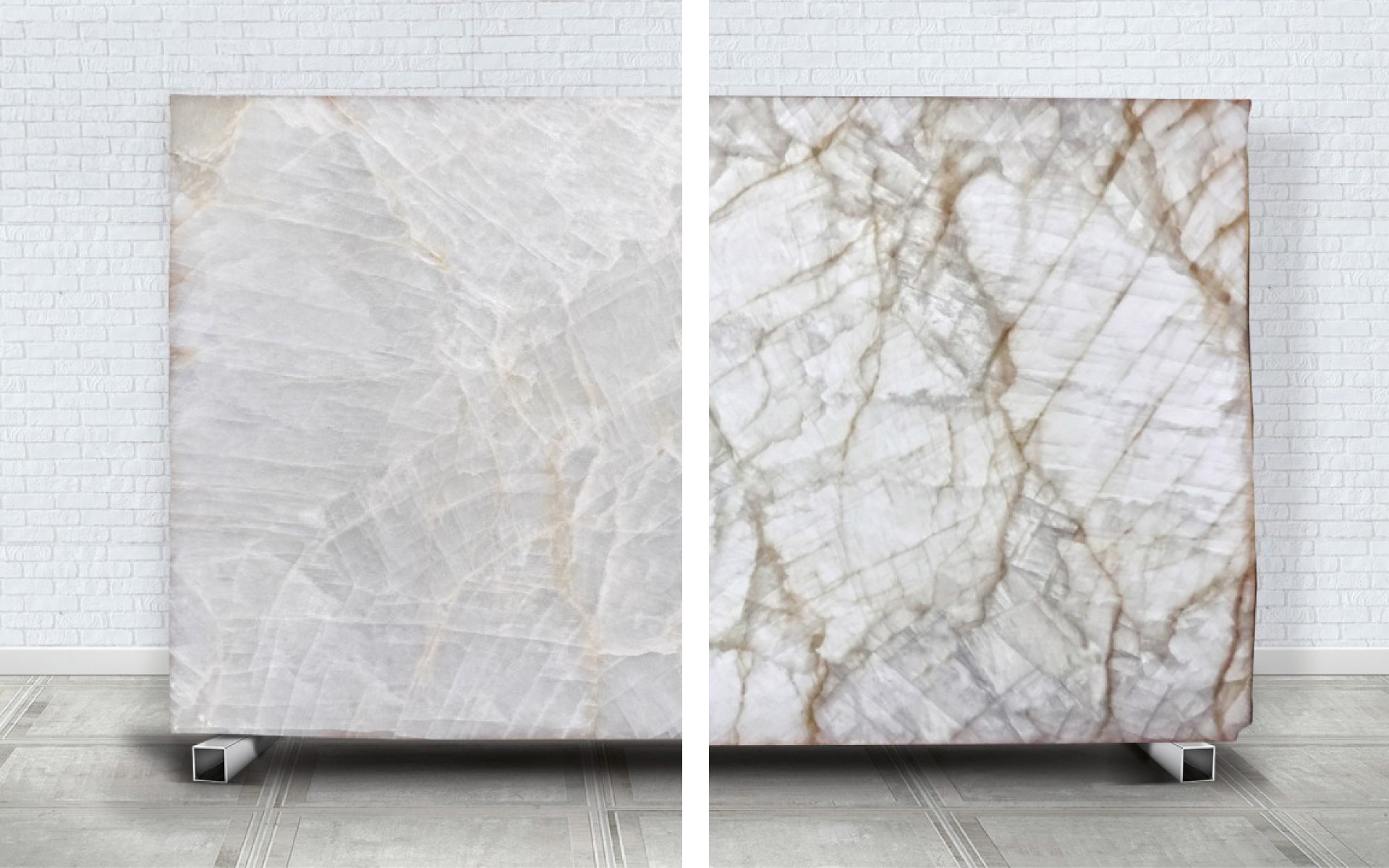
It is worth noting that the backlighting effect is not exclusive to onyx. In selected quartz surface decors, such as Mulen, Patagonia Mortinica, Calacatta Dauphine and Ajaccio, light penetration can also be achieved through appropriate slab processing and well-designed LED lighting. This is a good alternative where greater durability is important, but at the same time we want a strong, memorable visual effect.
Check also: Unique effects with Architype decors
Share:


Other publications
All publications
Architype at Marmomac 2026. Let's meet in Verona!
References
The application of Puricelli HPL panels in commercial interiors - where does this material have an advantage over other solutions?
References
The most popular Architype materials chosen by the B2B sector. Parameters, logistics, fabrication, and practical aspects - a guide.
References