



How to arrange a bedroom? A harmony of functionality, relaxing colours, and safe materials
References
The bedroom is one of the most private rooms in the entire home - a space dedicated exclusively to regeneration, calming down, and rest. Professional design of this interior goes far beyond choosing a comfortable mattress. A well-arranged bedroom is based on three solid pillars: well-thought-out ergonomics, a soothing colour palette, and the absolute safety of the materials used.
We suggest how to combine these elements into a coherent whole!
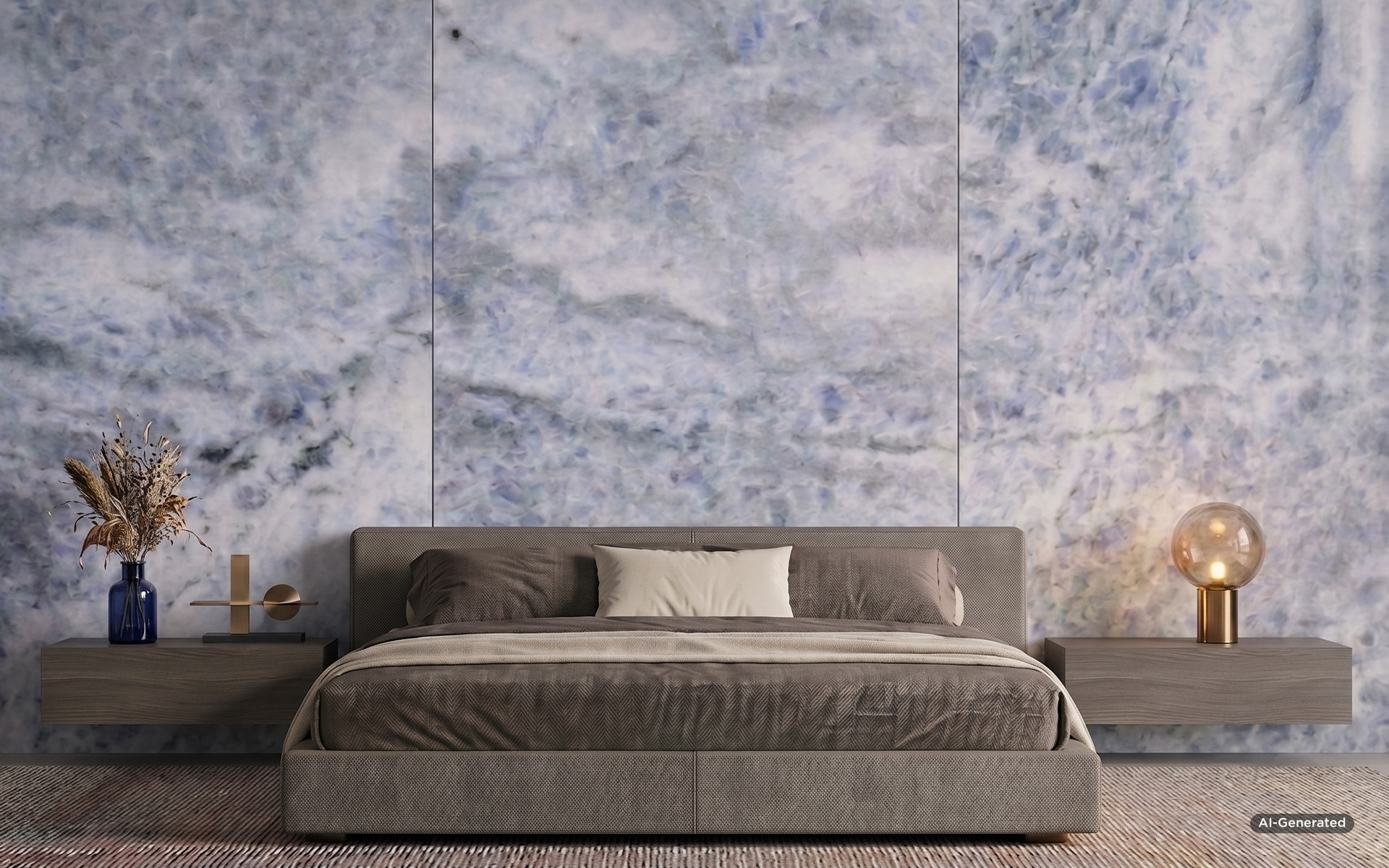
A functional space that supports the rhythm of the day
In the bedroom, the convenience of using the room is very important. Even the most beautiful interior will lose its charm if daily use of it is cumbersome. The key to success is appropriate zoning and maintaining circulation routes.
- The placement of the bed determines the entire layout of the room. Wherever possible, it should be accessible from three sides, which makes daily bed-making and getting up easier. The optimal distance between the edge of the bed and a wall or wardrobe is a minimum of 70 centimetres.
- Too many pieces of furniture and objects left out create visual chaos, which subconsciously makes falling asleep difficult. It is worth opting for made-to-measure furniture (e.g. reaching the ceiling), hidden drawers under the bed, and integrated organisation systems.
- A bedroom requires at least three lighting circuits. You need main lighting, task lighting, and decorative lighting. An interesting solution in the latter category are light-transmitting decors, which allow for an exceptionally soft, milky glow and build an evening atmosphere of relaxation. Natural onyx will work perfectly here, which, when backlit, resembles a phenomenal stained glass window and looks magnificent on a panel behind the headboard, as well as selected quartz stone decors.
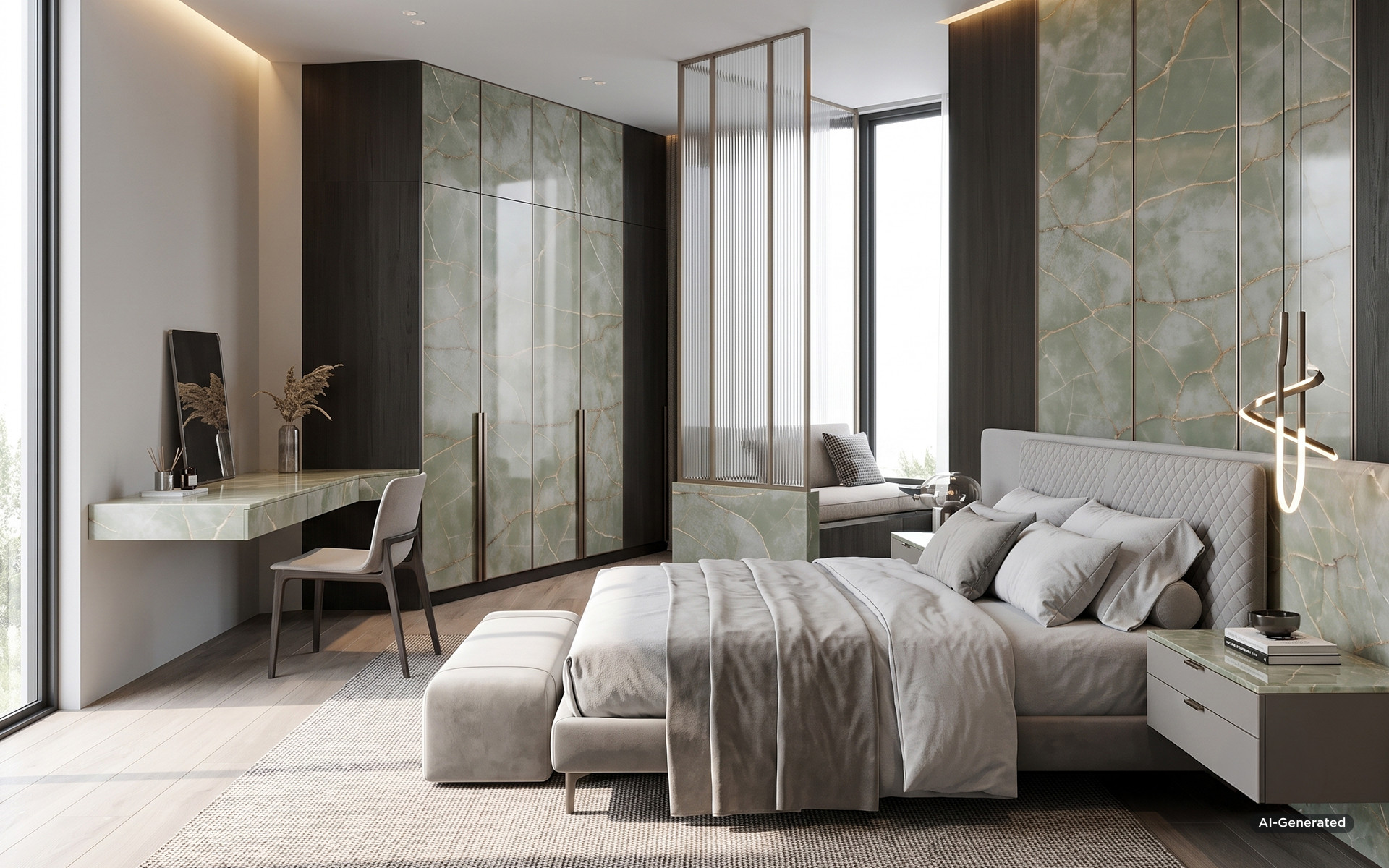
A colour scheme that promotes tranquillity
Colours can influence our well-being and sense of relaxation. In the bedroom, it is best to abandon bright, neon colours, and instead opt for calmer tones.
- The best base for a bedroom are shades inspired by nature. Off-whites, warm beiges, sage green, muted terracotta, or gentle pastels lower stress levels and help with relaxation. Earth tones used as wall cladding, floors, furniture fronts, textiles, furniture, or accessories fit perfectly into such a palette.
- If you prefer more atmospheric interiors, colours such as navy blue, bottle green, and even graphite or black will work perfectly. Dark colours on the wall can provide a sense of envelopment and safety, resembling the night sky. Such an effect can be further enhanced by using Architype materials with irregularly distributed light particles that imitate the view of a starry sky - for more inspiration, we invite you to our article fully dedicated to such decors.
- The 60-30-10 proportion rule - to avoid monotony, it is worth applying a classic design rule: 60% of the interior is the dominant colour (usually the walls), 30% is the secondary colour (e.g. furniture, curtains, rug), and 10% is the accent colour (cushions, lamps, small decorations).
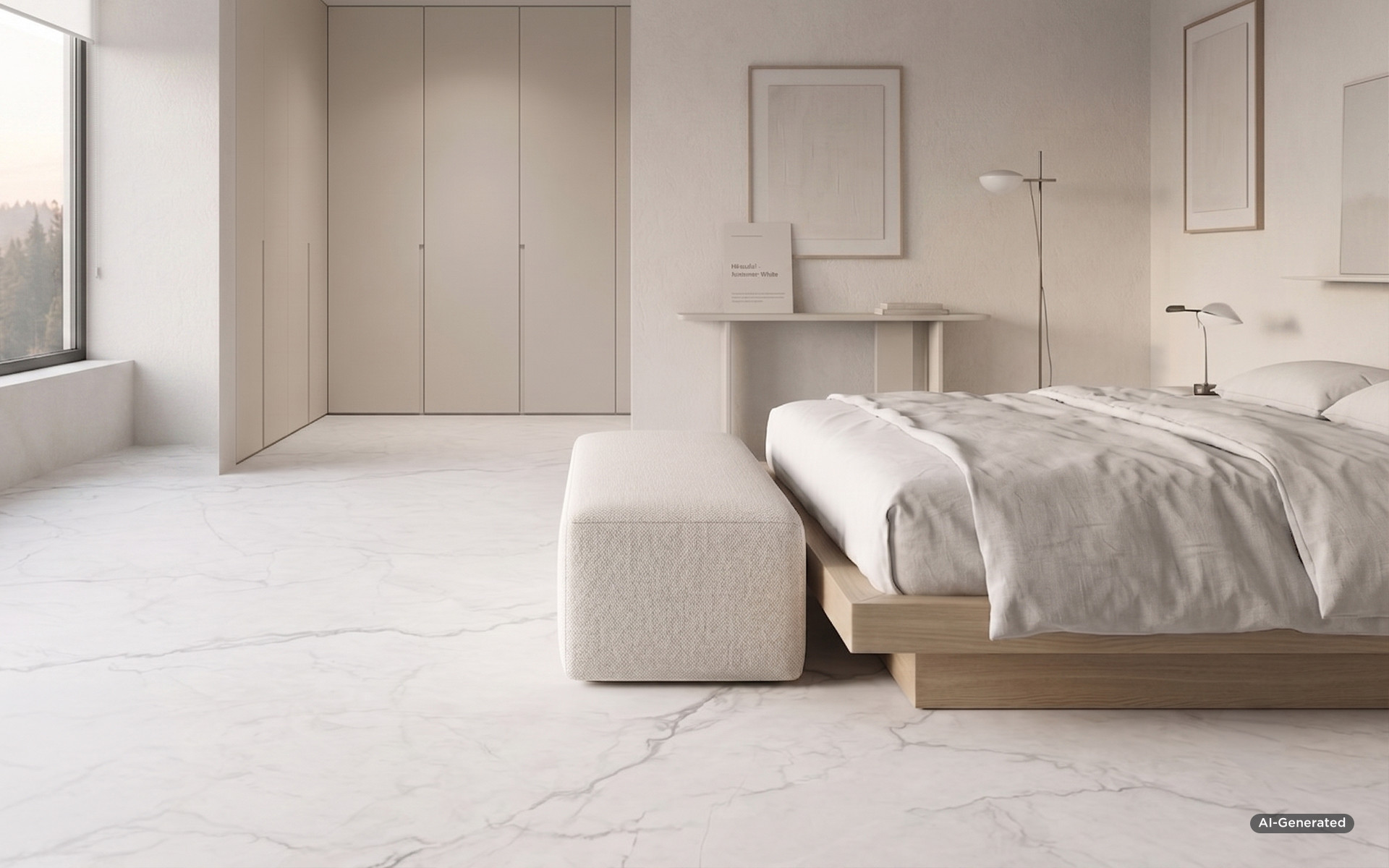
Material safety - clean air and healthy sleep
We spend about 1/3 of our lives in the bedroom, which means that the air quality in this room has a significant impact on our health. The choice of finishing materials should not be based solely on their appearance.
- VOC control and certified safety - cheap paints, glues in furniture boards, or synthetic varnishes can release toxic substances (e.g. formaldehyde) into the air for many months. For the bedroom, always choose products that hold independent certificates confirming the lack of volatile organic compound (VOC) emissions. In the Architype range, you will find materials - from large ceramic slabs, through quartz stones, modern, low-emission HPL panels - that meet rigorous standards such as GREENGUARD Gold (Caesarstone, Avant Quartz, GRANDEX) or PZH hygienic attestations (GRANDEX). They guarantee top quality and safe indoor air.
You can read more about the ecological standards and certificates of our materials in this article. - Breathable fabrics - textiles have direct contact with our skin. It is worth replacing synthetic polyesters with natural, hypoallergenic materials, such as linen, organic cotton, silk, or wool. They allow the skin to breathe and do not excessively accumulate electrostatic charges, which attract dust.
- If the bedroom has wide windowsills, a dressing table, a console, or is connected to an open bathroom (the so-called master bedroom), it is worth opting for highly hygienic surfaces. The vast majority of materials from the Architype portfolio - from quartz stones, through large-format ceramic slabs, to acrylic solid surfaces or HPL panels - are characterised by a compact structure free of pores and microcracks. This means that their surface does not absorb moisture, and dust and pathogenic microorganisms do not have micro-crevices in which they could hide and develop. As a result, maintaining perfect cleanliness, so important for the respiratory system and sleep quality, is simpler and does not require the use of irritating, aggressive chemicals. In turn, lovers of raw materials straight from nature can opt for hard and highly non-absorbent stones in these zones (e.g. quartzites and granites). Such a choice is an excellent investment in a safe, beautiful, and pollution-free environment during sleep.
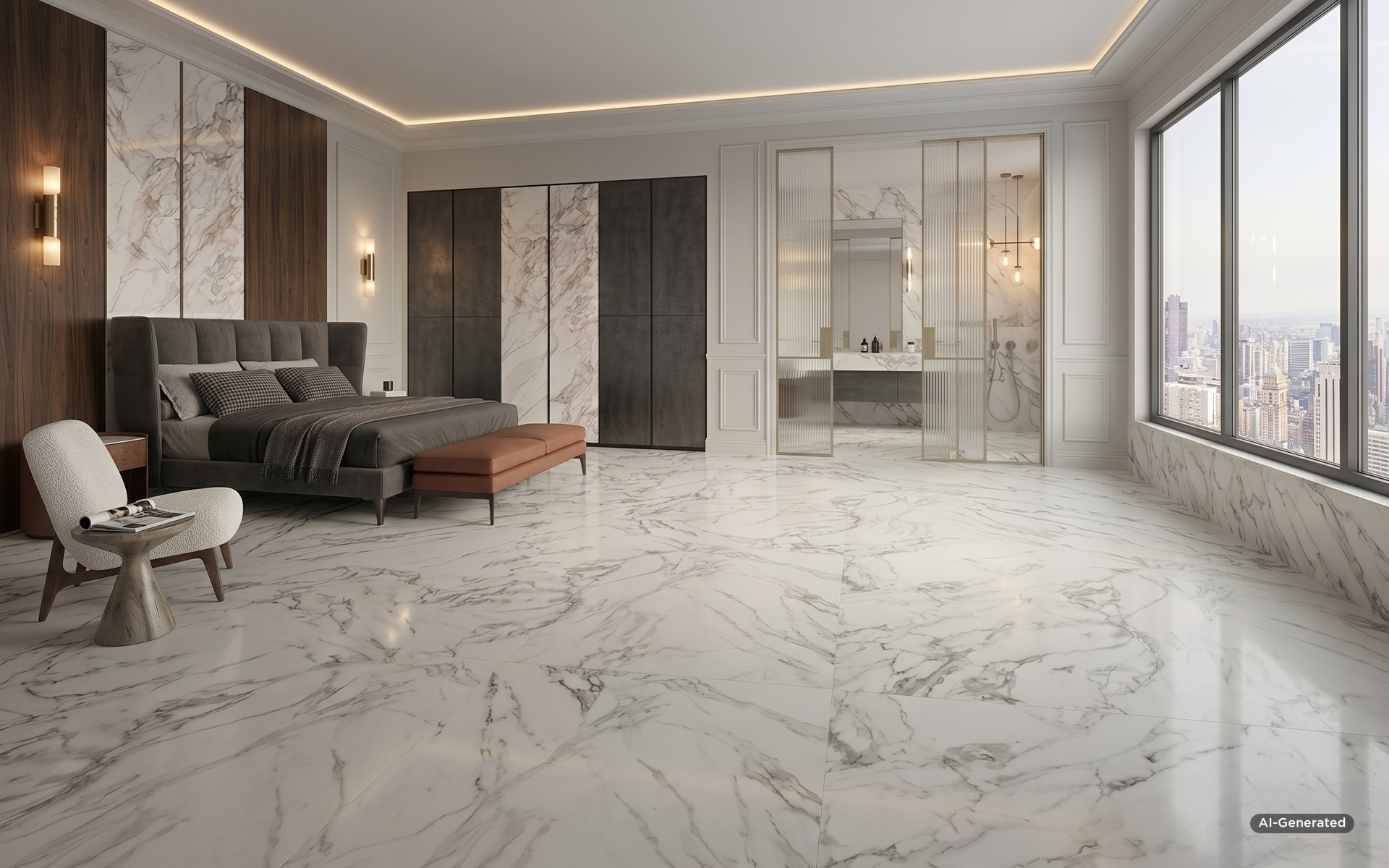
Arranging a bedroom is an investment in our daily well-being and health. By combining a functional layout, relaxing colours, and fully safe, hygienic finishing materials, you will create a harmonious space that will provide you with true rest and deep, regenerating sleep.
Share:


Other publications
All publications
Where to buy large-format sintered stone for the bathroom with high stain and water resistance? A guide to selection and purchase
References
White, cream, or beige? Choosing light large-format sintered stone available instantly
References

Compact HPL in sanitary facilities, locker rooms, and high-traffic areas – a specification guide for architects and investors
References