


The economics of acrylic solid surface fabrication for furniture workshops: how to implement the material into production and avoid costly mistakes
References
Mineral-acrylic composite, often referred to as solid surface or acrylic stone, offers joinery workshops the opportunity to expand their portfolio without building facilities typical for stonemasonry workshops from scratch. The material can be cut, routed, bonded, sanded, and thermoformed, with many operations performed using tools well known to furniture manufacturers. This does not mean, however, that buying the first board and starting production is enough. The entry threshold is relatively low, but project profitability depends primarily on technological expertise. A poorly executed joint, improper support, failure to account for thermal expansion, or an incorrectly executed cutout can quickly turn project profit into the cost of rework or a warranty claim. So how should solid surface processing be implemented in a furniture workshop, what equipment is needed at the start, and where to look for orders?
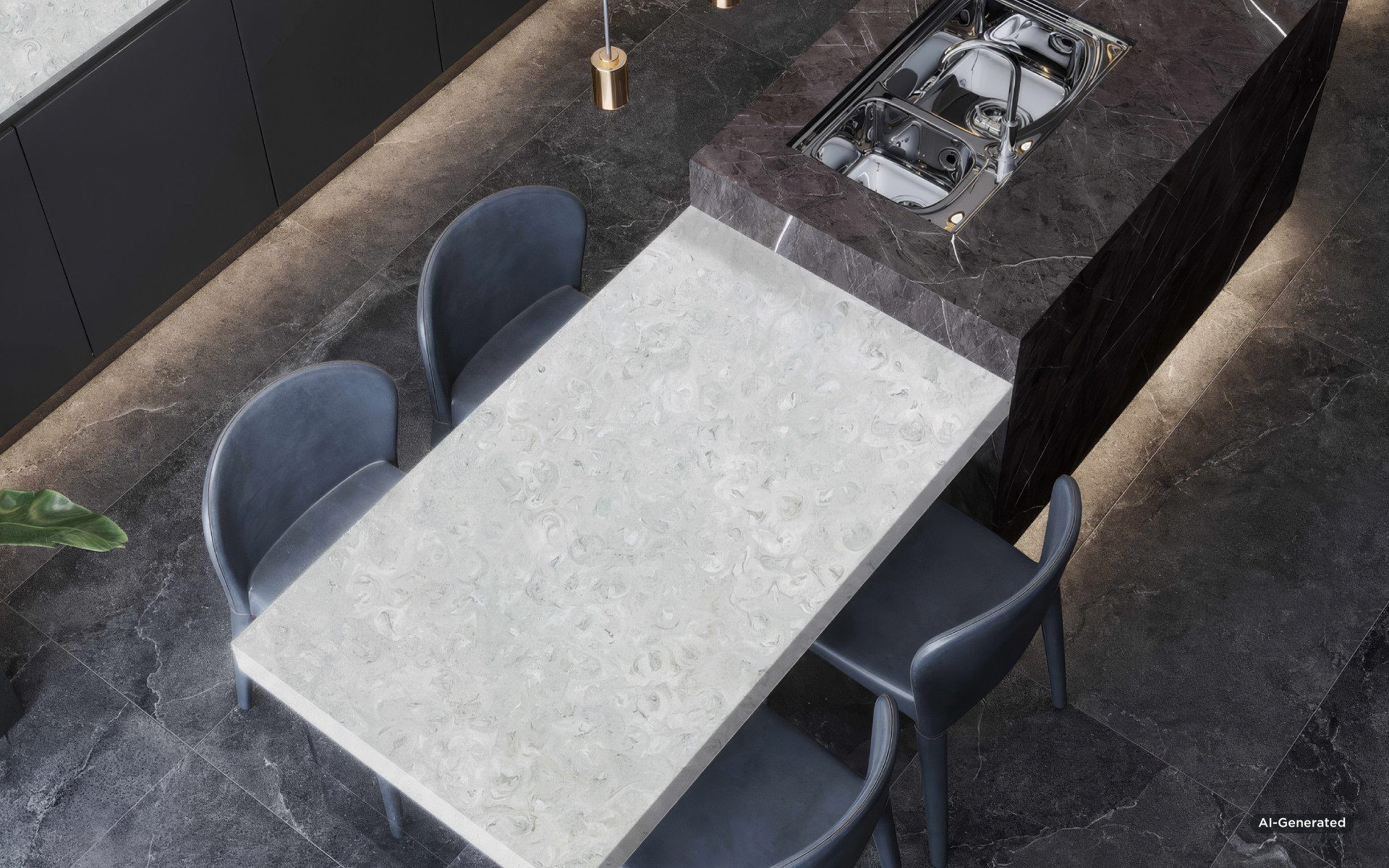
Solid surface – why is it a natural direction for a joinery workshop?
Mineral-acrylic composite consists primarily of mineral filler and acrylic resin with pigments. In the case of GRANDEX, the proportions are approximately 70% minerals and 30% resin with pigments. The material is non-porous, can be joined in a way that allows obtaining nearly invisible seams, and the surface can be restored through sanding and polishing. It also offers thermoforming capabilities, making it possible to create elements with shapes that are difficult to achieve using many traditional board materials.
For a furniture workshop, however, the processing technology itself is particularly important. Entering solid surface does not require purchasing a bridge saw or a specialised CNC intended for stone. Basic operations can be performed using properly selected woodworking tools – primarily routers, cutting and sanding tools, and an effective dust extraction system. This is a fundamental difference compared to starting in-house processing of quartz composite or other heavy stone materials. For a company that already manufactures furniture, part of the necessary equipment may already be in the workshop. The most important investment becomes mastering the technology rather than an extensive machine park.
What can be manufactured from mineral-acrylic composite?
The most obvious application is kitchen countertops, but the material's possibilities are much broader. Solid surface can be used to produce bathroom countertops, integrated sinks, islands, reception desks, commercial built-ins, surfaces for HoReCa, or equipment elements for medical facilities. Thinner boards can also be used as vertical cladding and decorative elements. GRANDEX is available, among others, in the standard format of 3680 × 760 × 12 mm. A 12 mm board weighs approximately 21 kg/m², and an entire sheet around 58 kg. Compared to large-format stone slabs, this means easier logistics and lower requirements during transport and installation. For worktops, a thickness of 12 mm is primarily used. 6 mm boards find application mainly in vertical cladding, fronts, and decorative elements where low mass is more important than the load-bearing capacity typical for a work surface.
What equipment is needed to get started?
The most important information for a joinery workshop owner is: you don't need to create a separate stone processing department right away. The minimum scope of equipment depends, of course, on which elements the company wants to produce. Entering simple countertops looks different than launching the production of thermoformed elements. At the beginning, what is needed primarily are appropriate tools for cutting and routing, a router, abrasives, equipment for bonding and clamping elements, a place for safe storage of boards, and effective dust extraction. Added to this are consumables: properly selected adhesives, accessories for their application, and materials for subsequent stages of sanding and surface finishing. If the workshop wants to produce curved elements, the next investment stage will be equipment for thermoforming and preparing appropriate moulds.
There is no single universal amount needed to start production. The cost of entry depends primarily on the current machine park. A workshop with good routers, power tools, dust extraction systems, and assembly stations will start from a completely different level than a company that still needs to build such facilities. Therefore, before buying equipment, it is worth first defining what projects should be included in the offer.
First simple projects, later thermoforming
One of the mistakes when implementing a new material is trying to master all technological possibilities simultaneously. It is much safer to start with simple countertops and teach the team proper cutting, bonding, and sanding. Only after mastering these processes can production be expanded to more complex joins or thermoforming. This is also important from an economic point of view. Every test performed on the material costs money. If an employee learns how to make an invisible seam, form an arc, and prepare a complex cutout all at once, the number of potential sources of error grows rapidly. Pilot production, on the other hand, allows checking the process in controlled conditions before the workshop starts offering more demanding projects to clients.
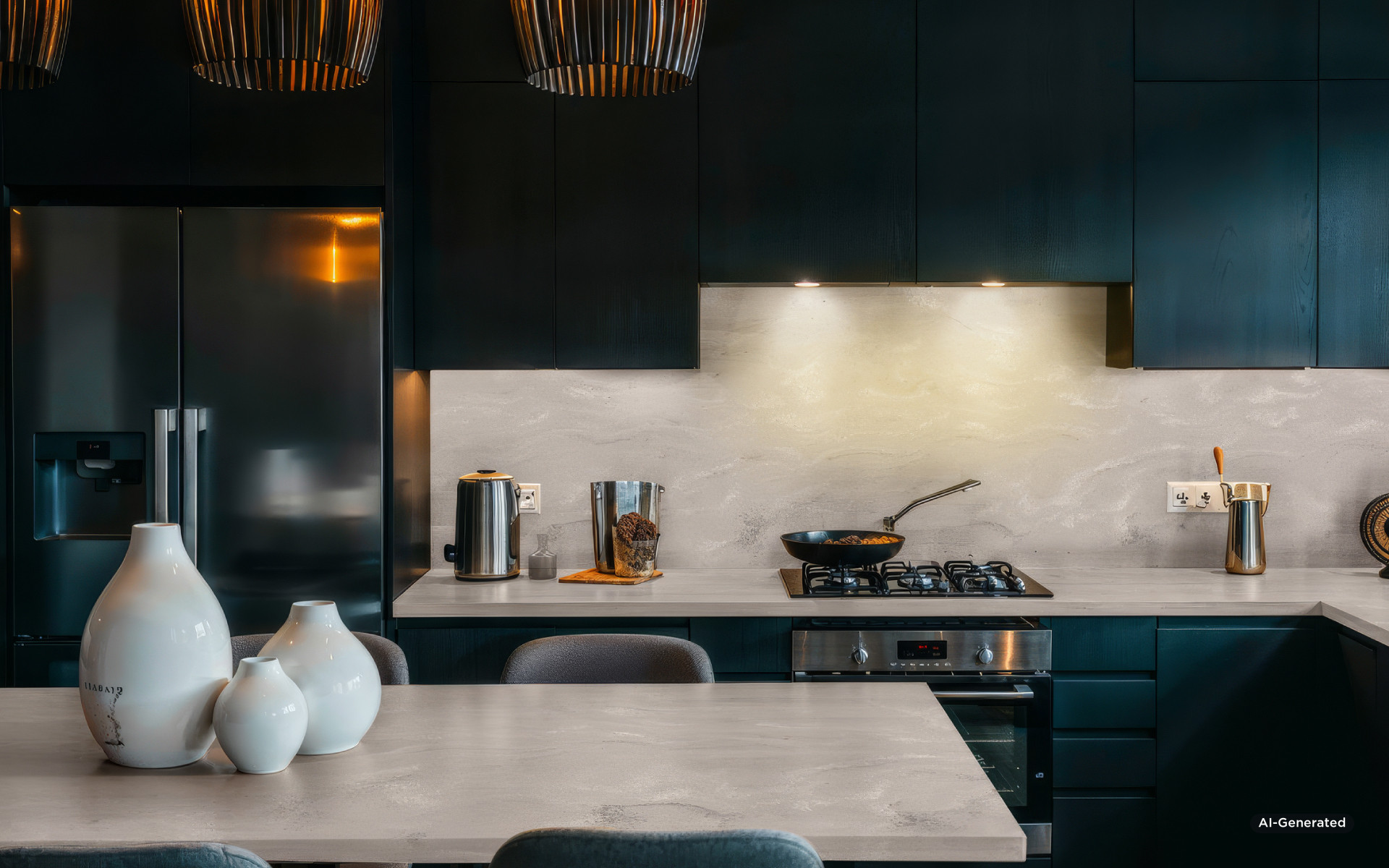
Solid surface bonding – a skill that must be mastered
One of the greatest advantages of mineral-acrylic composite is the ability to achieve nearly invisible joints. It is precisely this feature that allows creating long surfaces, joining a countertop with an integrated sink, or building extensive desks without typical, distinct material divisions. At the same time, proper bonding is one of the most important elements of the entire technology. Surfaces must be properly prepared, the joint executed using the correct adhesive, and then properly finished. Working temperature, station cleanliness, clamping method, and subsequent sanding all matter.
A beginner contractor should therefore not treat bonding the same as joining typical wood-based materials. A good start is to perform several test joints on material offcuts. This allows practising edge preparation, adhesive application, clamping, and sanding without the risk of losing a full-sized element. During actual production, the manufacturer's current processing instructions for the specific material and bonding system should strictly be used.
Thermal expansion – an invisible error that can return after installation
Mineral-acrylic composite moves under the influence of temperature changes. This means that when designing a countertop, it must be provided with the possibility of small dimensional changes. A problem arises when the contractor treats the material as a completely stable element and blocks it between walls or other parts of cabinetry. GRANDEX features thermal expansion at a level of ±4.5 mm/m at a temperature difference of 100°C.
In practice, this means that during design and installation, the material must be left with adequate space to move, in accordance with manufacturer recommendations. The lack of appropriate clearances can lead to stress build-up and, consequently, damage that will reveal itself only after project completion. Therefore, expansion joints are not a detail that can be resolved only "during installation". They must be taken into account as early as the measurement, design, and element preparation stages.
Substructure – the countertop needs proper support
Another common mistake of beginner contractors is focusing on the surface itself and treating the structure beneath it as secondary. Meanwhile, proper support affects countertop behaviour, especially in zones of cutouts, joins, larger spans, and overhangs beyond cabinetry. The method of preparing the structure should be adapted to the specific project and our current technological recommendations as a supplier. Special attention is required for large islands, long sections lacking continuous support, and places where countertop geometry has been weakened by openings. It is not worth assuming that a structural solution working well for laminate will automatically be correct for solid surface.
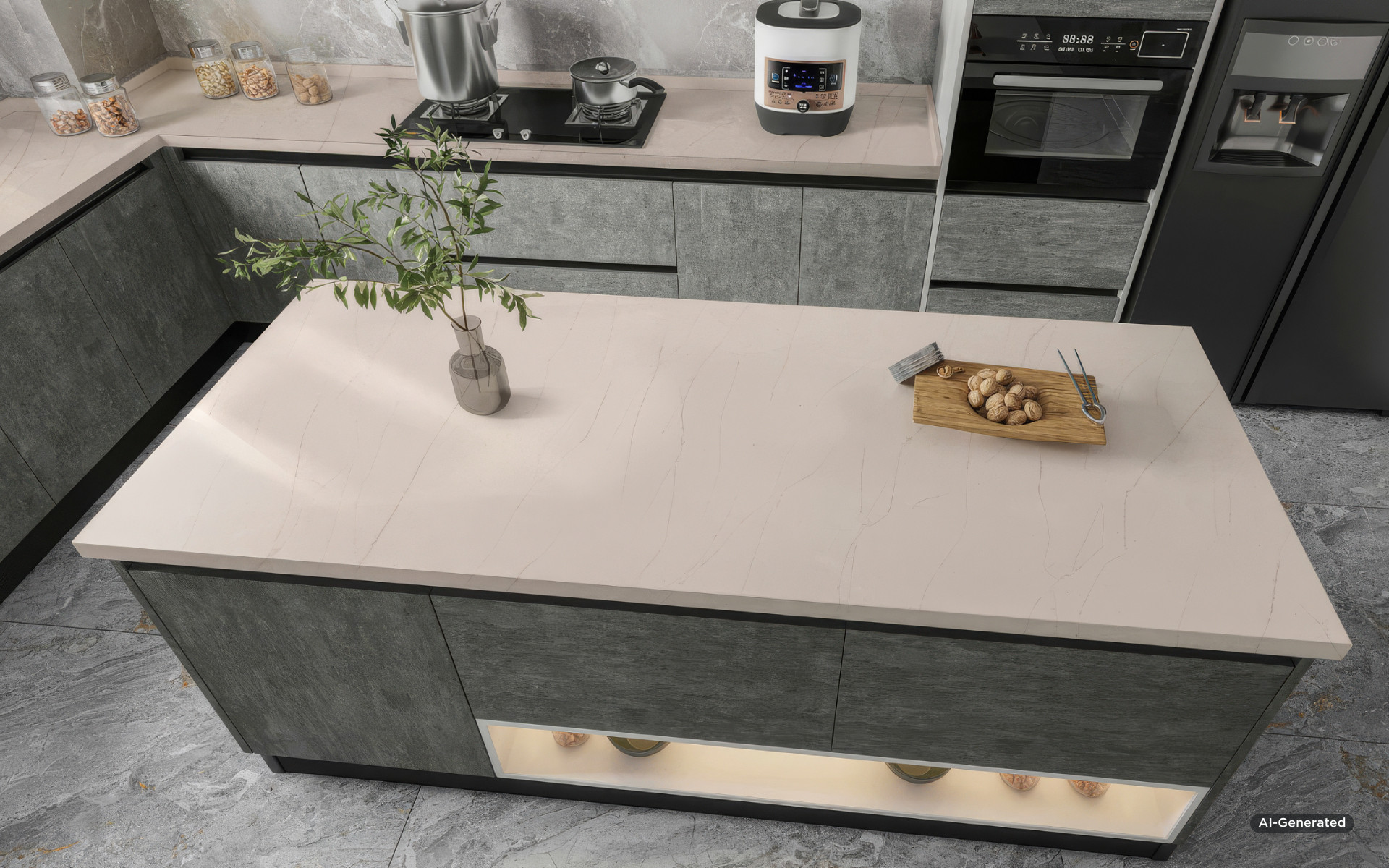
Sink and hob cutouts – no room for chance here
Cutouts belong to the most critical places of any countertop. Sharp corners concentrate stress, which is why the method of executing openings for sinks, hobs, or other equipment elements should align with material technology. Too little material left between a cutout and a countertop edge or an adjacent opening can also be a problem. Before starting production, it is worth working on technical documentation for the specific device, rather than solely on dimensions provided by the client. The final shape and method of executing the opening should then be compared with the solid surface production requirements. This is one of those stages where a dozen minutes of extra verification can prevent a costly rework after installation.
Thermoforming offers possibilities, but doesn't have to be the first stage of implementation
The ability to form material under temperature opens up completely new design possibilities for a joinery workshop. GRANDEX can be thermoformed at a temperature of 150–170°C, with exact process parameters needing adjustment to board thickness, decor, and bend radius, among other factors. This is a process where it is not worth working "by feel". Overly high temperatures, incorrect heating times, or improper cooling can lead to discolouration, deformation, or material damage. Therefore, during the first implementations, it is worth strictly adhering to our recommendations and performing technological trials beforehand. For a company starting work with solid surface, thermoforming can be the second stage of development. First, it is worth achieving repeatability in cutting, bonding, and finishing simple surfaces.
Most common mistakes of beginner contractors
With solid surface, the cost of an error grows with the stage at which it is discovered. A poorly prepared edge can be corrected while still in the workshop. A crack revealing itself after installation already means additional transport, service work, and a dissatisfied client. Therefore, special care should be taken in several situations:
- improper edge preparation and bonding,
- lack of space for material thermal expansion,
- improper countertop support,
- incorrectly executed cutouts and corners,
- starting production without material acclimation,
- colour mismatch of elements coming from different batches,
- improper surface sanding,
- lack of effective dust extraction,
moving too quickly to complex implementations and thermoforming. A good standard is therefore preparing your own production checklist and inspecting the element not only after finishing work, but after every key stage.
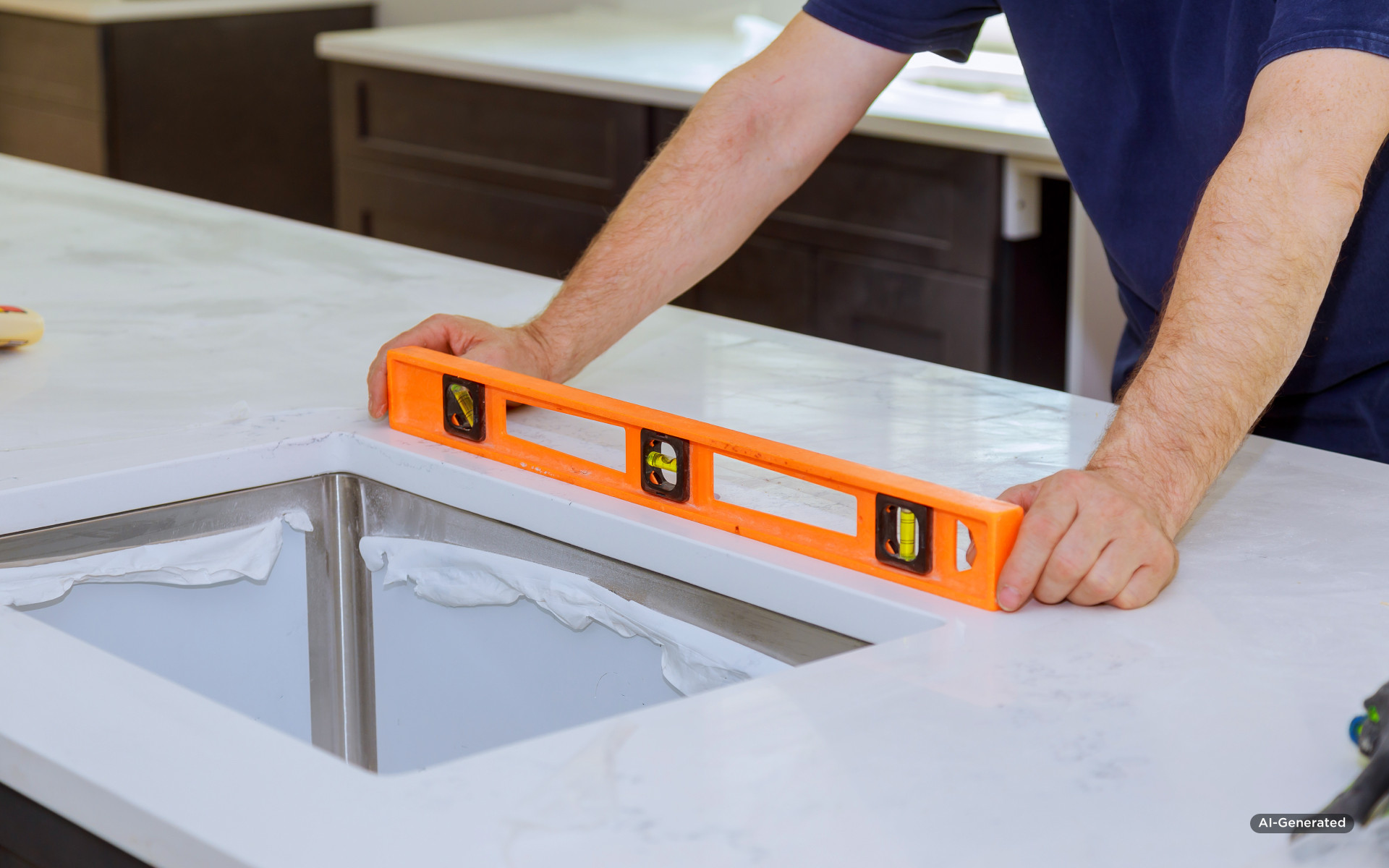
How much does a mistake cost?
Not just as much as the damaged board cost. The real cost of a mistake includes material, adhesive, and consumables, labour time, re-production, transport, potential disassembly and re-installation, and handling warranty claims. Added to this is a cost harder to calculate – delaying subsequent projects and the impact of a warranty claim on relationships with clients, designers, or furniture studios. Therefore, the profitability of solid surface processing should not be evaluated solely by board purchase prices. A workshop that works with repeatability and limits the number of reworks can achieve a better result on the same project than a company buying material at a similar price but losing labour hours on mistakes.
How to calculate a solid surface project?
The basis for pricing should be the full cost of execution, rather than solely the number of square meters of material used. The simplest model includes several elements. The first is material – the number of boards needed, taking into account actual cutting layouts and waste. The second is adhesive and consumables – abrasives, router bits, and other items consumed during processing. The third is labour. Not only cutting must be included, but also edge preparation, bonding, curing time requiring station occupancy, sanding, quality control, and transport preparation.
Added to this are measurement, transport, and installation, if they are within the scope of the order. It is also worth leaving a risk buffer, especially for unusual shapes, a large number of joins, or first implementations of a given type. Only the sum of these elements allows determining the execution cost and planning a margin. There is no single universal margin appropriate for every contractor. Its level depends on production scale, purchase prices, labour time, project complexity, and the scope of services provided. Any market benchmarks should therefore be treated as guidelines, with your own calculation of labour hour costs and material consumption serving as the foundation.
Renovation can be an additional service
Solid surface has another feature interesting from a business perspective – the surface can be restored. Scratches, local dulling, or part of surface damage can be removed through proper sanding and surface refinishing. The scope of possible repair depends, of course, on the nature of the damage and the specific decor. For a contractor, this means the opportunity to offer clients not only production and installation, but also subsequent service. This is of particular importance for commercial projects where surfaces are heavily used. In such cases, renovation can limit the need to replace the entire element and shorten surface downtime.
Training before the first order is an investment, not a cost
A low equipment threshold does not mean a low competency threshold. In solid surface, process repeatability is most important: proper cutting, joint preparation, bonding, sanding, making cutouts, and correct installation. Therefore, before starting regular production, we strongly recommend training employees and conducting a pilot implementation.
At Architype, we support contractors starting work with the GRANDEX brand at every step. We provide access to professional processing instructions and recommendations, help in matching adhesive colours, and supply free material samples. We also offer regular product training and workshops for our contractors, as well as advanced B2B technical support. Thanks to this, initial projects can be preceded by team preparation and technological trials, rather than learning new material only on a client job.
OSH must be factored in when organizing the workstation
Cutting, routing, and sanding composite generates dust, which is why an effective dust extraction system should be one of the fundamental elements of the station. Not only worker protection matters. Dust present in the bonding zone can also affect the quality of executed joints and increase the risk of defects. The workshop should therefore properly organise dusty operations, use effective local extraction, and personal protective equipment appropriate for the work being performed. When planning workstations, it is worth using current safety data sheets, our product instructions, and OSH requirements appropriate for the specific process.
Warranty: material and workmanship are not the same thing
In conversations with clients, it is worth clearly separating the warranty covering the material itself from the contractor's responsibility for proper fabrication and installation. Even the highest quality material can be damaged due to improper execution. A cutout error, lack of adequate support, improper bonding, or installation contrary to instructions are the most common causes of failure that are not covered by the standard board warranty. Therefore, it is crucial to document your own process, work according to our technical guidelines, and provide the client with instructions regarding surface use and care.
How to acquire orders for solid surface countertops and built-ins?
Mastering technology is only half of the business model. The second half is a steady flow of projects. For a joinery workshop, the first source can be existing clients. If your company makes custom kitchens, bathrooms, furniture, or commercial built-ins, solid surface can be introduced as another material option without having to build a new sales channel from scratch. The second direction is cooperation with kitchen studios and furniture manufacturers who want to offer premium countertops but do not intend to build their own processing facilities. For a specialised contractor, this can mean a steady stream of B2B orders.
The third source is architects and interior designers. Here, samples, knowledge of material possibilities, and readiness to consult more unusual details before ordering are particularly important. Another area is commercial projects – receptions, offices, catering establishments, bathrooms, medical facilities, or service spaces. In each of these cases, your advantage as a contractor is not only that you can buy a board from us, but above all, the capacity to carry a project from idea to a ready, masterfully fitted element.
What role do we play as a distributor?
Cooperation with us is much more than just supplying goods. We understand that when implementing new technology, samples, professional technical documentation, help in choosing the perfect adhesive shade for the decor, and substantive support during your first projects are extremely important. As the general distributor of the GRANDEX brand at Architype, we guarantee constant access to materials, training, and B2B technical support. What is very important – we build relationships. We agree the scope of cooperation, including support in finding retail clients and recommending your services to kitchen studios, individually with each partner.
What can step-by-step solid surface implementation look like?
It is safest to treat it as a gradual expansion of your workshop's competencies. At the beginning, evaluate your existing equipment and define what you genuinely lack to produce simple countertops. The next stage is getting to know the material, processing instructions, and principles of proper bonding. Then, order samples and material for tests, practise joints and sanding on offcuts, and execute your first pilot production. Only after achieving repeatable, satisfactory results is it worth accepting regular orders and expanding the scope of services to include more demanding challenges, such as integrated sinks or bending material under temperature.
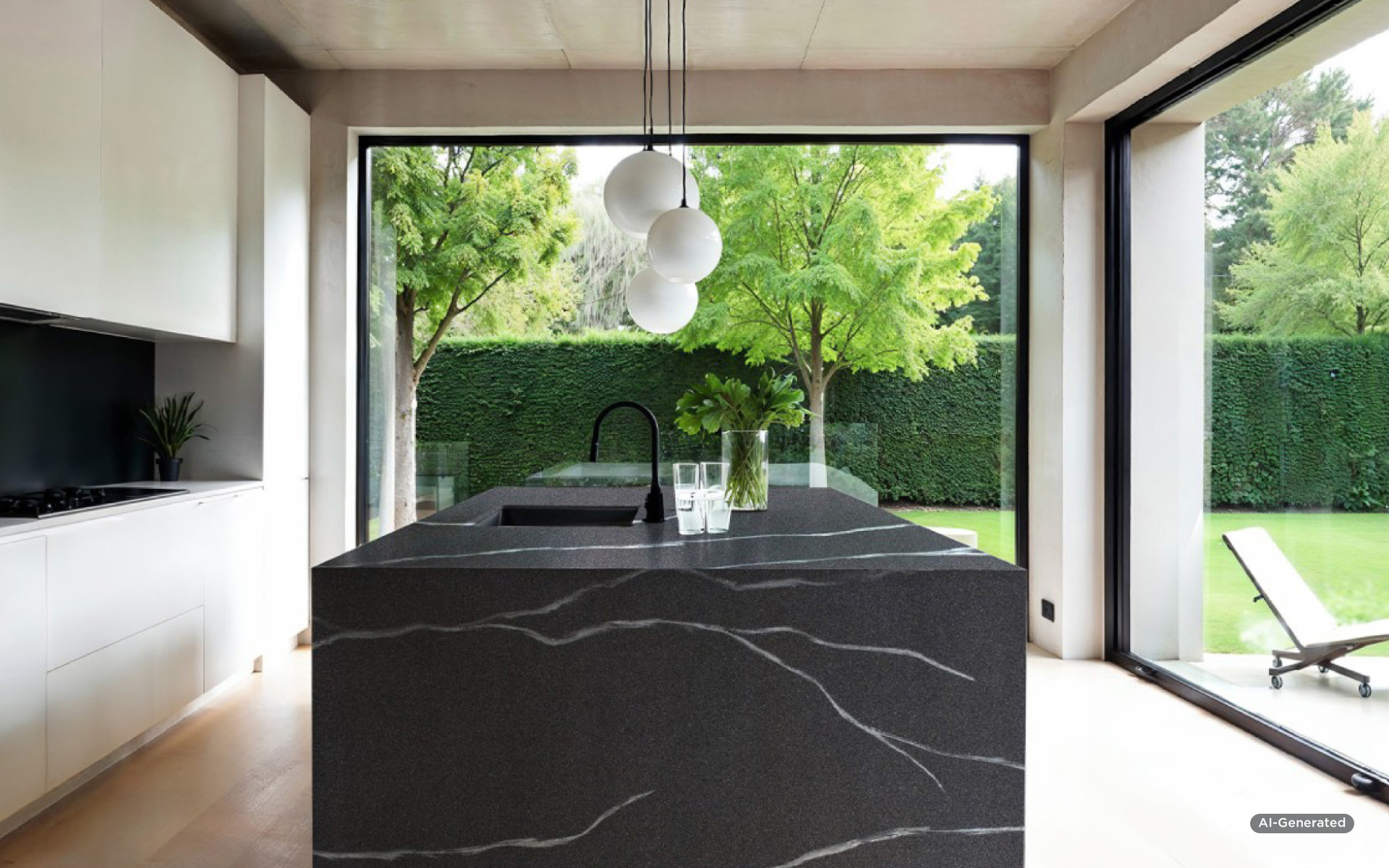
Can solid surface be profitable for a joinery workshop?
The greatest advantage of GRANDEX from a business perspective is the ability to utilise competencies that you already possess. Your company perfectly knows the specifics of working with board materials, can manage cutting layouts, has excellently mastered routing, sanding, and efficient installation at the client's site. Solid surface requires learning new principles of physics, but absolutely does not force you to build a classic stonemasonry workshop. It is an excellent way to increase the value of individual receipts.
Remember, however, that your financial profit will rarely be decided by the board purchase cost alone. The key to high margins will be faultless production, minimizing errors, precise calculation of labour hours, and a systematic funnel of orders. Properly implemented, GRANDEX material will quickly become the pride and asset of your workshop.
Become an Architype partner
If you are considering introducing acrylic stone processing into your company, take the first step with us. We will jointly analyse your workshop facilities and talk about technology. At Architype, we offer a full range of materials, free samples, and certified B2B instructions. We support contractors at every step so that implementation is safe, predictable, and – most importantly – profitable.
FAQ
1. Are stonemasonry machines needed to process solid surface?
It is not necessary to build a machine park typical for a stonemasonry workshop. Many basic operations can be performed using properly selected power tools used daily in joinery (e.g., efficient routers). The final set depends, of course, on the advancement level of your planned production.
2. How to bond solid surface?
Edges must be precisely prepared (routed), and adhesive dedicated to the specific material and decor number must be used to join them. Cleanliness of the workstation, proper clamping of boards, absolute compliance with curing times, and a correct sanding process with proper grits are also of immense importance for the invisibility of the seam.
3. Is solid surface training needed before starting production?
Practical training is definitely recommended. At Architype, we regularly organise professional product training and workshops dedicated to processing GRANDEX material, during which our experts teach proper cutting, bonding, making sink cutouts, and thermoforming.
4. What solid surface thickness is suitable for a countertop?
For worktops, we recommend a 12 mm GRANDEX board. 6 mm variants are dedicated to vertical cladding, lightweight fronts, and decorative accents (where low weight is more important than the rigidity typical for a horizontal surface).
5. Can solid surface be thermoformed?
Yes. GRANDEX composite becomes very malleable when heated to 150–170°C. The rest of the exact bending parameters depend, among other factors, on the bend radius and the decor properties.
6. How to calculate the cost of an acrylic composite countertop?
It is a mistake to calculate "by the metre". A safe quote is the sum of full costs: purchased boards (including unused waste), the adhesive system and abrasive accessories, full labour hours spent on preparing elements in the workshop, travel, carrying in, installation, and a small buffer for rework.
7. What are the most common mistakes in solid surface processing?
The most dangerous consequences come from ignoring the material's thermal expansion (lack of so-called expansion gaps, which results in the countertop cracking). Common defects also include: incorrect (too sharp) cuts in the corners of sinks/hobs, poor choice of supporting frame, and skipping technological trials before complex bends.
8. Where to acquire orders for solid surface?
The target group includes both your existing clients for custom kitchens and furniture studios without their own countertop processing capacity. We, as a distributor, also support our authorised contractors through individualised lead generation programmes.
Share:


Other publications
All publications
Large-format sintered stone in ventilated facades – an architect's guide to design, details, and specification
References

The future of the stone industry and interior design. Which trends will dominate 2027?
References
How to show a client the difference between laminate and quartz: From showroom to installation
References