


The future of the stone industry and interior design. Which trends will dominate 2027?
References
The only constant is change – the words of Heraclitus of Ephesus are incredibly universal and fit many contexts, including the realities of the stone and interior design industries. The world of design and architecture is in a phase of intensive transformation, and the directions of development in production technologies and interior aesthetics are accelerating at an unprecedented pace. To set standards and provide materials ahead of their time, simply following industry publications is not enough. The Architype team regularly takes an active part in the most important international events – from the prestigious Marmomac natural stone trade fair in Verona, through the inspiring Warsaw Home Kitchen, to the leading international exhibition of ceramic tiles and bathroom furnishings, CERSAIE. It is there, during backstage discussions with top designers and manufacturers, that the future crystallises. Based on these direct observations and gathered experiences, we have prepared a comprehensive overview of what will be fashionable in 2027 in interiors and the stone industry itself.
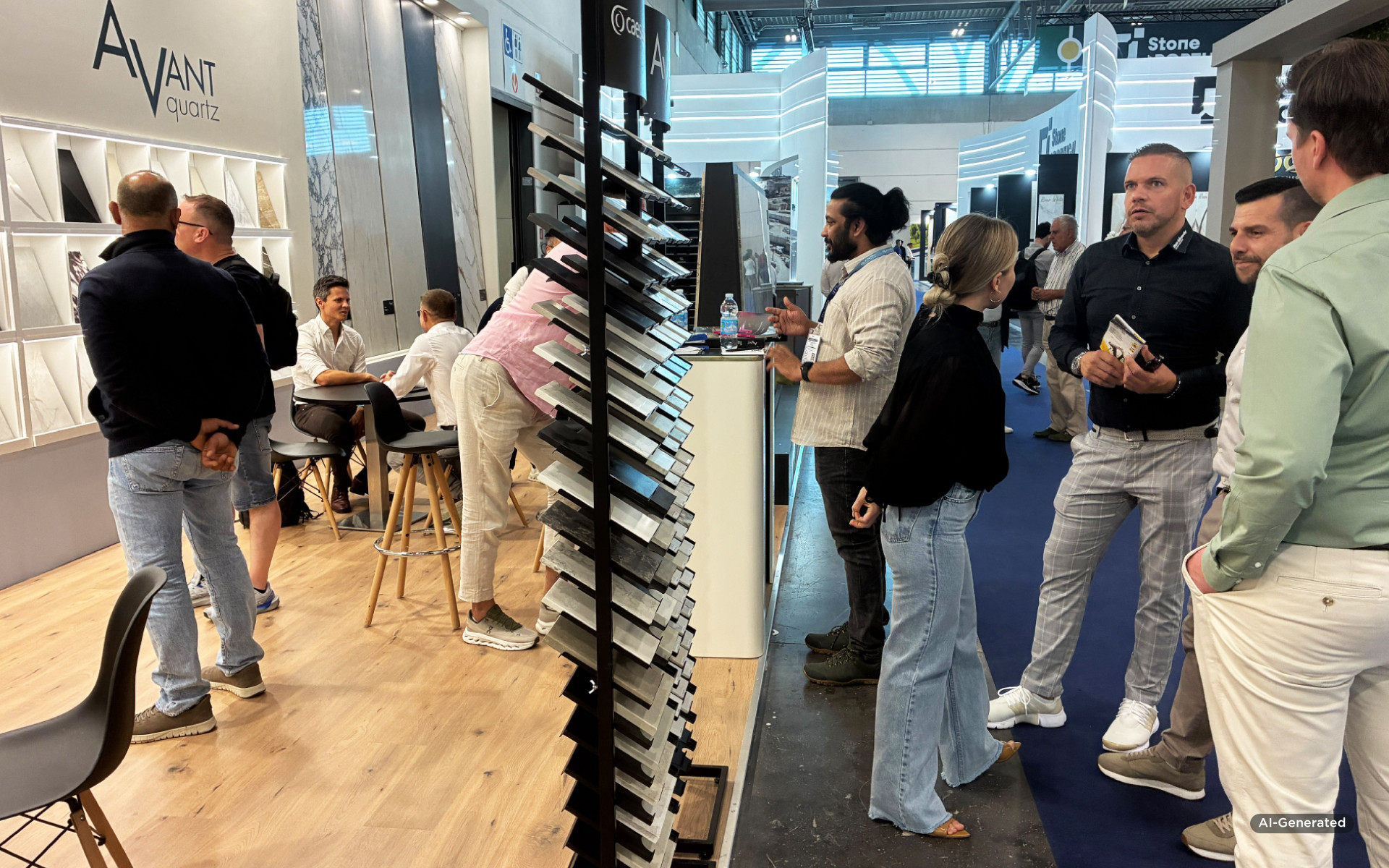
What will be fashionable in 2027 in interiors? The end of cold minimalism
We are approaching the definitive end of the era of passionless, sterile minimalism, which has dominated catalogues and social media for years. Interior design for 2027 is heading in a direction where every space we inhabit is meant to evoke specific, positive emotions and serve as a true sanctuary for us. The home will once again be defined as a place that, on the one hand, allows for deep relaxation, and on the other, inspires creative action.
The key word of the coming seasons is becoming haptics. Luxury goes beyond the sense of sight, shifting the emphasis to the sense of touch. Architects are moving away from perfectly smooth, cold surfaces in favour of materials that encourage physical contact. Interiors will feature increasingly more surfaces with a distinct, structural finish, brushed wood with a highly palpable grain, and thick-weave fabrics. Natural stone Scalla Naturale, the Keralini large ceramic slab, and the Avant Quartz quartz surface also fit perfectly into this sensory trend.
Soft geometry and hidden technology, or the evolution of detail
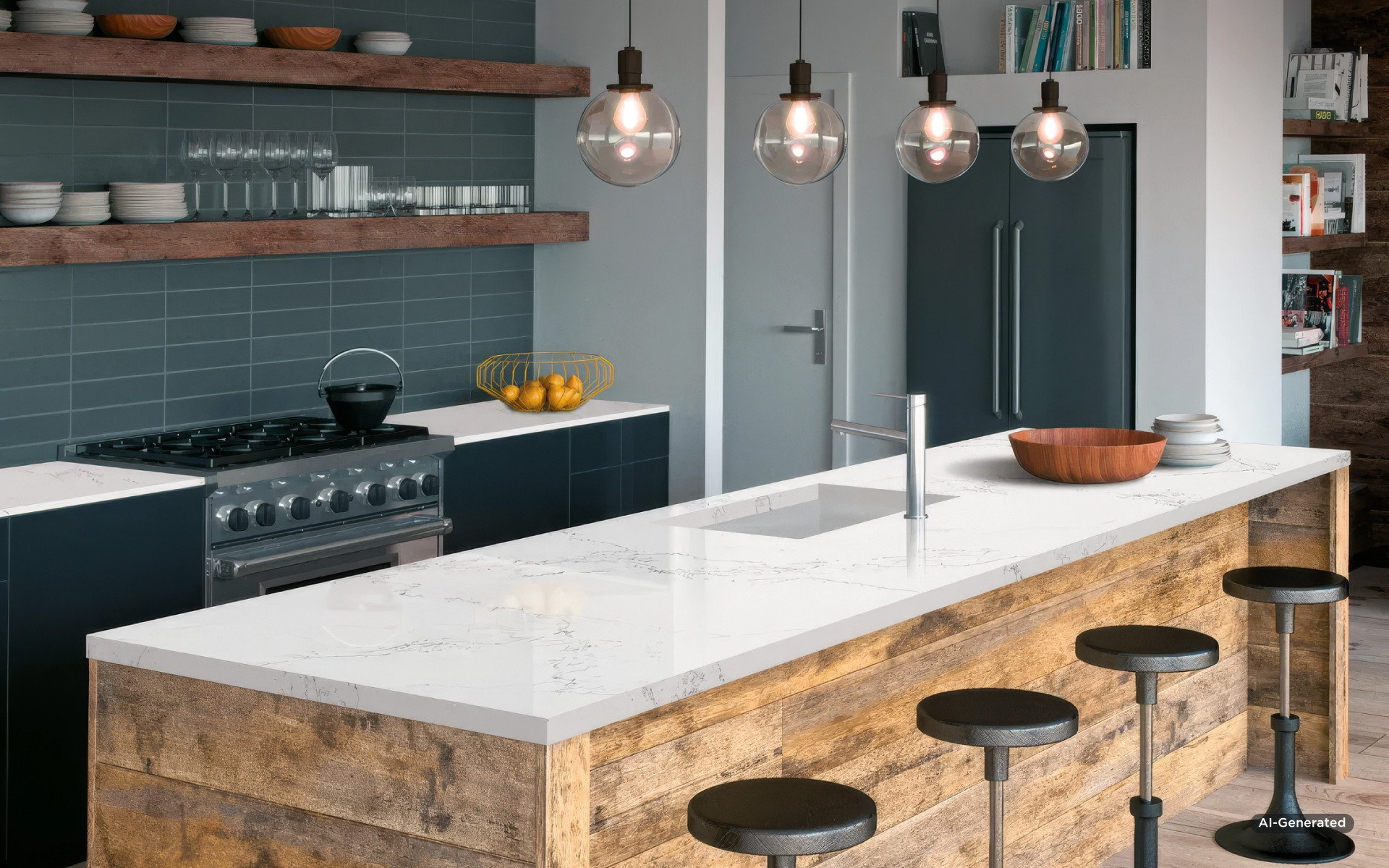
Another significant phenomenon shaping modern interiors in 2027 is Soft Geometry, which means introducing curves and fluid lines into projects. Sharp, aggressive edges and angular forms are giving way to gentle arches, rounded kitchen islands, and oval tables. Such an approach makes the space friendlier, safer, and visually harmonious. Combining massive materials, such as stone, with soft forms produces a spectacular effect of effortless elegance. An excellent answer to these design challenges is the GRANDEX acrylic solid surface. Thanks to thermoforming technology, this material becomes malleable under high temperatures, which allows it to be freely shaped into rounded, bent, and the most unusual forms. This gives architects almost unlimited possibilities in creating fluid, organic realisations that perfectly align with the principles of Soft Geometry.
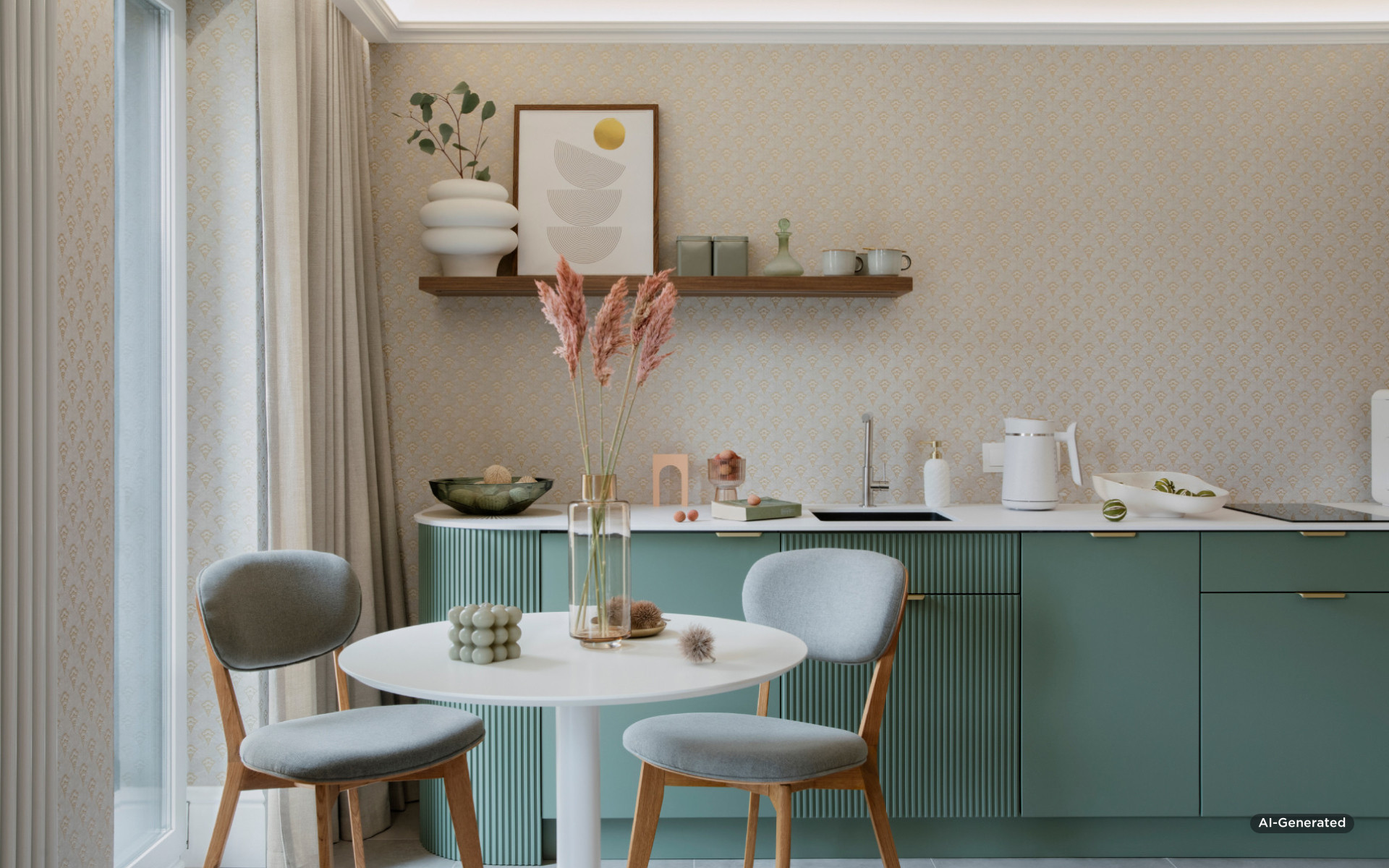
This is accompanied by the development of Silent Technology. Technology in a modern home is meant to be ubiquitous but invisible to the eye. Instead of exposing cables and equipment, designers integrate them with natural materials. Stone countertops with built-in inductive charging modules or sound systems hidden within the architecture of furniture are solutions that allow one to enjoy digital conveniences without disrupting the organic character of the interior.
Trends in natural stone for 2027. What sets the new directions?
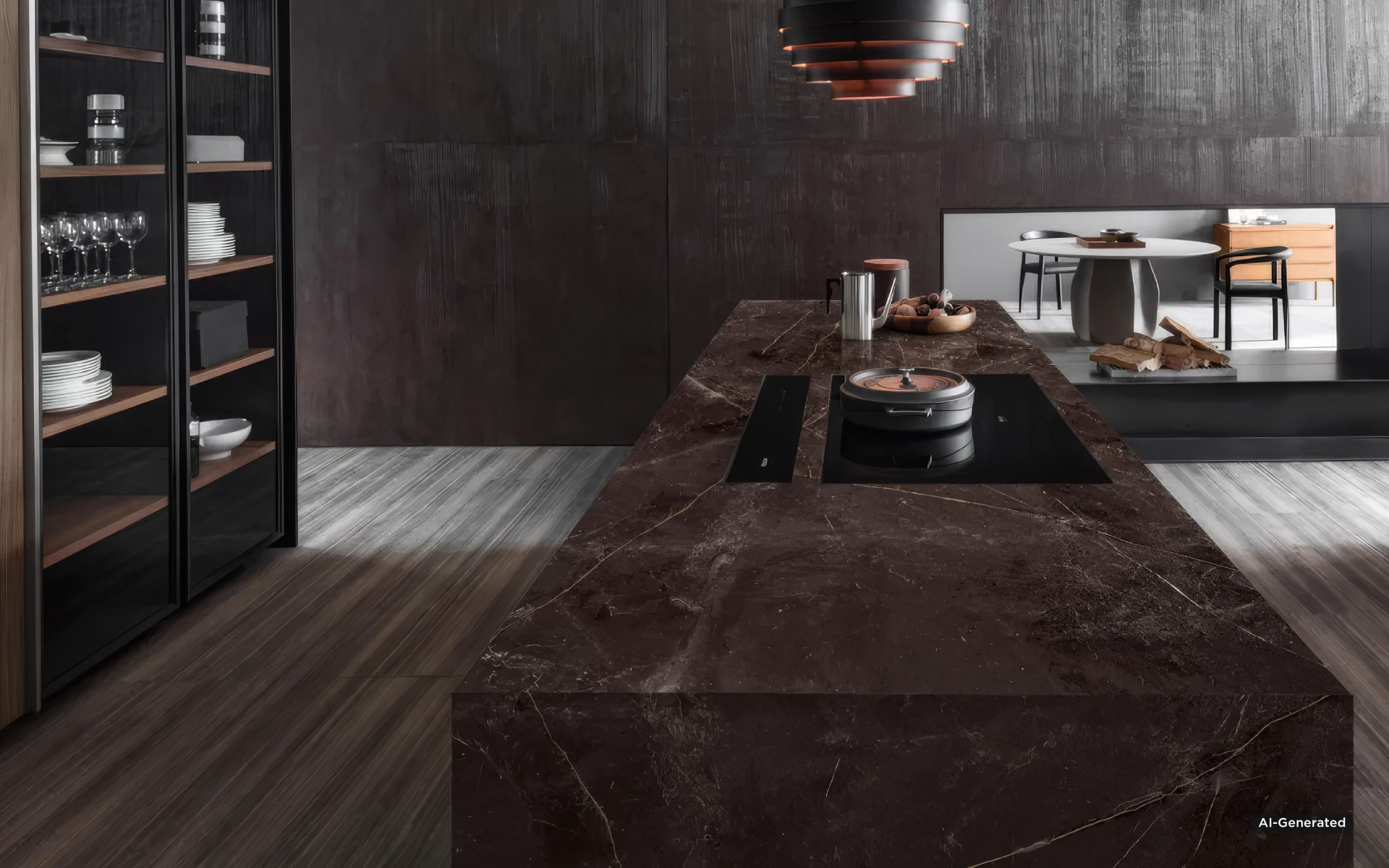
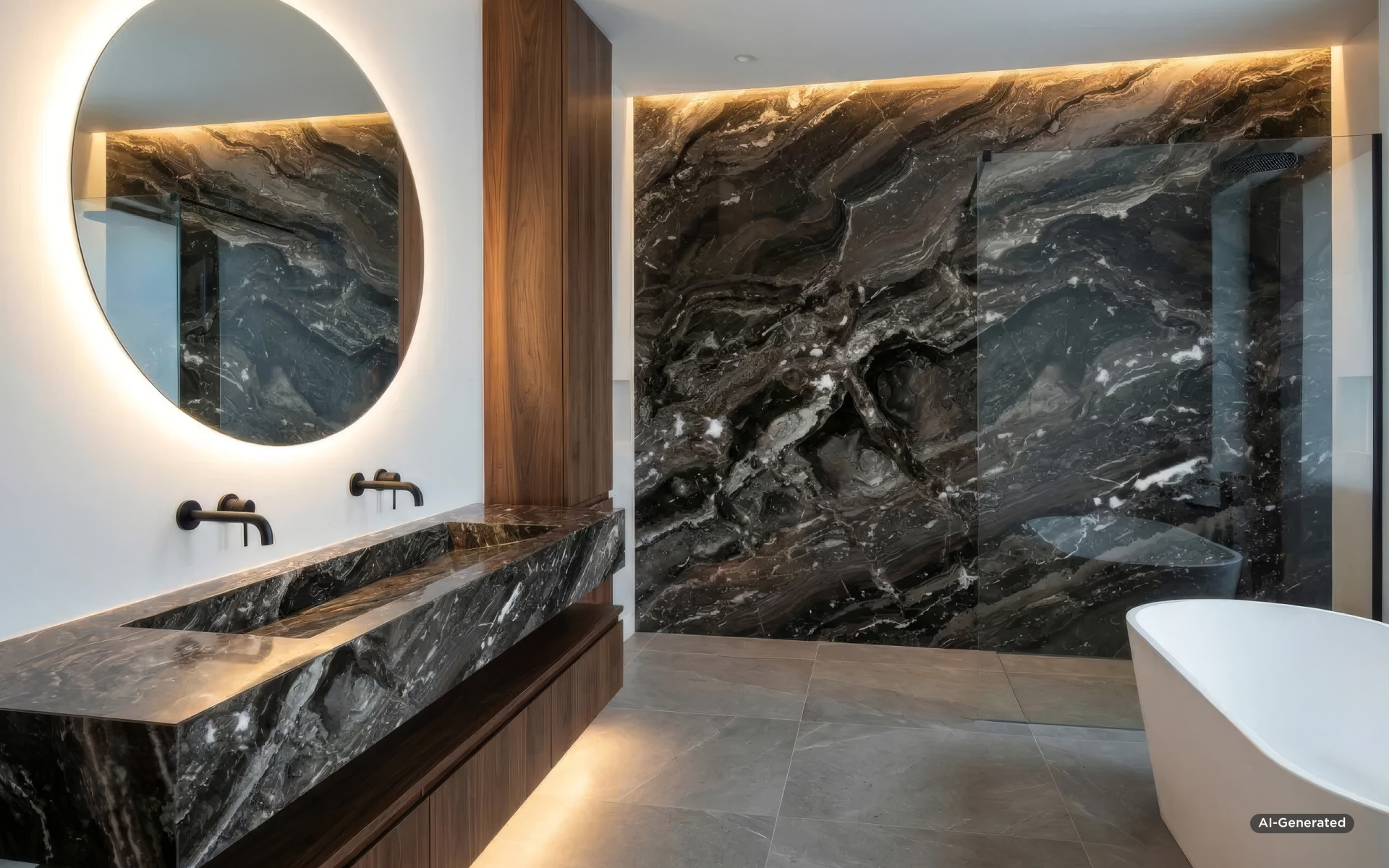
From our observations gathered at international trade fairs, it is evident that stone is no longer treated solely as a finishing material. It is becoming a fully-fledged architectural element that organises and defines the entire space. Instead of limiting themselves to small accents, designers are opting for large formats. Large-format slabs allow for the creation of phenomenal, monolithic surfaces with a minimal number of joints, ensuring the natural veining pattern remains uninterrupted.
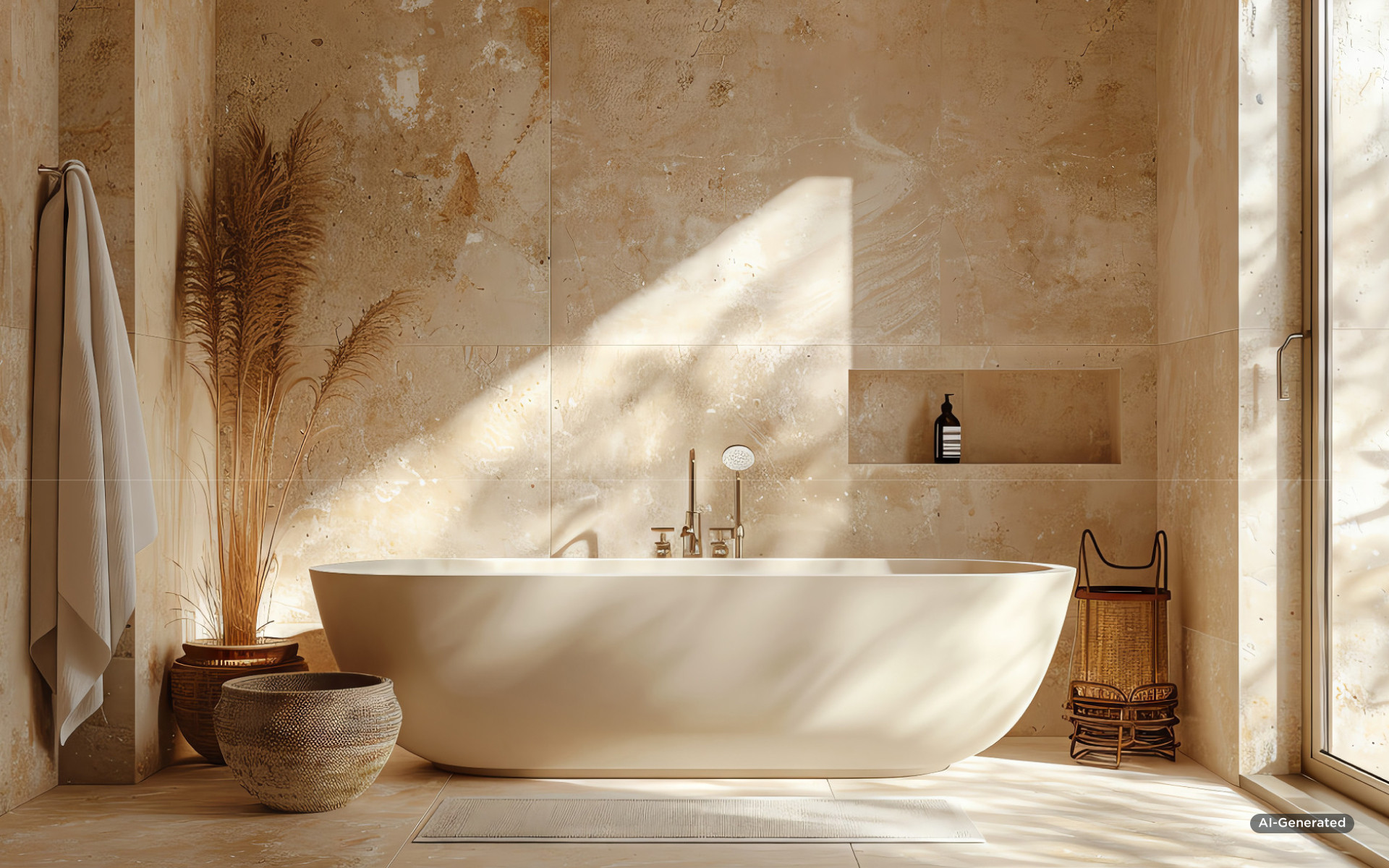
The resurgence of travertine is set to be a major highlight for the upcoming seasons. Having taken a back seat in recent years, this classic stone is rapidly climbing the ranks of the most desired materials for new architectural projects. Its distinctive, porous texture perfectly answers the growing demand for authentic, sensory-rich environments, bringing a unique Mediterranean warmth to any space.
Earth tones and bold contrasts in modern arrangements
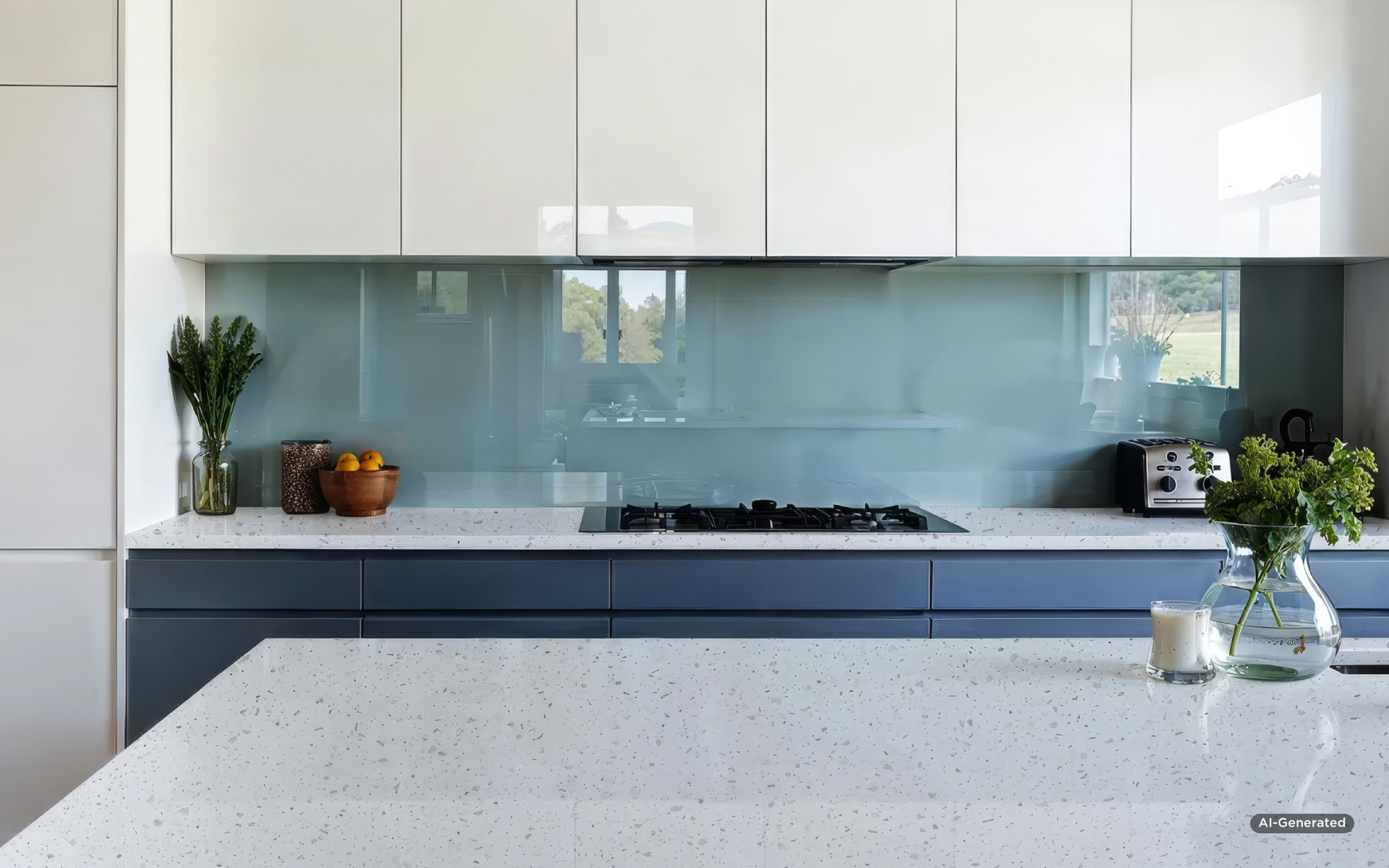
When it comes to 2027 colour palettes, expect a more liberated approach to layering hues. While serene, warm beiges, sandy tones, and earthy shades will continue to form the foundation of modern interiors, the upcoming trend shifts towards bold contrasts. To break up visual monotony, neutral backgrounds are being paired with vivid, unexpected accents. During recent industry events, accessories in shades of blue, olive green, and deep burgundy were clear standouts.
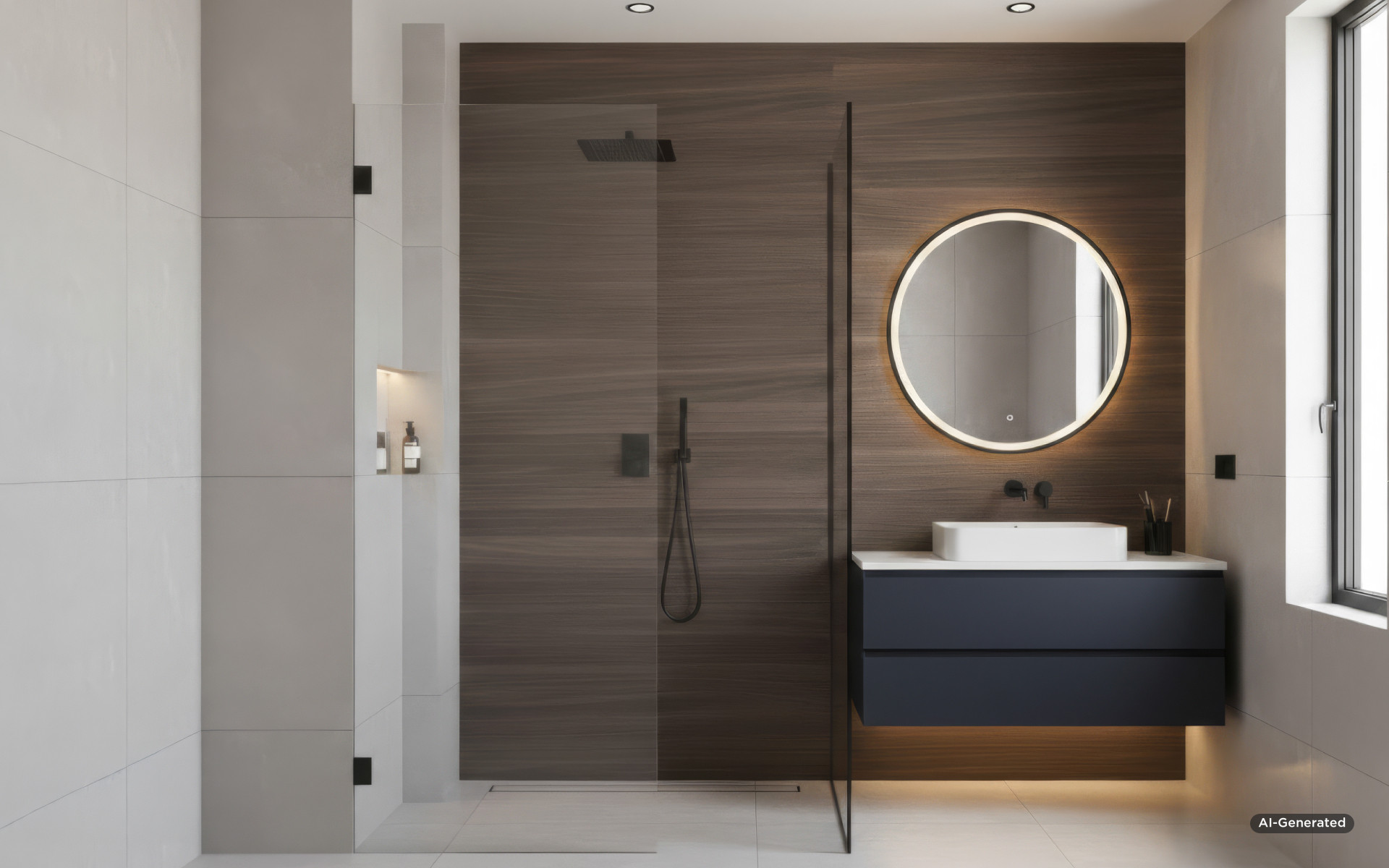
The position of stones with dark, expressive colouring is also not weakening. Materials inspired by deep black or graphite serve as a perfect counterpoint for bright surfaces and work brilliantly in combination with warm light, metal, and glass. Contrasting stone with natural wood allows for achieving a balance between a cold, mineral surface and organic softness. It is worth noting, however, that stone does not have to be paired exclusively with natural raw materials. An excellent alternative are its faithful, high-class imitations, available in the Architype range – including decors from the KRAFFTEN and Puricelli brands. Natural wood, despite its undeniable beauty, has a number of limitations and requires time-consuming maintenance, such as regular impregnation, varnishing, or oiling, which precludes its use in many projects. Our technological wood substitutes solve this problem. Depending on the selected material, they offer specific resistances: moisture-resistant compact HPL is an excellent choice for wet zones, while Puricelli N.EXT can be safely used outdoors and in places exposed to strong sunlight and temperature fluctuations thanks to its UV resistance. This provides much broader arrangement possibilities, allowing one to enjoy the aesthetics of wood where the use of real boards would be impossible or too troublesome to maintain.
Niche stones and comprehensive personalisation of luxury
The expectations of premium segment investors are changing. Clients are looking for unique solutions that will highlight their individual style. Standard, mass-available materials are increasingly being replaced by niche stones, e.g., rare varieties of granites, quartzites, or marbles, characterised by a unique colour and unrepeatable vein pattern. These are true treasures of nature, which become small works of art in the hands of experienced craftsmen.
This phenomenon goes hand in hand with the trend of comprehensive personalisation of the entire home. Companies like Architype offer cohesive material concepts, where the same or a few perfectly matched stones transition smoothly from kitchen cabinetry, through stair treads, all the way to bathroom cladding and integrated, milled washbasins. This approach allows for the creation of an absolutely unique space, tailored to the ergonomics and aesthetic requirements of the household members.
Ecology and sustainable development. Zero Silica technology
Durability and aesthetics are not enough today. The modern investor asks about the material's impact on the environment. Sustainable design is becoming fully measurable, and issues such as carbon footprint or resource efficiency are gaining crucial importance. In the European space, there is increasingly loud talk about occupational safety and ecology in the context of production. The push for materials with minimal crystalline silica content is becoming a central theme in European design and manufacturing conversations. At Architype, we are actively responding to this shift by offering advanced solutions that align with the industry's sustainable and health-conscious development.
Zero Silica technology, meaning the special NEO CRYSTAL line belonging to the palette of Avant Quartz quartz surfaces (in which the crystalline silica content has been reduced to below 1%), stands out in terms of ecology with recycled materials (from 30 to 80% of materials for the production of slabs comes from recycling), the recycling of as much as 99% of the water used in the production process, and the use of renewable energy sources. This solution also represents a significant step forward in health protection. Reducing the silica content significantly reduces exposure to crystalline silica dust during processing, protecting the respiratory system of stonemasons. Ultimately, however, it is the target users of the interiors who benefit most from this innovation. NEO CRYSTAL slabs are characterised by trace emissions of volatile organic compounds (VOCs), as certified by GREENGUARD Gold, which certifies low VOC emissions in private and commercial spaces.
Smart production. How is the digital revolution changing stone processing?
Even the most extraordinary stone requires precise processing. The future of stonemasonry is based on the integration of traditional craftsmanship with advanced technology. The digitalisation of production processes allows for a significant increase in precision, cost optimisation, and the reduction of valuable raw material waste.
The use of CAD and CAM software enables the creation of accurate, three-dimensional cutting models, thanks to which the designer and the client can visualise the final effect even before any intervention in the material. The application of advanced CNC machine tools, robotic arms, and waterjet cutting technology allows for the realisation of even the most complicated projects, including rounded forms and integrated elements. Furthermore, intelligent algorithms (including solutions based on artificial intelligence) can automatically optimise the slab cutting plan. The system independently analyses the vein layout and bypasses natural stone imperfections, which substantially increases the percentage of full material utilisation and accelerates the execution of orders.
Our presence at the most important global trade fairs and continuous tracking of innovations allow us to look to the future with optimism. Thanks to the combination of stunning natural materials (and their excellent technological substitutes) with state-of-the-art digitalisation, the stone industry has years of dynamic development ahead of it, and we at Architype are ready to realise this development for you. Subsequent industry events are therefore not only a place to exchange experiences and draw invaluable inspiration but also confirmation that we are constantly moving in a good direction, aligned with the transformations that the stonemasonry, architecture, and interior design market is undergoing.
The knowledge we bring back from the global design capitals is, for us, primarily a tool that we want to share with you. Our team of advisors keeps a finger on the pulse of the latest trends and will be delighted to advise on what currently reigns in the industry. We invite you to contact us – we will gladly advise and help you select materials that will make a given project not only beautiful and functional but also perfectly fit into the architecture of tomorrow.
FAQ – The future of interiors and trends in the stone industry for 2027
What interior trends will be fashionable in 2027?
In 2027, we are moving away from cold minimalism in favour of haptics, sensory textures, and so-called soft geometry. Interiors are meant to evoke positive emotions and constitute a true, cosy sanctuary.
What colours will dominate interior arrangements in 2027?
The foundation will be warm earth tones, beiges, and sand shades, boldly contrasted with expressive accents. Blue, olive green, deep burgundy, and dark, contrasting stone materials will be in fashion.
Which natural stone to choose for a modern interior?
Travertine, with its unique, porous structure, is returning to favour, as are exclusive niche natural stones with unprecedented patterns and colours. Designers are also opting for large-format slabs, creating monolithic, almost seamless surfaces.
What to substitute natural wood with in demanding zones?
High-class imitations available in the Architype range offer excellent alternatives that do not require time-consuming impregnation. For wet zones, moisture-resistant compact HPL (such as KRAFFTEN or Puricelli) performs perfectly, while Puricelli N.EXT offers UV and temperature resistance for outdoor applications or areas exposed to strong sunlight.
What is Zero Silica technology in stone production?
It is an innovative production process for natural stone substitutes (e.g., Avant Quartz quartz surfaces from the NEO CRYSTAL collection), in which the crystalline silica content has been reduced to below 1%. This significantly reduces exposure to crystalline silica dust for stonemasons and achieves GREENGUARD Gold, which certifies low VOC emissions for indoor spaces.
How is artificial intelligence changing stone processing?
Digitalisation and AI algorithms automatically optimise the slab cutting plan, minimising waste and precisely matching the layout of veins. Thanks to advanced CNC machines, it is possible to create complicated, rounded shapes with millimetre accuracy.
Share:


Other publications
All publications
How to show a client the difference between laminate and quartz: From showroom to installation
References
Architype at Marmomac 2026. Backlit novelties, the return of travertine, and a look at the trends
References
Where to buy large-format sintered stone for the bathroom with high stain and water resistance? A guide to selection and purchase
References