



Backlit quartz stone - discover decors where light becomes part of the material
References
Quartz stone is usually thought of as an opaque material. Three decors from the Avant Quartz collection prove otherwise. Although they retain the full strength and practicality of a traditional composite, models 5900 Patagonia Brive, 8950 Chablis, and 9172 Blave transmit light when lit from below or behind. This makes their pattern read in a completely new way, opening a different set of design possibilities for architects. The material ceases to be just a work surface, and becomes a tool for creating a unique atmosphere of a space.
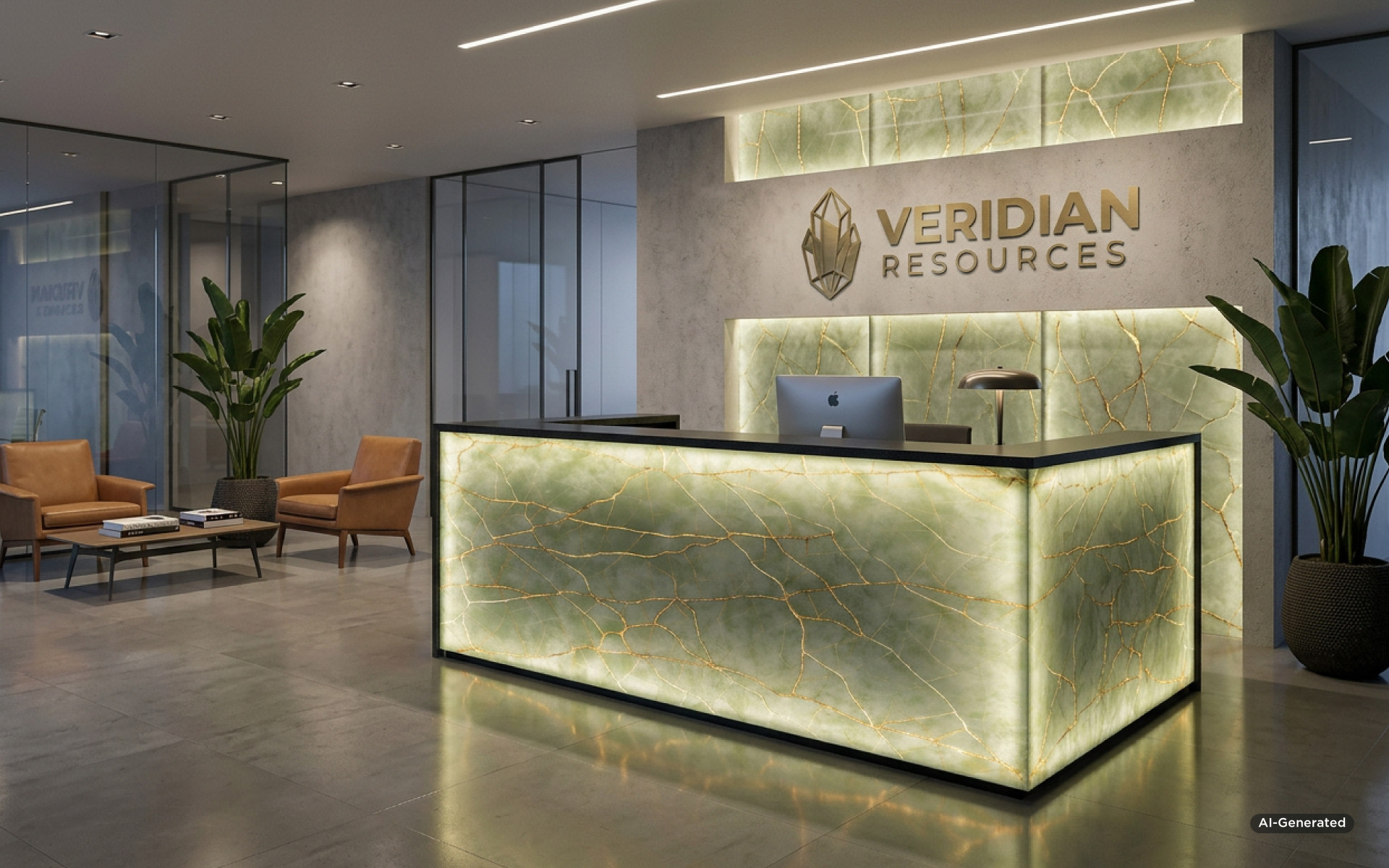
What happens under backlighting?
Standard quartz produces an even, milky glow when backlit. Light passes through it uniformly, without highlighting the veining pattern or natural mineral inclusions. These three decors behave completely differently.
Where the material is denser, the light stream is held back. On the other hand, where there are mineral inclusions or structural veins - it refracts and scatters. The layered build of the slab, invisible under daylight, comes forward, giving the surface a depth that was not there before.
By day, the material works as a classic worktop or a wall panel with an expressive pattern. In the evening, when internal backlighting is turned on, the same piece takes on an entirely different quality. This happens without any additional finishing - it is pure physics and a unique interaction with light.
Overview of decors recommended for creative projects using backlighting
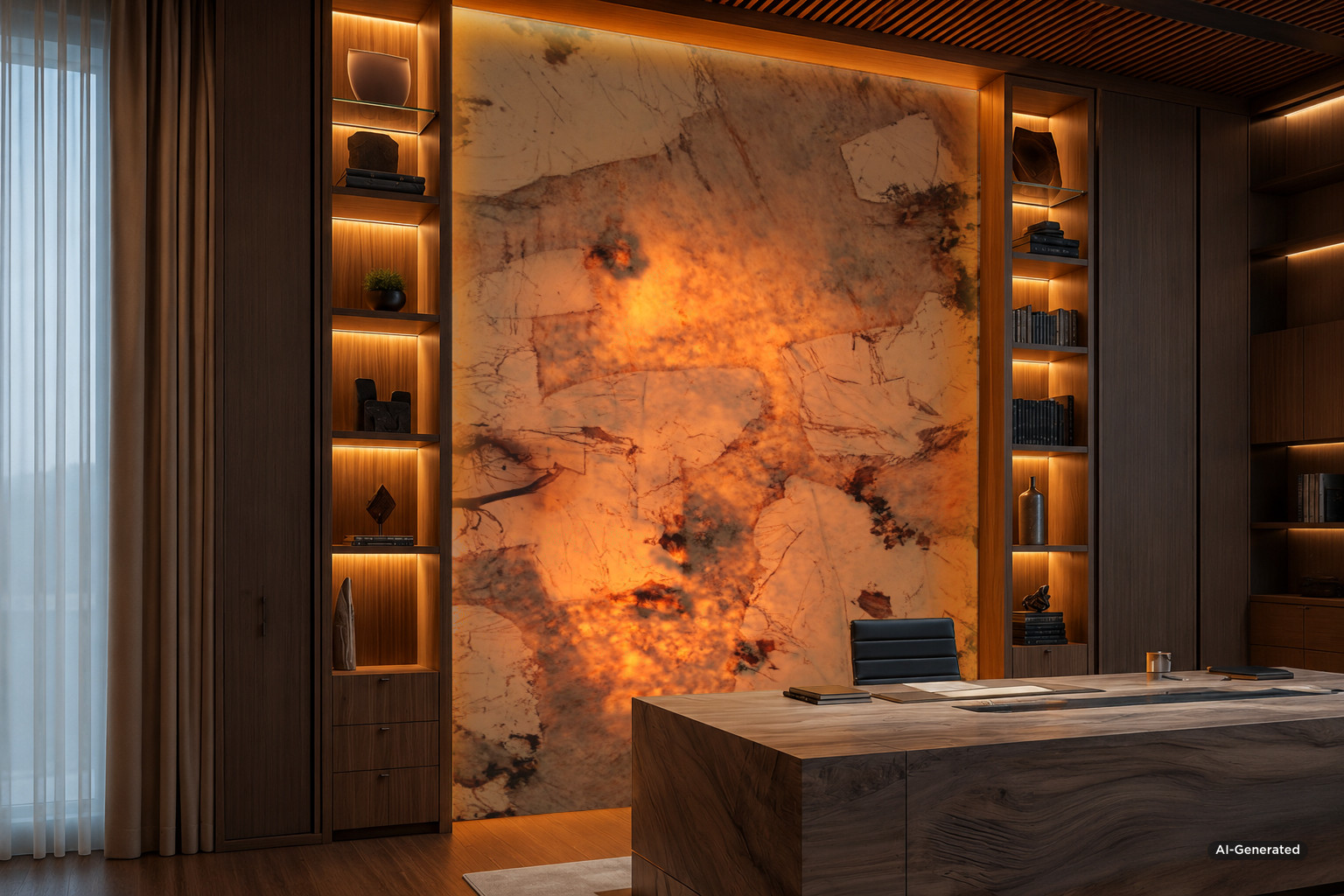
This decor belongs to the Digital Print series and carries the Full Body designation. This means that the pattern runs through the full thickness of the slab, instead of remaining only on the surface. Under backlighting, there is therefore no risk of an "empty base" effect beneath the pattern. The structure reads the same on the surface, the edges, and the cuts. A warm cream and beige background carries large angular crystalline fragments of varying size. Ochre and rust zones are scattered across the slab, together with dark brown and black mineral flecks. These are what create the impression of interacting with a genuine stone, rather than just its imitation. The pattern is asymmetric and unpredictable, with no visible repeats. Under ordinary lighting, it is a rich, living surface with a strong natural character. When backlit, the warm tones deepen, the rust and brown inclusions begin to glow from within, and a spatial three-dimensional effect opens up between the crystalline fragments. This effect looks most spectacular on large formats: on a kitchen island lit from below, or an accent wall with even LED panels behind the slab.
Recommended applications: lofts, private bars, spa areas, and restaurant interiors where the material sets the tone for the entire space.
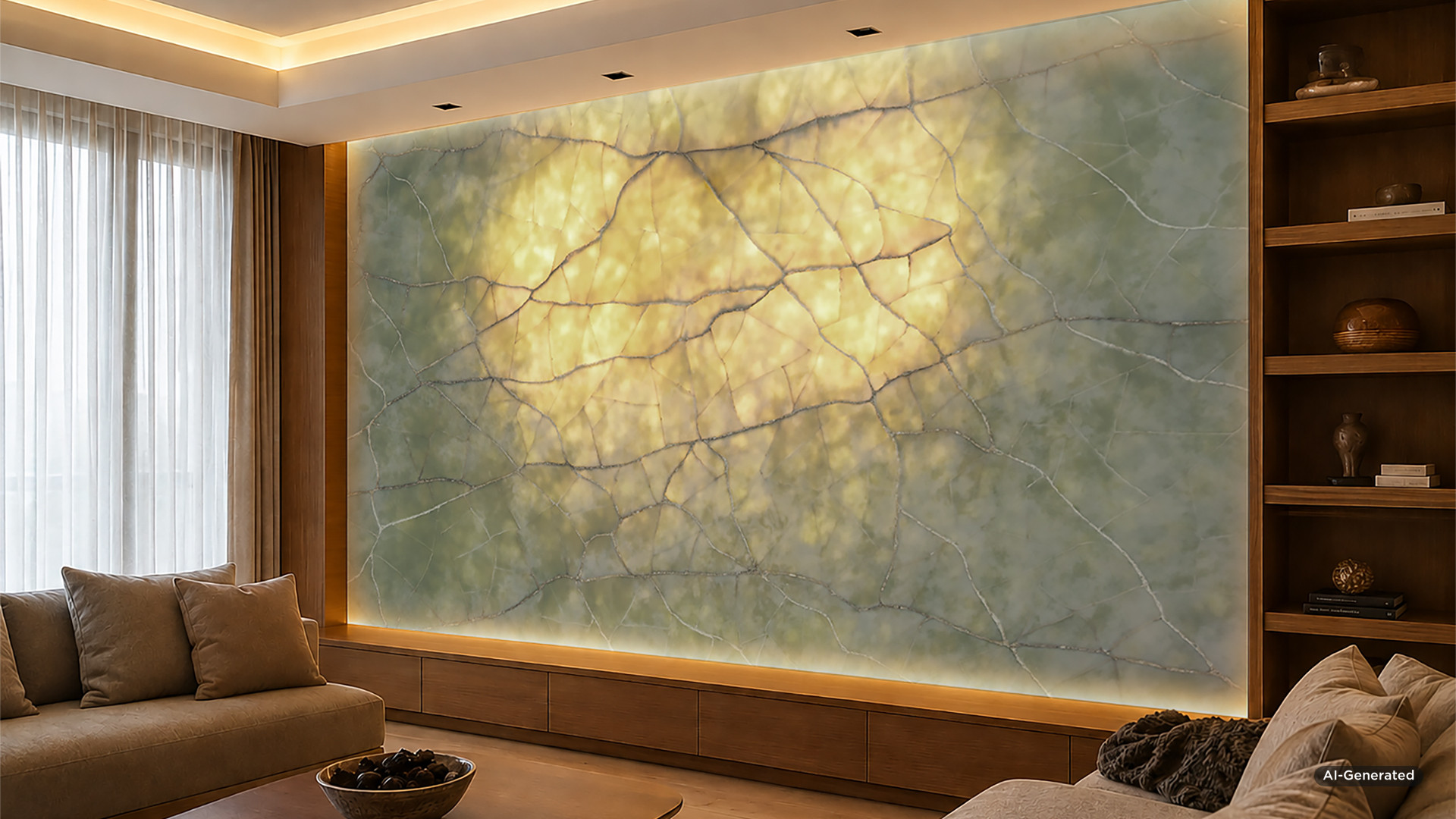
Chablis belongs to the Oxide collection, a series of decors with oxidised tones and saturated mineral colours. A sage-green background is overlaid with a dense network of organic gold and bronze veins. They run horizontally and diagonally across the slab, forming closed sections of different sizes that recall a natural craquelure. The background is uneven, with the green smoothly shifting from grey-green to olive across different parts of the slab. Under ordinary lighting, Chablis has a very specific character. It is a decor with a recognisable colour and a complex pattern that is hard to mistake for anything else. When backlit, the green background gains depth and a cool translucency. The gold veins produce their own reflection, reinforcing the impression of the network structure. Under warm light at 3000 to 3500K, the green takes on an amber undertone and reads warmer. Under cool light at 5000K, the green sharpens and becomes more mineral in feel.
Recommended applications: accent panels, bar counters, cladding in spa and wellness spaces, and non-standard design projects that call for a strong colour statement.
Blave belongs to the Marble collection. A light cream, almost white background carries faint warm horizontal strokes and thin linear inclusions. The pattern is very restrained. The surface reads as calm and uniform, without sharp accents. On closer inspection, the internal structure of the material becomes visible, characterized by fine layers of differing density. When backlit, Blave gives the softest and most even effect of the three decors. Light passes through it smoothly, without abrupt accents. The surface takes on a milky warmth and a subtle depth. The effect, although subtle, is perfectly visible: the material stops being "just white" and gains tridimensionality. Under warm light at 3000 to 3500K, Blave becomes particularly soft and warm.
Recommended applications: office and hotel receptions, backlit niches, decorative panels in bathrooms and bedrooms, and relaxation zones. It is the most versatile of the three decors when it comes to pairing it with other materials and interior colours.
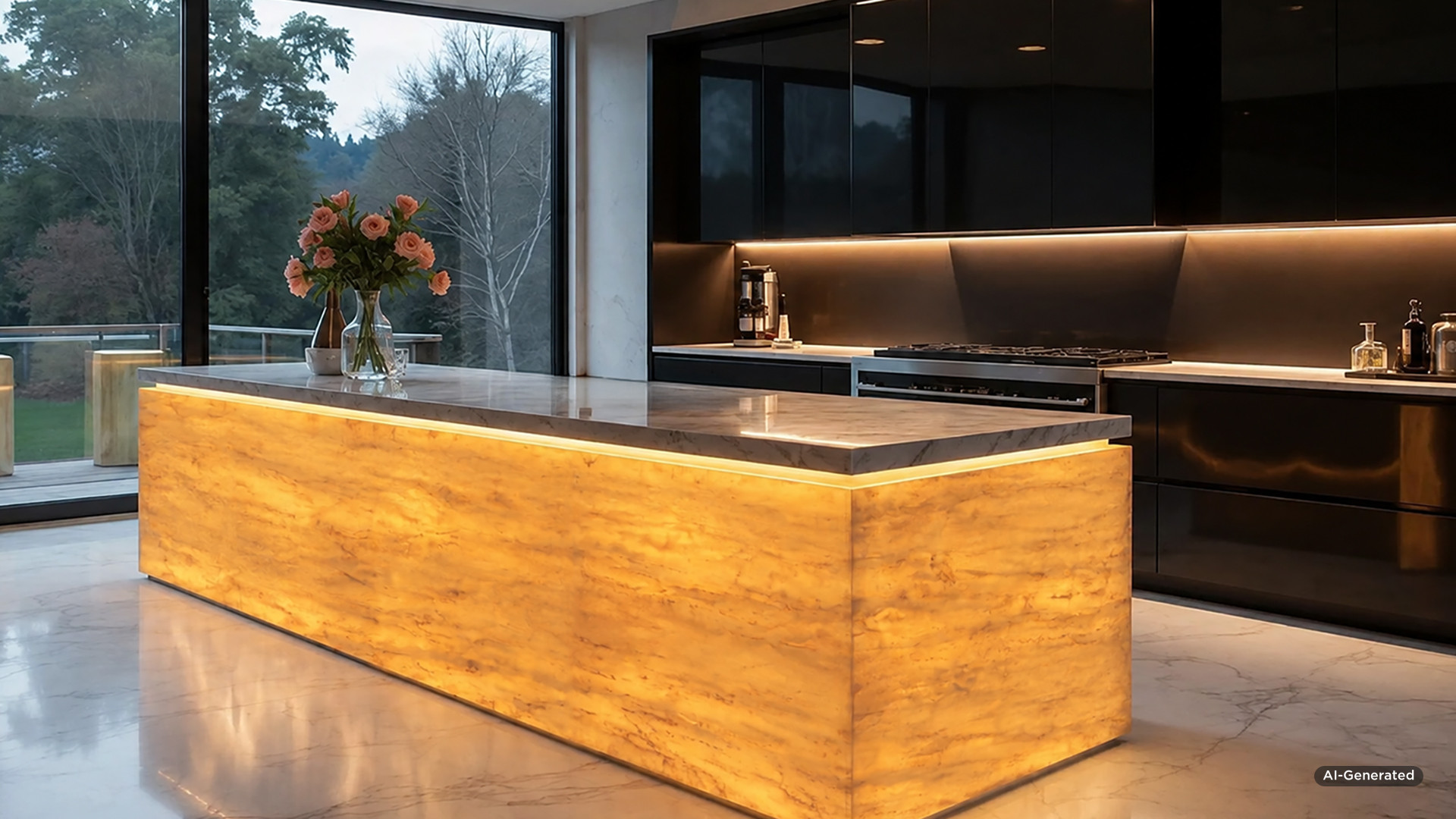
Applications of backlit quartz stone decors in interior design
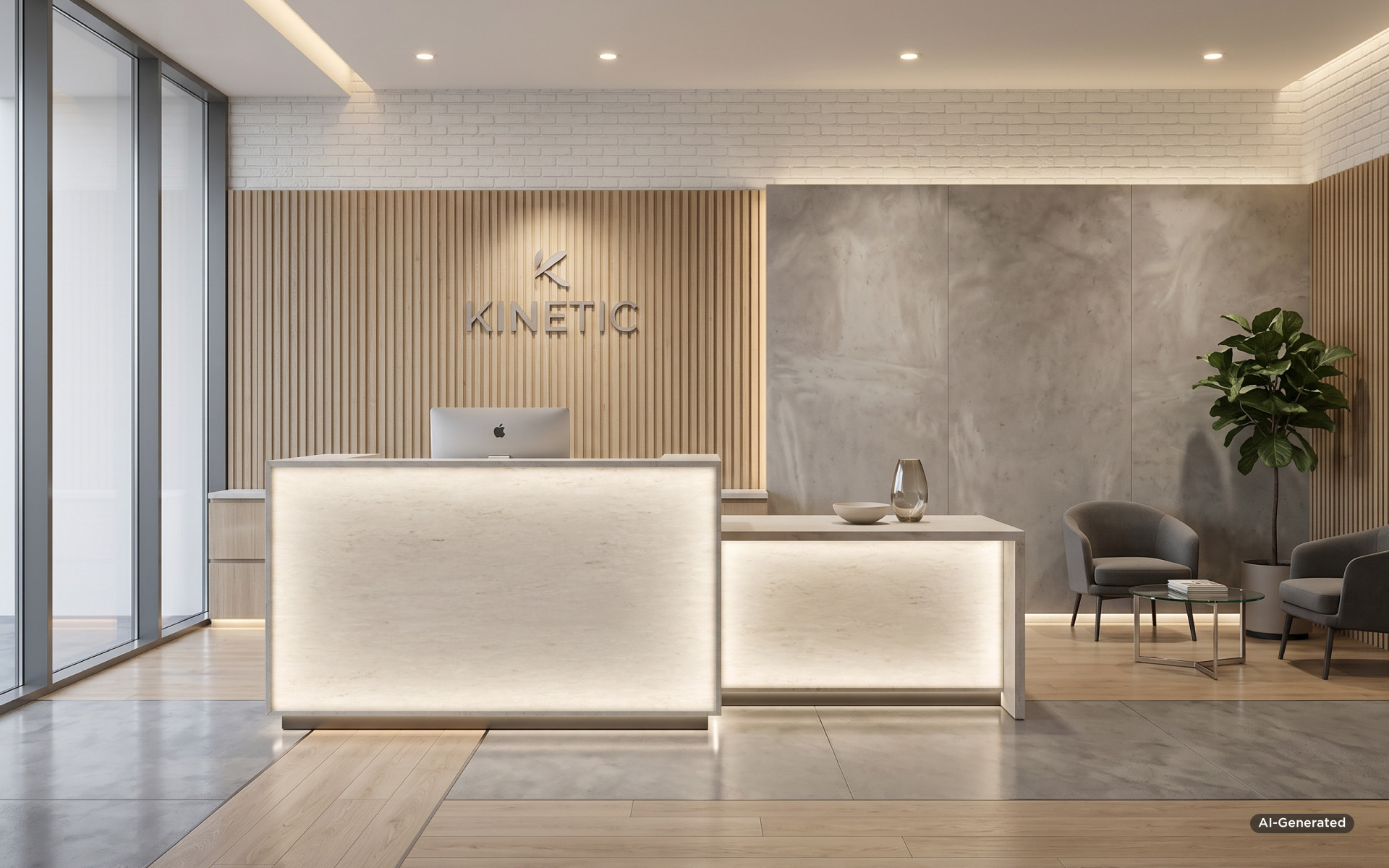
The ability to transmit light opens design applications that are not available to standard quartz stone. Bar counters with internal LED lighting turn the material into part of the scenography of a space rather than just an ordinary worktop. Accent walls or panels with even backlighting gain depth even in daylight. Backlit niches and shelves let the material interact with light at specific points. As for partitions - where a slab stands between two zones, backlighting it from one side gives a soft, diffused light effect on the other side.
All three decors retain the standard technical properties of the Avant Quartz brand: hardness, scratch resistance, water resistance, and a non-porous, hygienic surface. The material is certified for use in residential interiors, public venues, and medical facilities. Backlighting is not, however, a requirement. Under ordinary lighting these are fully functional, high-quality quartz surfaces with no limits on use.
Technical notes for fabrication and installation
- Slab thickness. It directly affects the intensity of the effect. A 20 mm slab gives a moderate result, while thinner slabs transmit significantly more light. If the backlighting effect is a key design intent, the target thickness should be agreed upon before the order is placed.
- Light source. It is recommended to use LED panels with an even light coverage rather than standard strips. Strips without a diffusion layer create hot spots and banding that spoil the visual effect. Placing a diffusion panel between the LEDs and the slab removes uneven illumination. For residential spaces, 3000 to 3500K (warm white) is optimal and enhances the warm tones of the Patagonia and Blave decors. For commercial spaces, 4000 to 4500K (neutral) light gives a more restrained and even result. A power of 1000 to 2000 lumens per square metre is enough for a pronounced effect without overexposing the material.
- Ventilation. An air gap is needed between the LED system and the slab to ensure proper heat dissipation. An enclosed, unventilated space shortens the service life of the LEDs and can negatively affect the appearance of the material over extended use.
- Edge quality. With backlit material, the quality of edge and cut finishing is much more visible than with standard quartz. If a backlit edge falls within the field of view, it should be polished to the same standard as the main flat surface of the slab. In the case of the 5900 Patagonia Brive decor, which uses Full Body technology, the finished edge looks identical to the flat surface, and the continuation of the pattern is not disrupted.
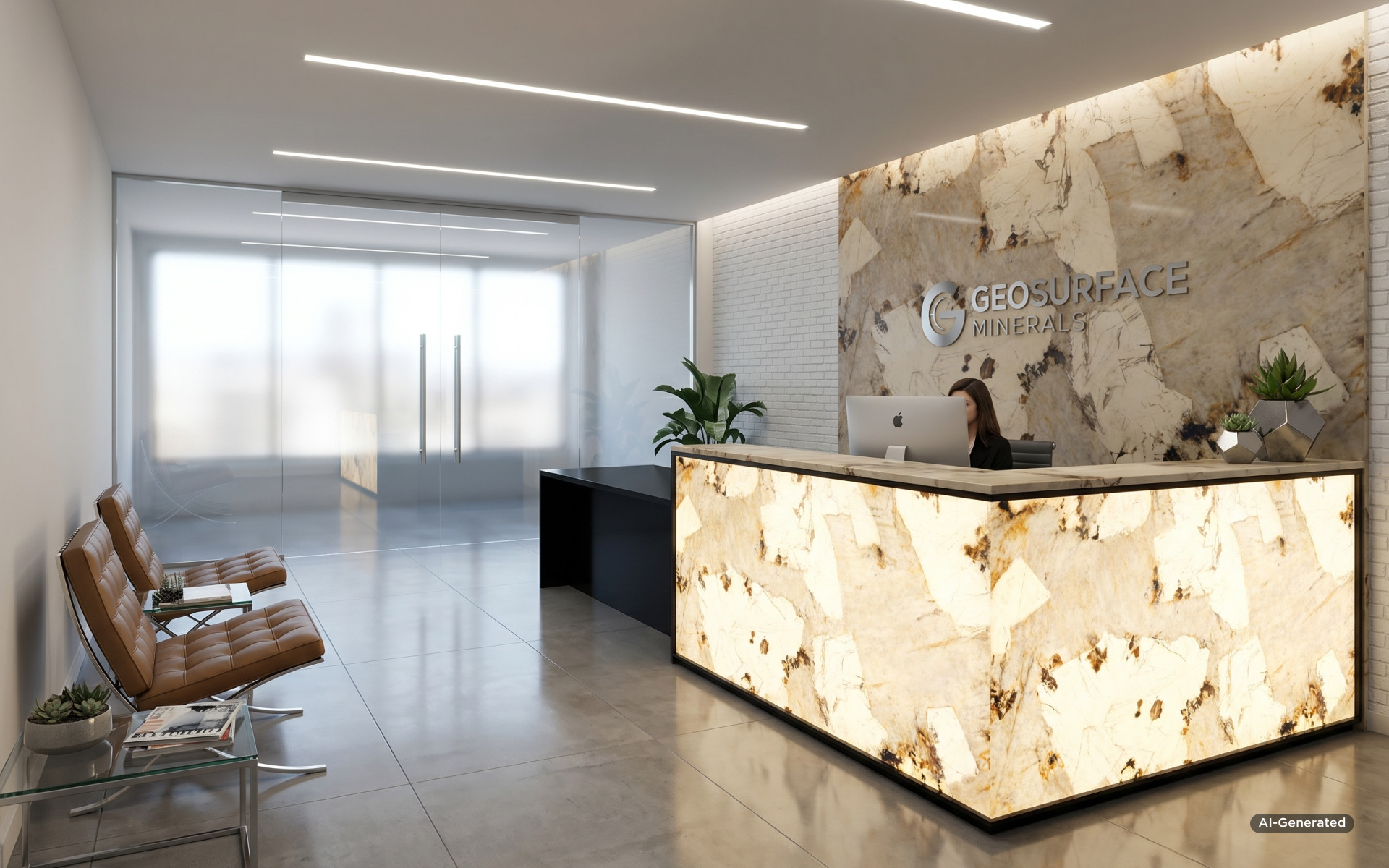
Backlit surfaces made of quartz stone are undoubtedly a great solution that gives the space a unique depth and allows the material to literally come alive. However, this is not the only interesting visual effect that can be achieved with decors from the Architype range - you will learn more about other innovative design possibilities in this article.
Share:


Other publications
All publications
Architype at Marmomac 2026. Let's meet in Verona!
References
The application of Puricelli HPL panels in commercial interiors - where does this material have an advantage over other solutions?
References
The most popular Architype materials chosen by the B2B sector. Parameters, logistics, fabrication, and practical aspects - a guide.
References