



Quartz stone in interiors. Beauty that stands the test of time
References
Designing a dream interior is the art of seeking materials where refined aesthetics meet functionality and reliability. Among the Architype solutions that have consistently garnered the appreciation of architects and designers, quartz stone holds a special place. It combines natural beauty with modern production technologies, resulting in surfaces that perfectly complement both classic and contemporary designs.
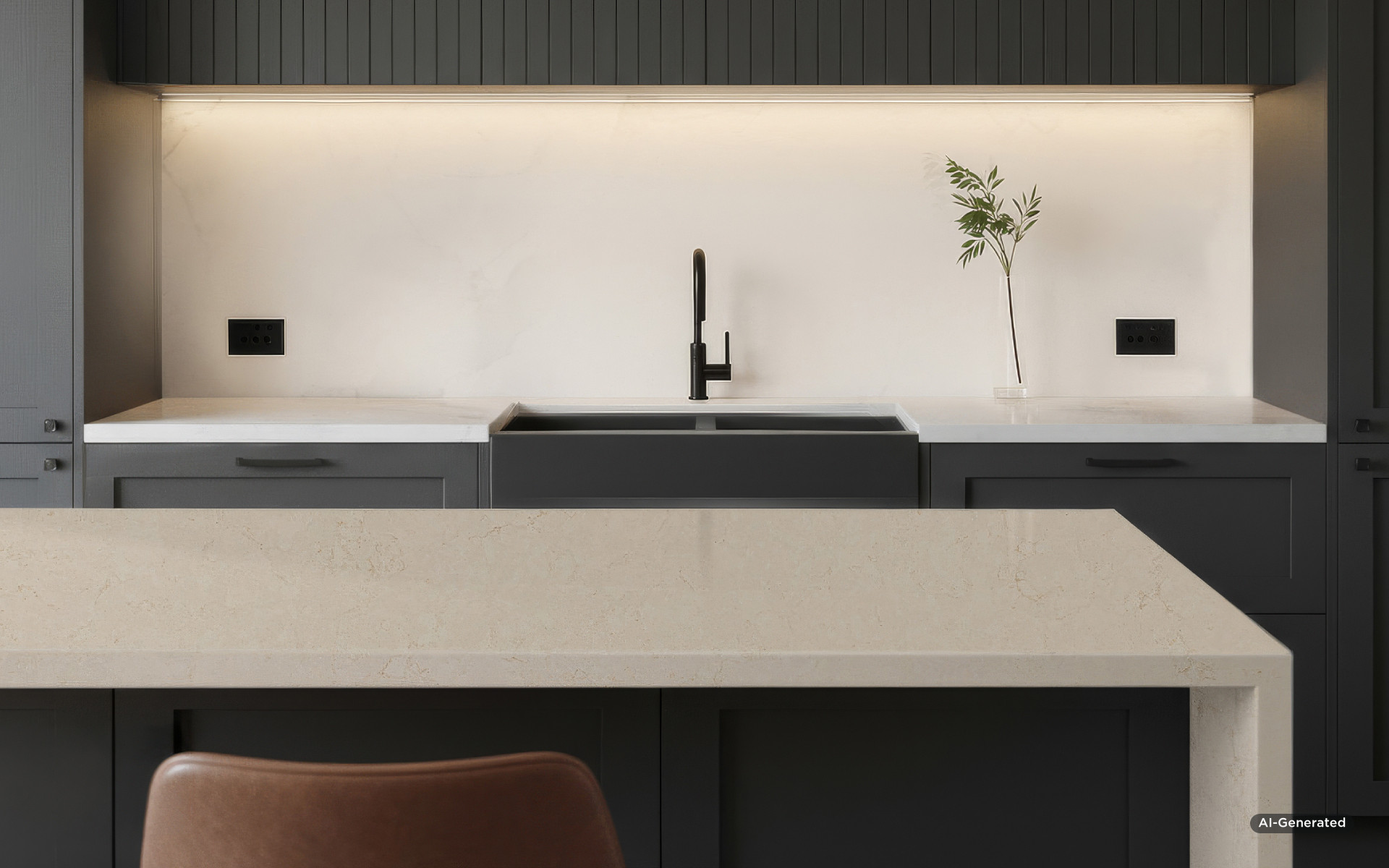
What are quartz surfaces made of?
The secret behind the properties of quartz stone lies in its precisely developed composition. The vast majority of its structure - from 93 up to 95 percent - consists of natural, carefully selected, and crushed quartz. To give the material the appropriate flexibility and form, the natural mineral is bound using high-quality polymer resins, which act as a durable binder.
The mixture is enriched with pigments and, depending on the selected collection, additional elements such as mirror flecks, minerals, or marble chips. The refined production process enables a vast diversity of decors. Brands from the Architype range uniquely interpret both deep, solid colours and intricately woven veining.
Durability at the highest level
Choosing quartz stone is a decision based on the technical parameters of the material. Quartz is a mineral with very high hardness, surpassed in nature only by diamonds, corundum, and topaz. In practice, this translates to the slabs having high resistance to mechanical stress, including impacts and scratches. The dense, uniform surface withstands work with hard kitchen tools and minimizes the risk of chipping. Quartz stone also exhibits resistance to short-term exposure to high temperatures, facilitating safe use in work zones. Upon contact with highly heated cookware (e.g. taken straight from the oven), the use of protective trivets is recommended to fully preserve the original physical parameters of the worktop.
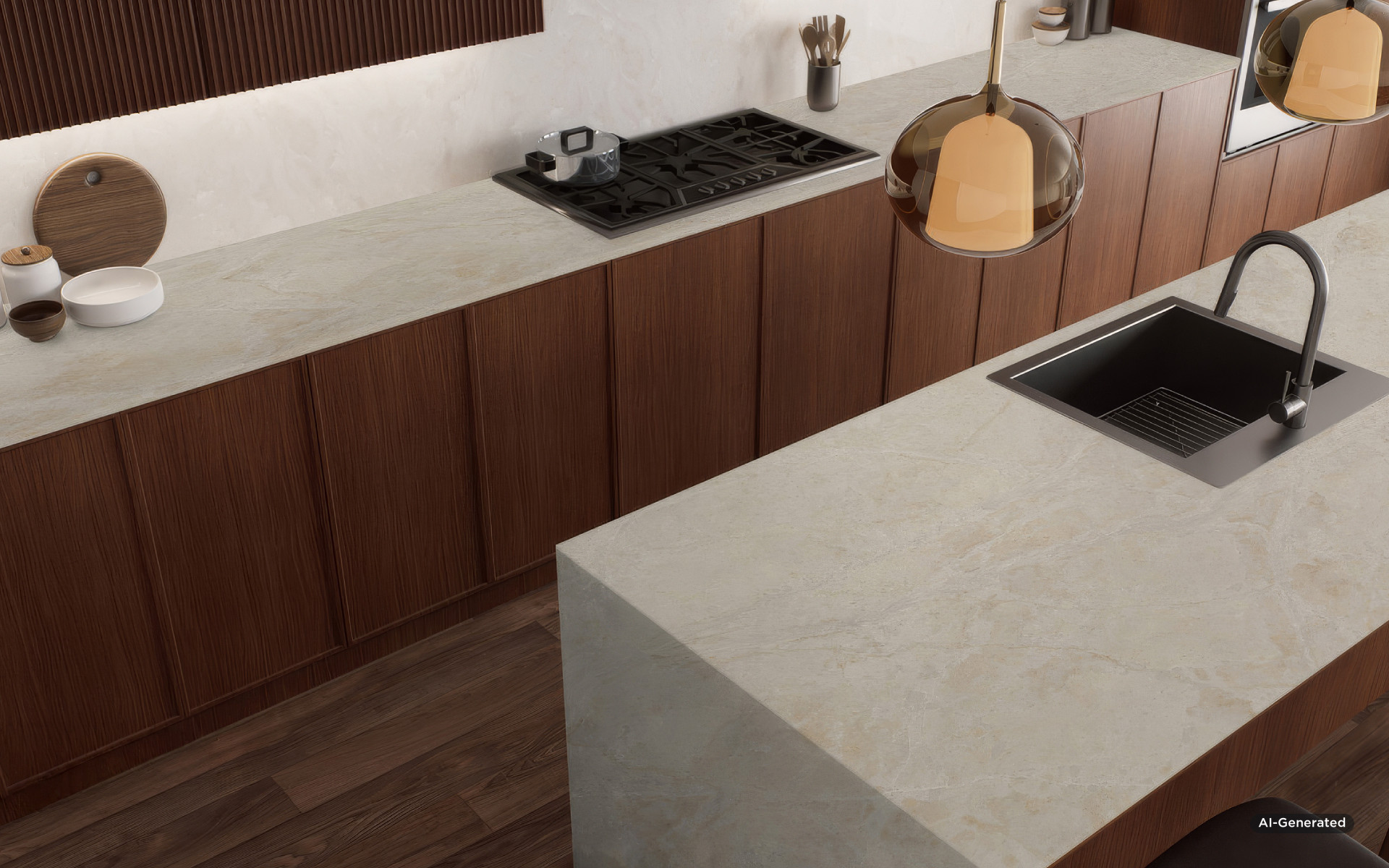
Safety and hygiene of quartz stone
In spaces such as kitchens or bathrooms, maintaining hygiene is crucial. Quartz stone stands out with a uniform, dense structure that is completely free of micro-cracks and pores. As a result, the material achieves a very low moisture absorption rate of just 0.02%. The surface does not absorb spilled water, fats, or contaminants, which naturally blocks the growth of bacteria, fungi, or mould. Surfaces of this type are completely safe for health and the environment. They contain no toxic substances, are non-allergenic, and natural background radiation is minimal and remains well below regulatory limits. These properties are confirmed by certificates, including international standards that approve the material for direct contact with food.
Harmony between nature and ease of use
Authentic natural stones have delighted with their noble, unique character for centuries, serving as a classic element of spatial finishing. Quartz stone is not an attempt to replace them, but rather serves as a complementary alternative for those who value a high degree of operational convenience.
The fundamental difference in the daily use of quartz surfaces is the lack of a need for regular sealing. To remove most stains, simply wiping the surface with a cloth dampened with a neutral pH cleaner (such as standard washing-up liquid) is sufficient. Furthermore, the pattern consistency from batch to batch makes it easier for joiners and stonemasons to precisely match and join elements during installation, and for architects to design surfaces with a very specific pattern.
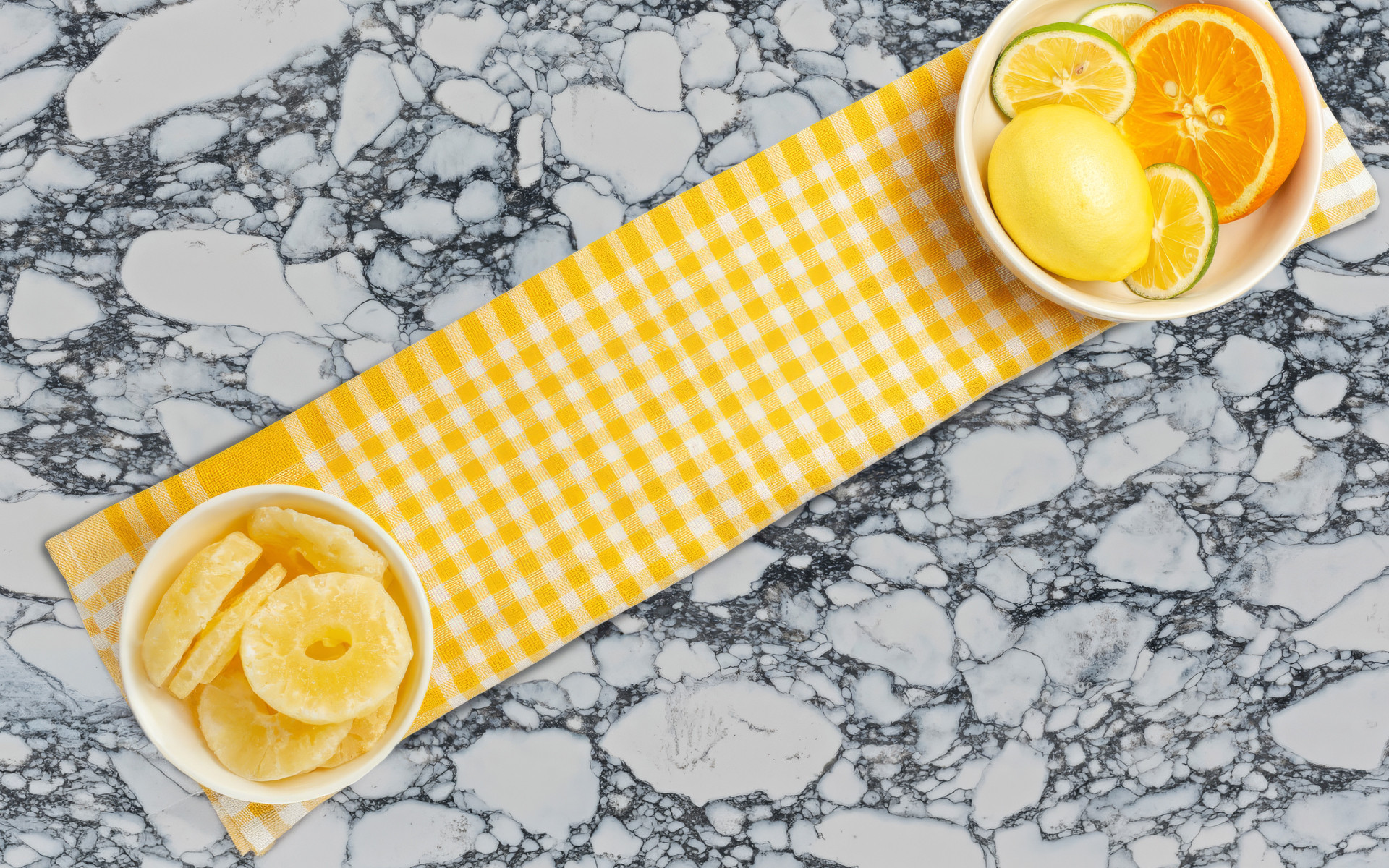
Quartz stone brands available in the Architype range
The quartz surfaces in the Architype range come from two globally recognized brands: Avant Quartz and Caesarstone.
Avant Quartz stone is a solution whose design draws from French architecture and craftsmanship. The composition of these slabs is based on 95% natural quartz. Collections such as Marble or Granite have been designed to faithfully reflect the structure, colours, and characteristic veining of natural stones. The high technical parameters of the material are confirmed by independent SGS laboratory tests - the slabs achieved a fire classification of B-s2, d0 (which guarantees, among other things, the absence of flaming droplets upon contact with fire) and a high flexural strength, typically around 40-70 MPa to EN 14617-2. This material is available in standard and enlarged formats (Jumbo), enabling the optimization of cutting costs and adaptability to projects of various scales.
The second quartz stone brand is Caesarstone. It is a globally renowned Israeli manufacturer, present on the market since 1987. Caesarstone slabs are manufactured using Italian Breton technology and are also characterized by excellent pattern consistency. The brand places strong emphasis on rigorous environmental norms and hygiene standards, confirmed by ISO 14001, ISO 9001, and NSF certificates (allowing for food-contact surfaces). The Caesarstone range is diverse - alongside collections imitating natural stones (Supernatural), it also features solutions inspired by raw concrete or oxidized steel, gathered in the Metropolitan line.
Check also: Architype for the environment: materials that are kind to the planet
Limitless design possibilities - the use of quartz stone
The versatility of the discussed materials means their application is truly limited only by imagination. These surfaces are intended for robust worktops, large kitchen islands, and wall cladding in wet zones. Architects utilize them to create stairs, flooring, furniture fronts, and window sills in residential spaces.
Furthermore, due to their high hygiene parameters, they are installed in places with specific sanitary requirements, such as laboratories, nurseries, or medical facilities. The availability of the material in Jumbo formats (reaching 3200 by 1600 millimetres) facilitates the execution of large-scale projects and the creation of broad surfaces without the need for frequent slab joining.
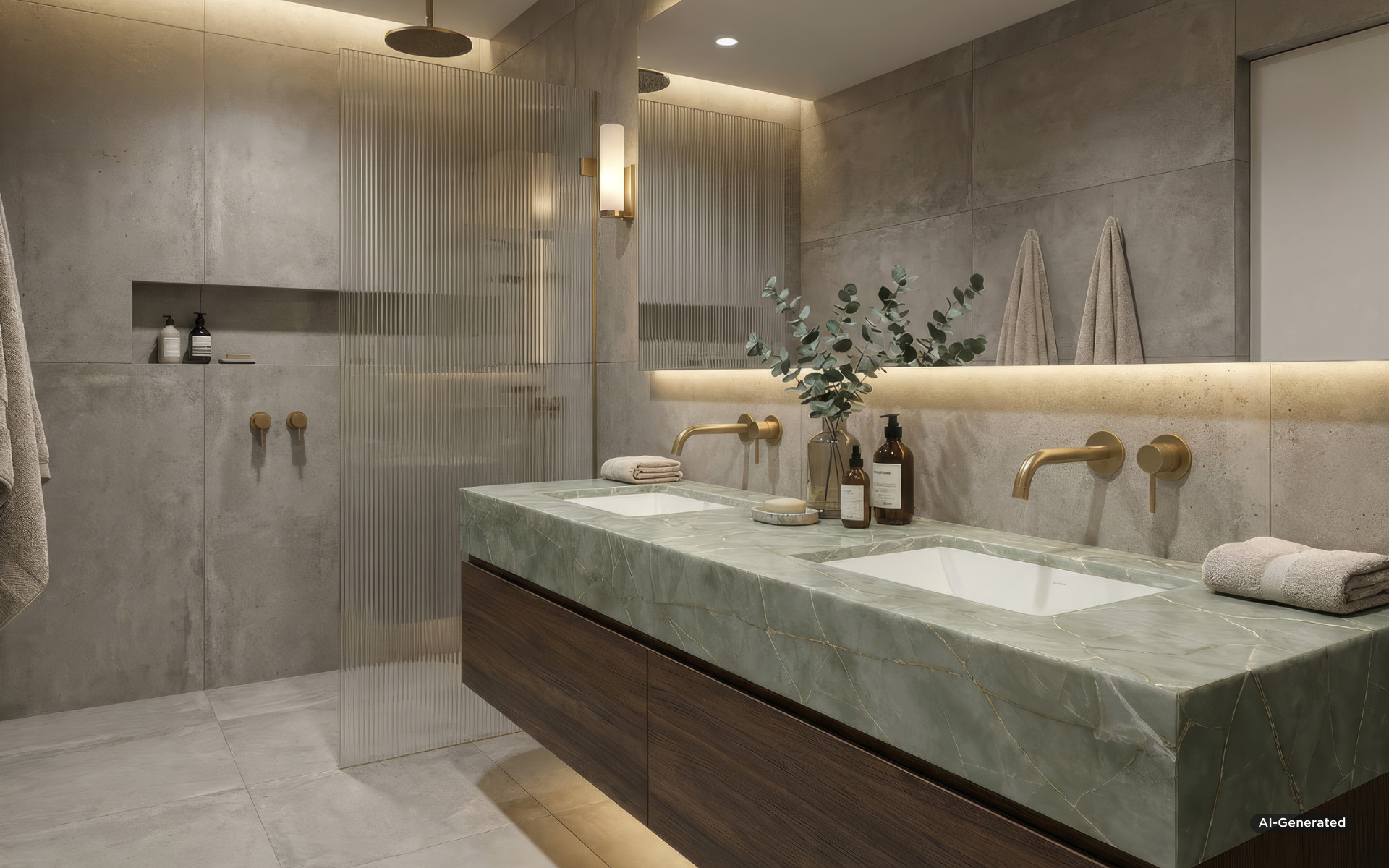
Unconventional solutions and technological innovations
Modern production and processing technologies for quartz surfaces allow for the realization of projects that go beyond standard applications. Our brands continuously expand their portfolios, offering unconventional design possibilities:
- The application of Nano-Ink digital printing in the Avant Quartz Digital Print collection allows the pigment to penetrate the slab to a depth of approximately 1 millimetre. This yields a realistic, three-dimensional veining pattern without having to deposit the dye solely on the surface.
- A shift in the approach to ecology and occupational safety has resulted in the NEO CRYSTAL collection (Avant Quartz). It utilizes Zero Silica technology, which eliminates crystalline silica, while the process itself relies heavily on recycled raw materials (from 30 to 80 percent) and the recovery of production water.
- Caesarstone's slab manufacturing technology allows for highly precise matching of veining between individual elements. This facilitates a seamless continuation of the pattern across large areas, creating the visual impression of a single, continuous sheet without distinct joints.
- Appropriate milling or thinning of selected decors allows them to be backlit from below using LED modules. The light penetrating the material brings out the details of the pattern, which works perfectly when designing modern kitchen islands or reception desks.
Choosing the right finishing materials is a decision that impacts the comfort of using a space for many years. Quartz stone proves that high technical parameters can go hand in hand with refined design, enabling the realization of even the most demanding architectural concepts. We encourage you to explore the full palette of decors in the Architype range and find the solution that best fits the character of your planned project.
Share:


Other publications
All publications
Architype at Marmomac 2026. Backlit novelties, the return of travertine, and a look at the trends
References
Where to buy large-format sintered stone for the bathroom with high stain and water resistance? A guide to selection and purchase
References
White, cream, or beige? Choosing light large-format sintered stone available instantly
References