

Natural stone in outdoor projects. Which type is best?
References
Natural stone used outdoors must withstand various weather conditions, especially in our climate zone. Throughout the year, it is exposed to numerous changes: frost, snow, intense sun, heat and rain. Appropriate technical parameters are therefore crucial in order to enjoy an intact terrace or façade surface for many years. What types of natural stone do we recommend for outdoor applications? Granite, quartzite and travertine.
Granite is the most obvious choice where maximum durability is important. It is one of the hardest natural rocks, resistant to abrasion, water and frost. It can easily cope with heavy foot traffic, changing weather conditions and prolonged exposure to the sun. That is why it is so often used on driveways, external stairs, terraces and the facades of residential and commercial buildings. Another advantage is its visual stability – granite does not fade, does not lose its structure and looks the same for years as it did on the day it was installed. It is a stone for those who want peace of mind for many years and do not plan to carry out frequent maintenance.
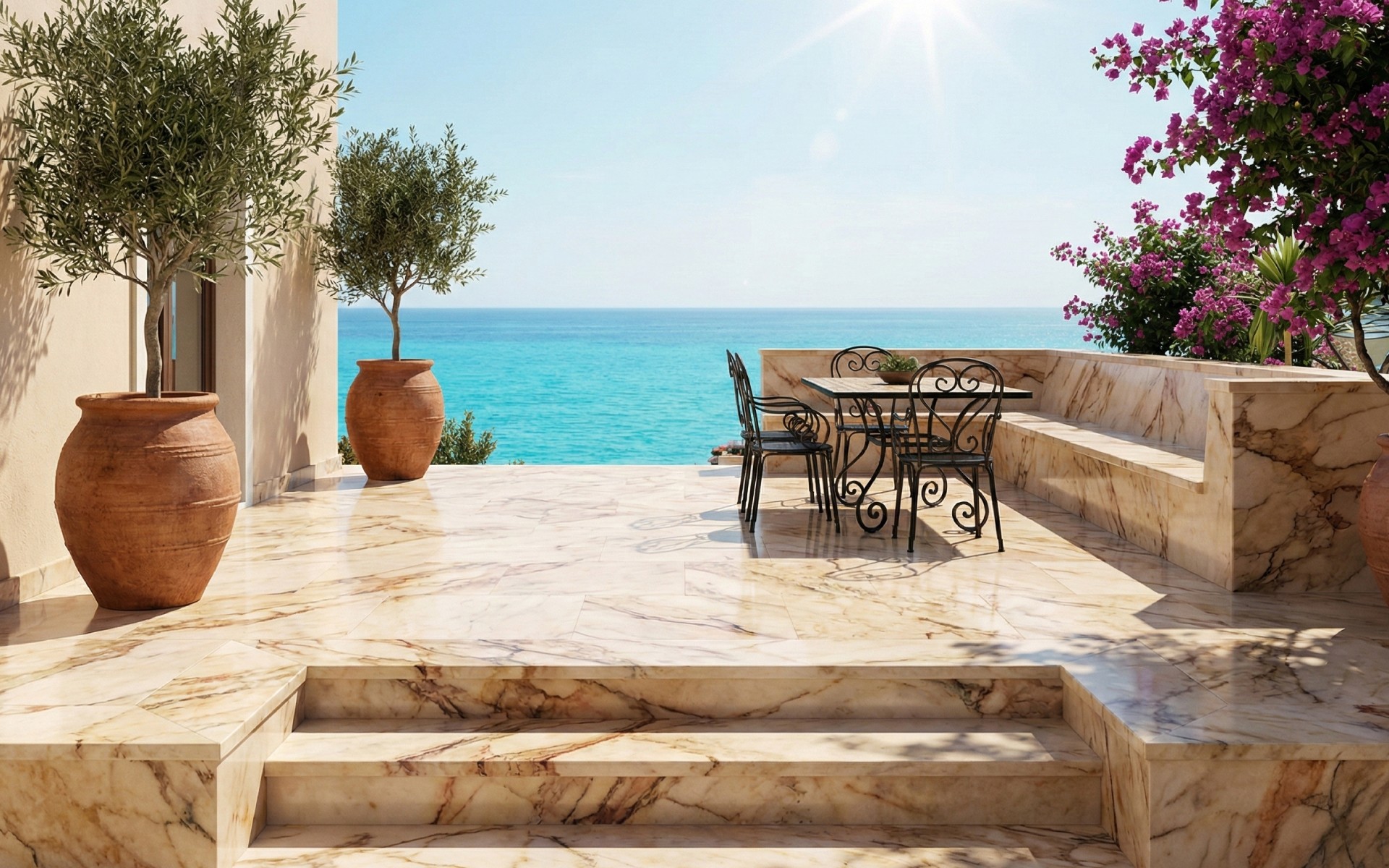
Travertine is visually lighter, warmer in appearance and more decorative. It is often chosen where the outdoor space is intended to be a natural extension of the home or garden. Terraces, patios, pool areas and facades with a more ‘Mediterranean’ character are places where travertine looks very natural. However, it should be remembered that it is a porous stone that requires proper preparation. Filling the pores and regular impregnation are essential, but with proper care, travertine tolerates outdoor conditions well and rewards you with a look that cannot be confused with any other material.
Quartzite occupies a position between granite and travertine, although technically it is closer to granite. It is very mechanically and chemically resistant and at the same time often has a more dynamic pattern and varied colours. It is a stone that works well in gardens, on terraces, in public spaces and wherever the material needs to be both durable and expressive. Quartzite copes well with moisture, frost and UV radiation, which is why it is often used in projects that need to retain their fresh appearance for many seasons without intensive maintenance.
The outdoor applications of natural stone are very wide-ranging: building facades, external staircases, terraces, driveways, but also small architectural elements such as walls, planters, fountains and decorations. It is crucial to match the stone to the function it is to perform. One material will work well on a frequently used passageway, while another will be more suitable as a purely decorative element in a garden.
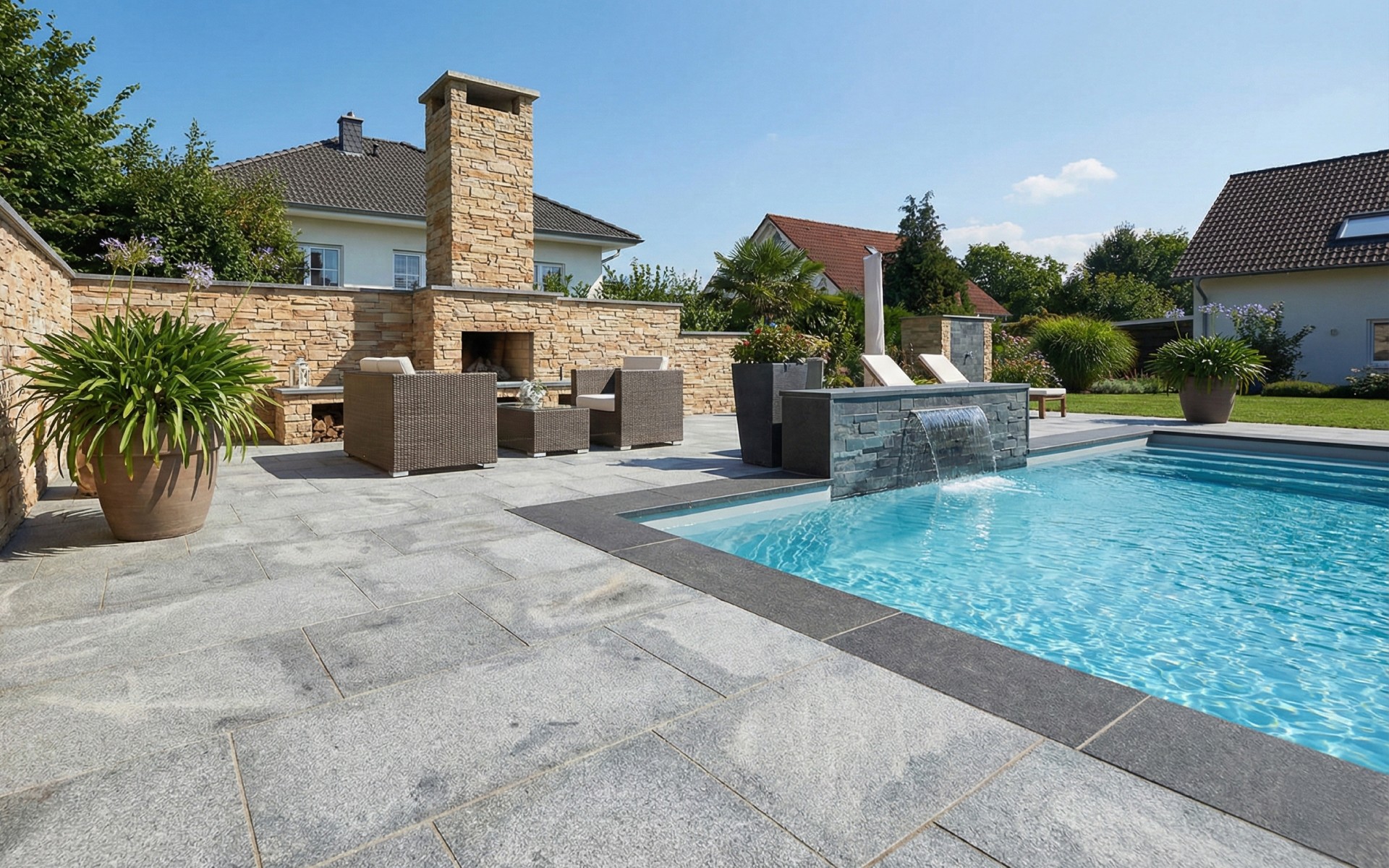
Natural stone care outdoors is not complicated, but it should be regular and adapted to the specific characteristics of the material. The basis is periodic cleaning with water and a soft brush and the use of impregnation selected for the type of stone and its porosity. It is also worth responding to organic dirt, such as leaves or deposits, before they have time to penetrate the structure of the material. Well-chosen and properly protected natural stone withstands the passage of time very well, maintaining a high level of aesthetics.
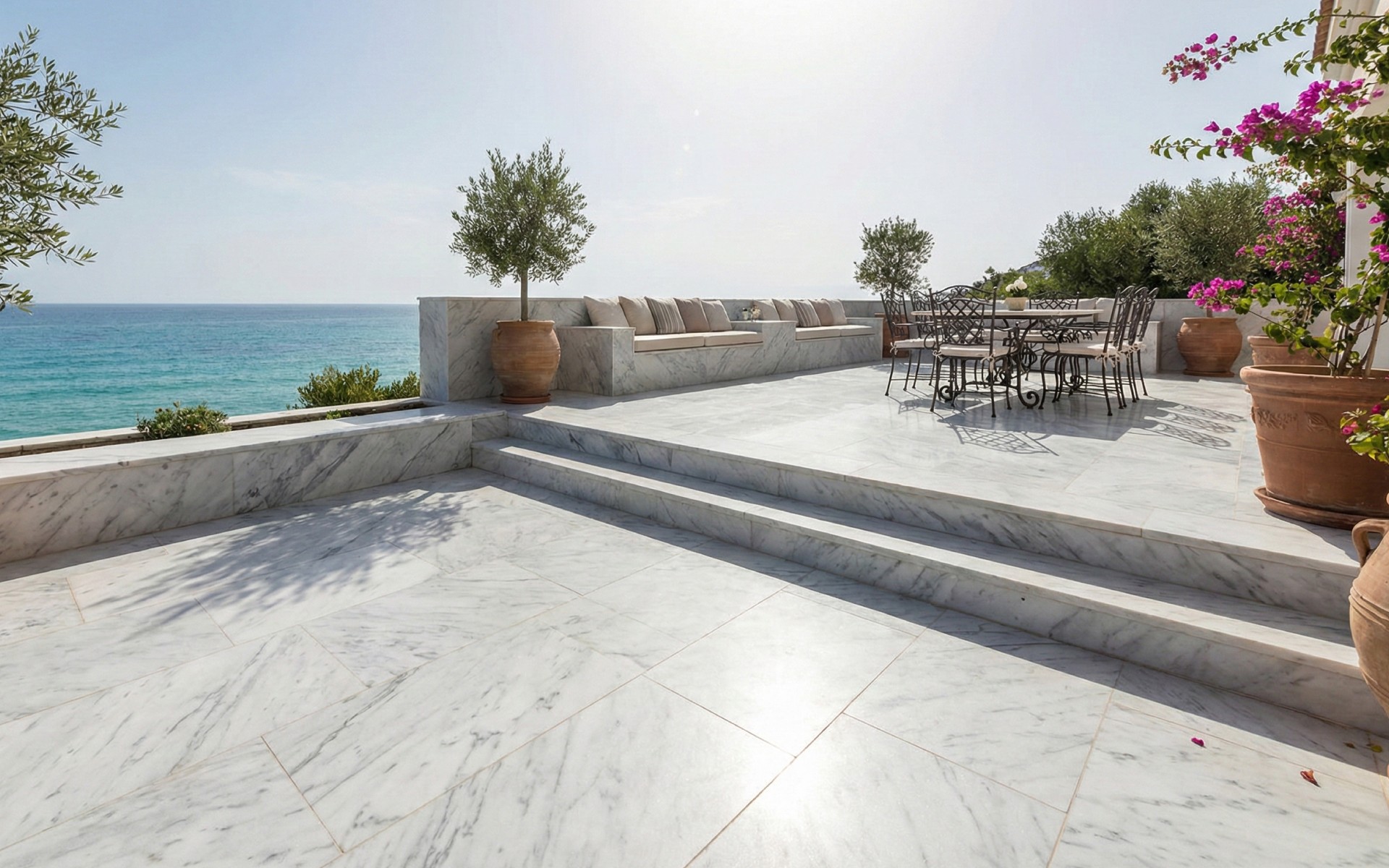
In the case of outdoor projects, solutions that have been proven in practice are of key importance. Frost resistance, anti-slip properties and correctly designed installation determine how the stone will function over the years. Granite, travertine and quartzite, properly selected for a specific application, have been a reliable choice for outdoor spaces for years. At the design and purchase stage, it is worth consulting your expectations - our experts will be happy to help you choose the material for the nature of the project, technical conditions and the expected end result.
Check also: Natural stone – a new chapter in Architype's portfolio
Share: