



Natural stone in the kitchen
References
Kitchen design involves a multitude of decisions - comfortable furniture, good-quality appliances, functional layout of work areas and aesthetic accessories that will make the room cosy. Finishing materials are no less important, as they determine durability and comfort of use. In today's article, we will look at how to use natural stone in the kitchen to fully exploit its potential and adapt it to the needs of the household.
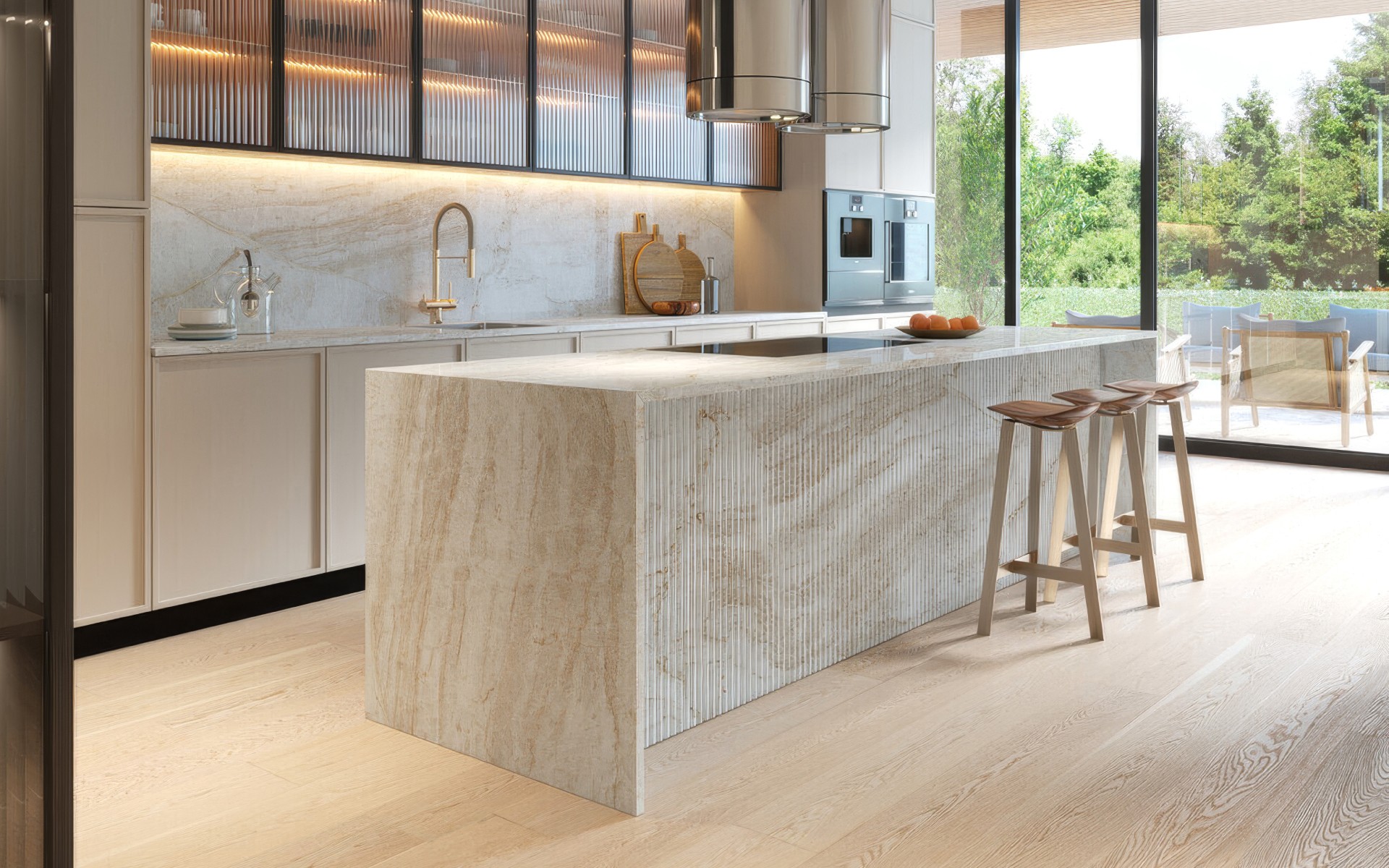
The kitchen is one of the most demanding places in the home. High temperatures, moisture, grease, sharp objects, food stains, intensive use, frequent cleaning - these are just some of the factors to which materials used in the kitchen are exposed. At the same time, we often expect the kitchen to look as good as the rest of the house. Is it possible to reconcile these two expectations? Properly selected natural stone is a solution that can meet these requirements.
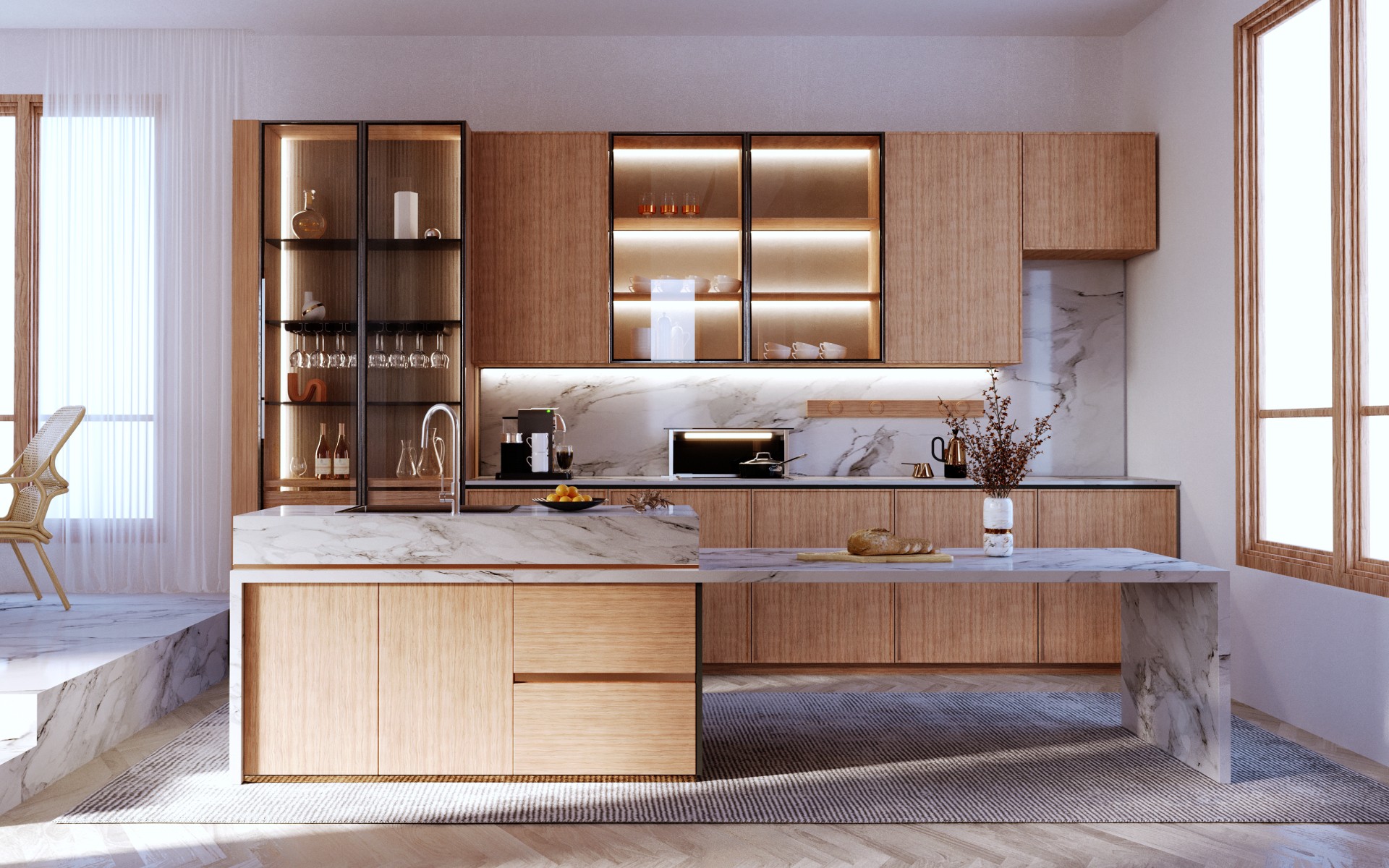
One of the most common choices for kitchens is granite, a stone that withstands daily use very well. It is resistant to scratches, impacts, high temperatures and contact with water, which is why it is ideal for countertops and kitchen islands. Hot pots or spilled water are no problem for it and thanks to its low water absorption, granite is also stain resistant.
In terms of usability, quartzite is similar to granite, while the range of decors includes slightly more varied slab patterns. The material is resistant to scratches, abrasions, impacts and chemicals, making it ideal for heavily used kitchens. It requires impregnation, but with proper care, it will retain its impeccable appearance for many years.
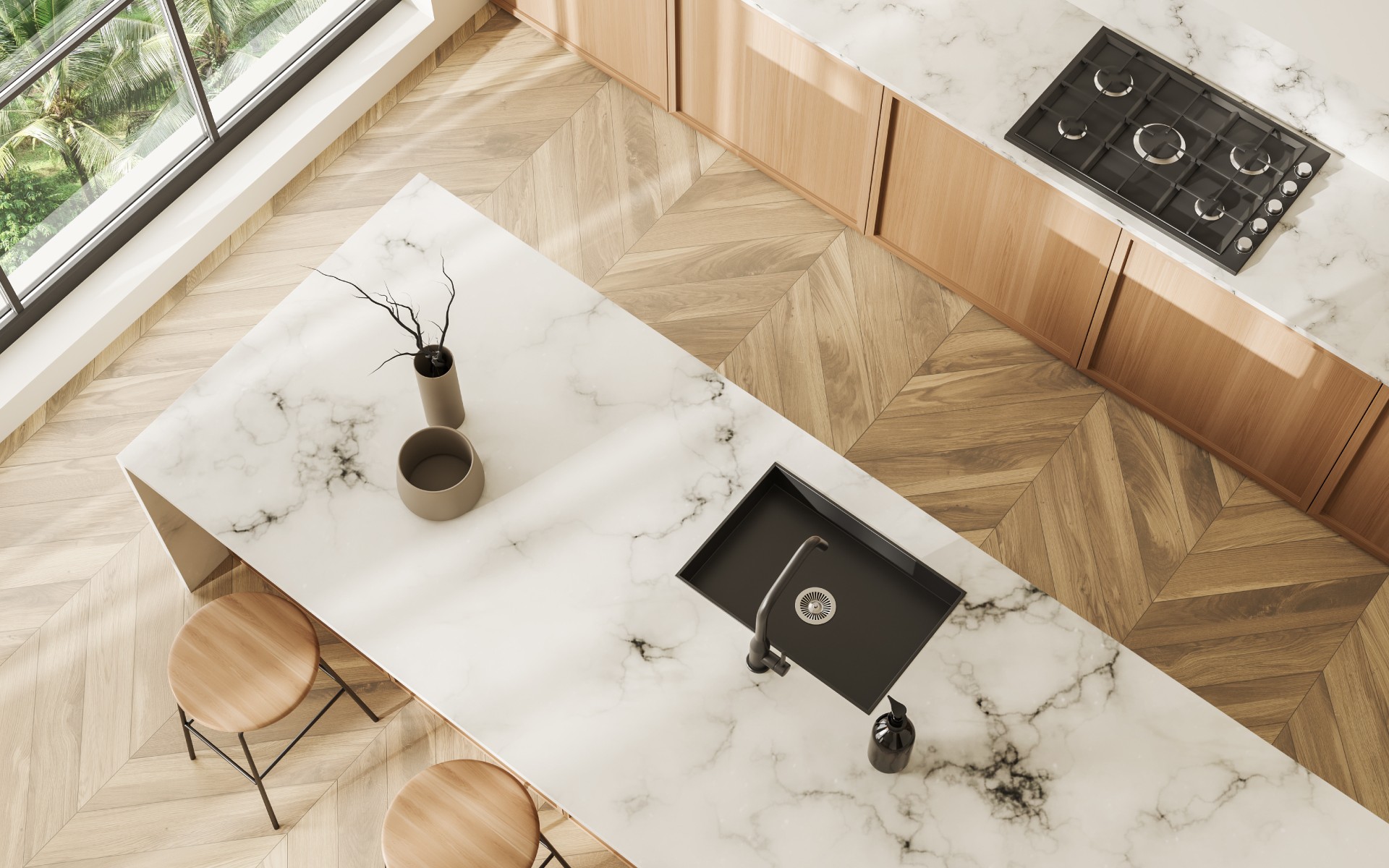
Marble in the kitchen is beautiful, noble and associated with luxury, but it requires awareness that it is not a ‘maintenance-free’ stone. Its surface is more delicate than granite or quartzite, sensitive to acids and scratches, so it works best on less intensively used or decorative surfaces, such as wall cladding, kitchen island casings or decorative panels. In kitchens where marble plays a major role, regular impregnation and maintenance, as well as quick response to dirt, are crucial.
Another natural stone - onyx - serves a completely different function in the kitchen. It is a stone with more decorative properties, which is not recommended in places where cooking enthusiasts pursue their passion on a daily basis. It is worth using it where it will not come into direct contact with knives, hot dishes or aggressive cleaning agents. We recommend exploiting the potential of its appearance by creating impressive wall panels (these can be illuminated thanks to their partial light permeability!), island fronts or decorative elements of the kitchen units.
Regardless of the stone you choose, its care in the kitchen is very important. Daily cleaning should be limited to pH-neutral agents and soft cloths. Impregnation protects the surface against grease, stains and water, so it is worth renewing it in accordance with the recommendations for the type of stone. Additional good habits, such as using coasters for hot dishes or protective mats for heavier items (e.g. household appliances), will significantly extend the life of stone surfaces. Natural stone in the kitchen is not a universal choice - each type has its strengths and limitations, which should be taken into account at the design stage. However, a well-chosen stone can combine durability with a beautiful effect in a way that is difficult to achieve with other materials. It is a good investment for years to come, provided that the decision to choose it goes hand in hand with an awareness of how the stone will be used on a daily basis and what care we are able to provide for it. We encourage you to consult our experts, we will be happy to look at your project, help you choose the best types of stone and suggest solutions that will work well during the implementation and subsequent use of the kitchen.
Share:


Other publications
All publications
Backlit quartz stone - discover decors where light becomes part of the material
References
From ventilated facades to the shipbuilding industry. The most interesting applications of Puricelli HPL panels
References

Zero Silica technology. A new generation of architectural materials
References