



Cozy interiors with travertine – how to combine it with other materials?
References
Travertine has been attracting designers and investors for years who are looking for a natural material that is less ‘formal’ than marble and ‘softer’ in appearance than granite. Its light, warm shades of beige, cream and off-white give interiors a calm, friendly atmosphere that makes you want to stay. It is a stone that does not dominate the space, but calms and warms it, providing a solid base for the selection of other materials.
A characteristic feature of travertine is its porous structure. It can remain visible if we want a more raw, natural effect, or be filled in if we want a smooth and uniform surface. Travertine is also relatively easy to work with, making it suitable for both large surfaces and details - from floors and wall cladding to countertops and built-in elements. It is often chosen for its high durability and good acoustic and thermal insulation.
How to combine travertine with other materials?
One of the most natural and proven combinations is travertine with wood. Both materials have a common denominator in the form of natural origin and warm colours, but they differ in texture. Wood emphasises the organic character of stone and balances the calm surface of travertine well. This combination works well in living rooms, bedrooms and bathrooms, where we want a friendly and relaxing interior.
An interesting effect is also achieved by combining travertine with metal, especially in a brushed or matt finish. Steel, brass or aluminium introduce a more modern, sometimes slightly industrial accent, which contrasts with the soft pattern and warm shade of the stone.
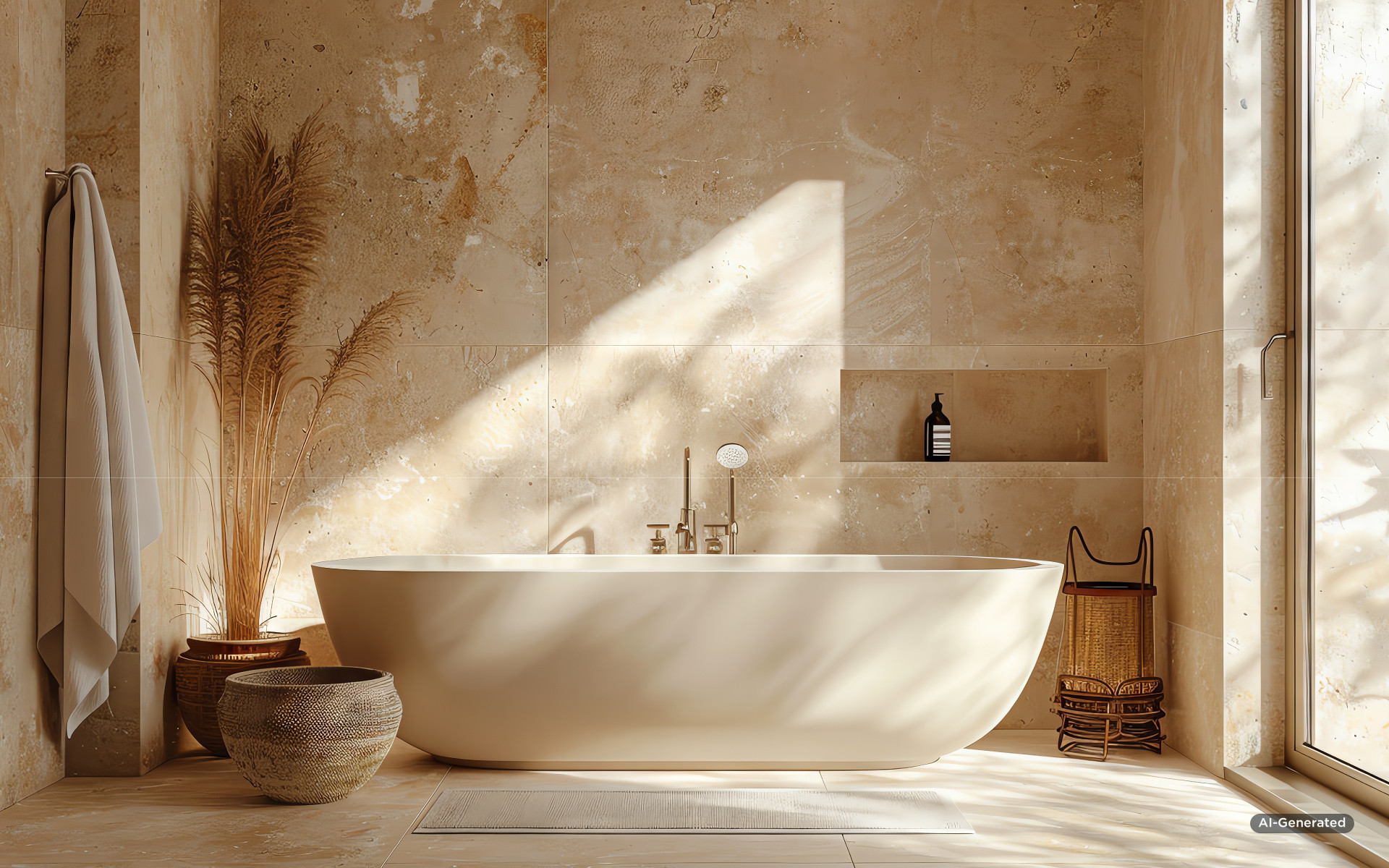
Fabrics also play an important role in travertine arrangements. Natural materials such as linen, cotton or wool complement the stone well and reinforce the impression of cohesion. Carpets, curtains or upholstered furniture help to ‘soften’ the space and prevent the stone from being perceived as cold or austere. This combination significantly increases the cosiness of the interior.
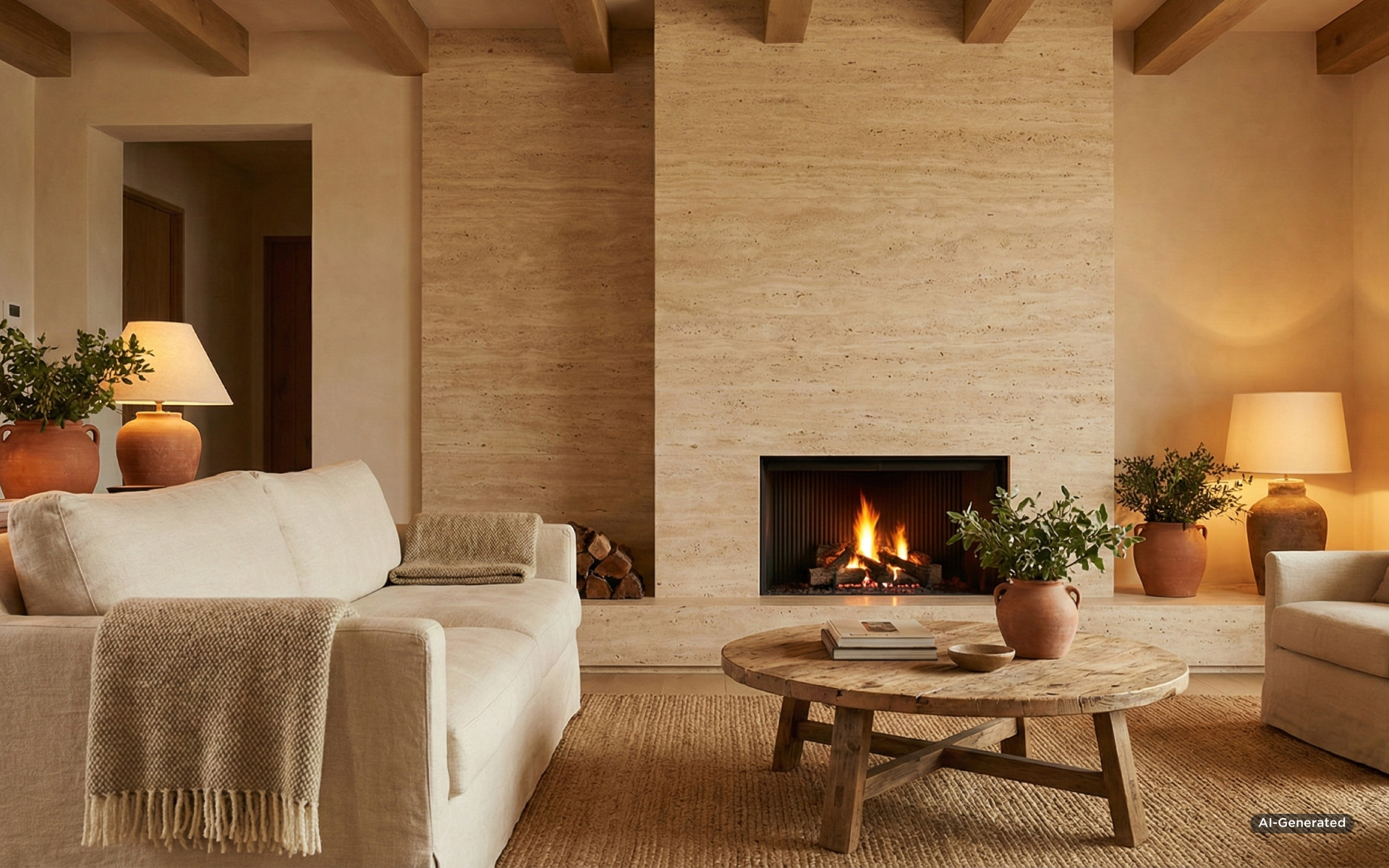
Travertine can be used in many rooms. Floors and walls in living rooms, bathrooms and kitchens are the most common choices, but it is also increasingly used on decorative countertops, bath surrounds and fireplaces. In commercial spaces, such as hotels or offices, travertine helps to create an atmosphere of calm and relaxation, which has a significant impact on how guests perceive the place. Skilful combination of travertine with other materials significantly expands the design possibilities.
Like any natural stone, travertine requires conscious use and care. Regular cleaning with pH-neutral agents and impregnation, especially in areas exposed to moisture, will preserve its appearance for many years. Filling pores and small cavities is also part of maintenance, which helps to maintain the impeccable aesthetics and durability of the material.
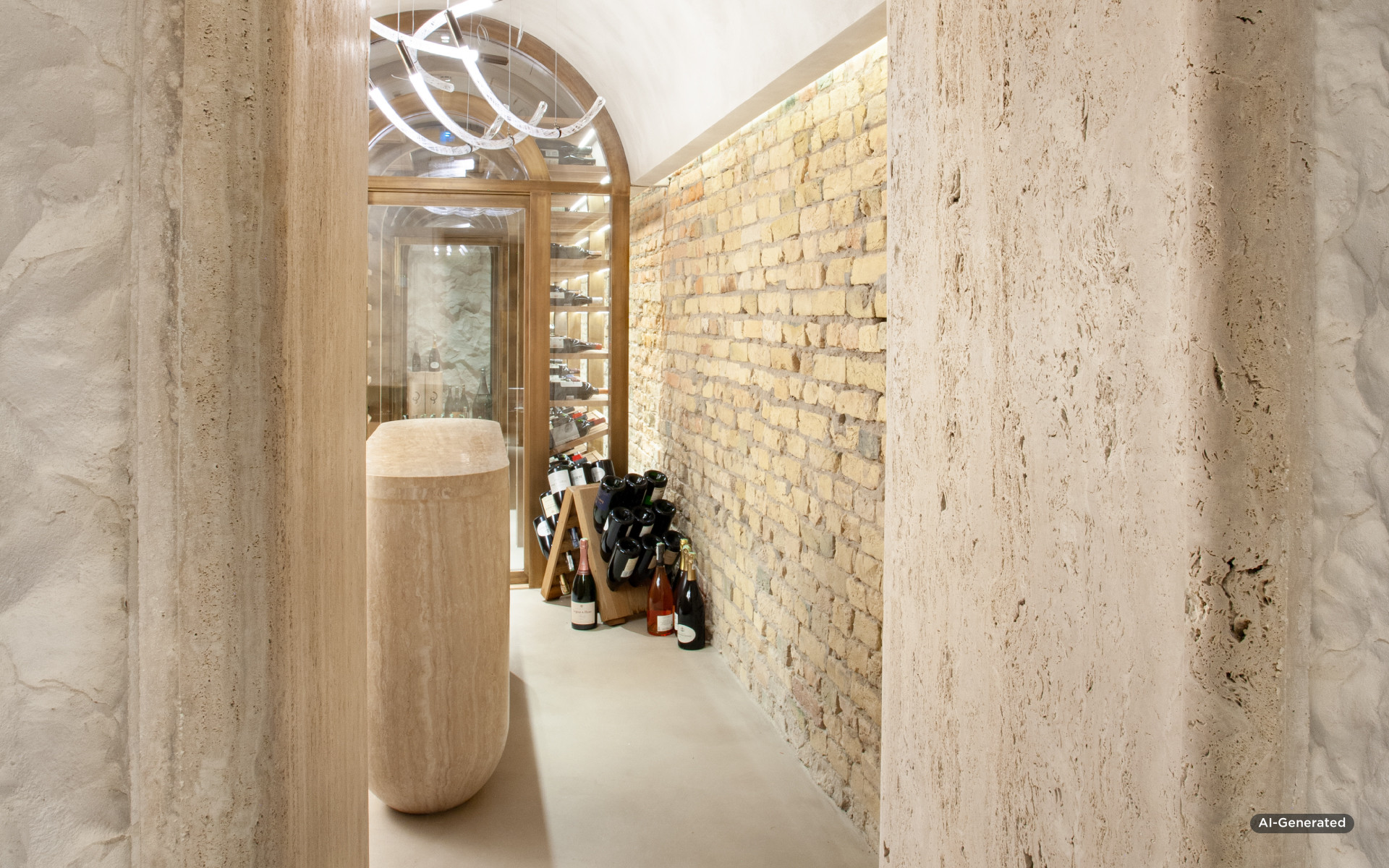
Travertine works best in areas with moderate traffic, where its structure is not exposed to intensive use. When combining it with other materials, a sense of proportion and colour is crucial. When the combinations are well thought out, travertine ‘rewards’ you with an interior that is warm, calm and relaxing.
Share:


Other publications
All publications
Architype at Marmomac 2026. Backlit novelties, the return of travertine, and a look at the trends
References
Where to buy large-format sintered stone for the bathroom with high stain and water resistance? A guide to selection and purchase
References
White, cream, or beige? Choosing light large-format sintered stone available instantly
References