



Zero Silica technology. A new generation of architectural materials
References
Quartz stone has for years been one of the most valued materials in the interior design industry and one of the most frequently chosen solutions from the Architype range. Traditionally, these are slabs created by combining crushed quartz and polymer resins, which act as a binder. Such a mixture guarantees high hardness, water resistance, and a pore-free structure, which prevents stain absorption and the growth of microorganisms. Despite excellent performance parameters, modern architecture and changing health and safety regulations pose new challenges for manufacturers. The answer to these is the innovative Zero Silica technology, which the Avant Quartz brand has utilized in its latest NEO CRYSTAL collection. This solution is revolutionizing the market, combining the excellent properties of quartz surfaces with the highest level of safety and environmental care.
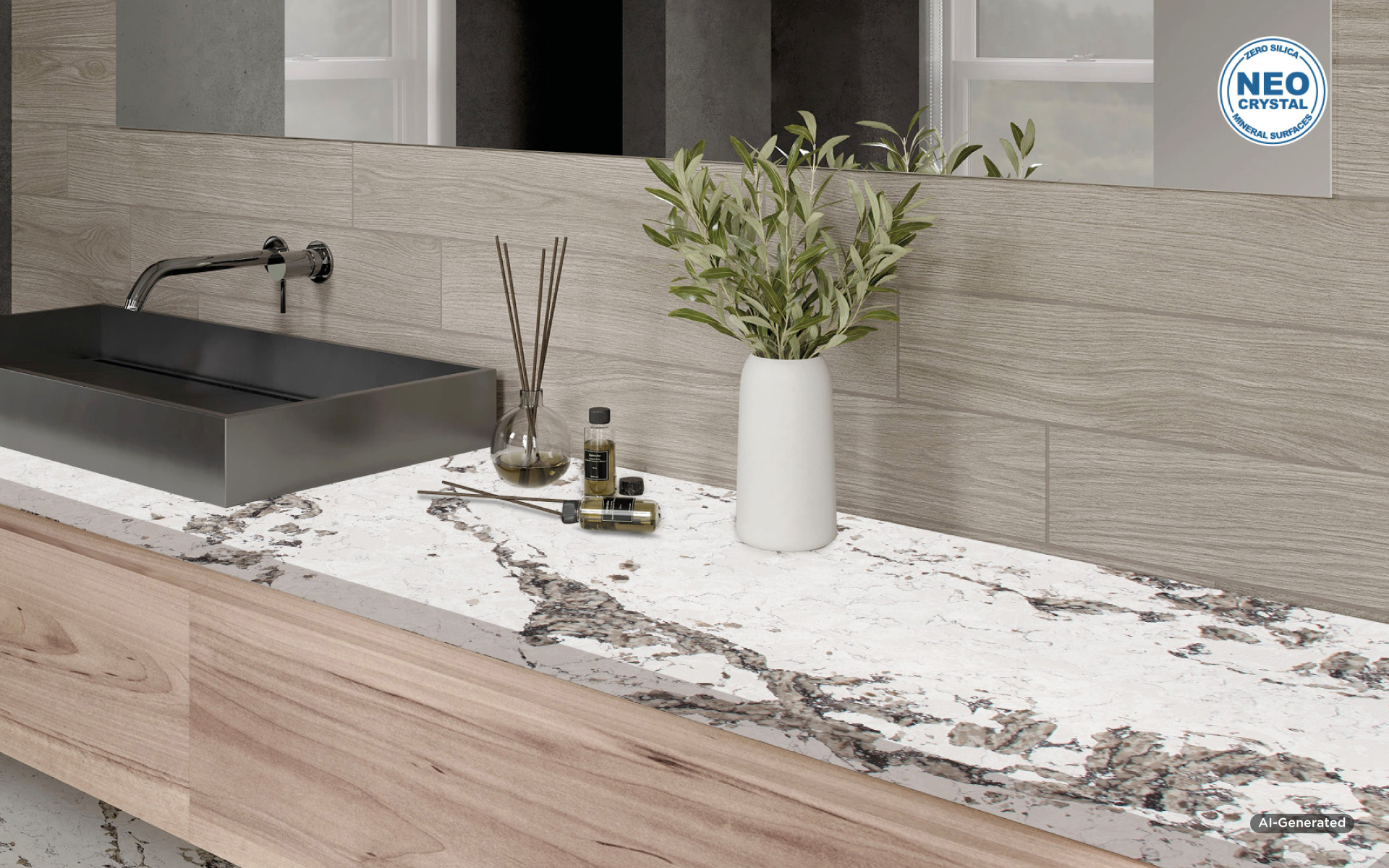
Crystalline silica - a challenge faced by the industry
To fully understand the breakthrough nature of the Zero Silica technology, one must look at the processing of traditional materials. What exactly is crystalline silica (silicon dioxide, SiO₂)? It is a naturally occurring and highly common chemical compound, being the main building block of many rocks, sand, and above all - quartz itself. While the materials themselves in the form of finished worktops or wall cladding are completely inert and safe for users, the danger arises during their processing.
Standard quartz stone available on the market consists of 85-90% crystalline silica. Its cutting, grinding, milling, or drilling in production facilities involves the emission of very fine dust. The inhaled respirable fraction (extremely small silica particles) can penetrate deep into the lungs, posing a major occupational hazard in the stonemasonry or construction industry. To protect workers, facilities are forced to employ costly and rigorous precautions, such as advanced exhaust ventilation, operating machinery with water systems that reduce dust emission, and using certified respiratory protection equipment (e.g. specialized masks and half-masks with P3 filters).
Engineers working on the new technology have completely changed this paradigm. Surfaces manufactured to the Zero Silica standard (whose flagship example is the NEO CRYSTAL line) reduce the crystalline silicon content to below 1%, which in practical terms means eliminating it from the processing stage. The traditional quartz in the slab's structure has been replaced by an innovative, eco-friendly composition, in which up to 80% of raw materials come directly from recycling.
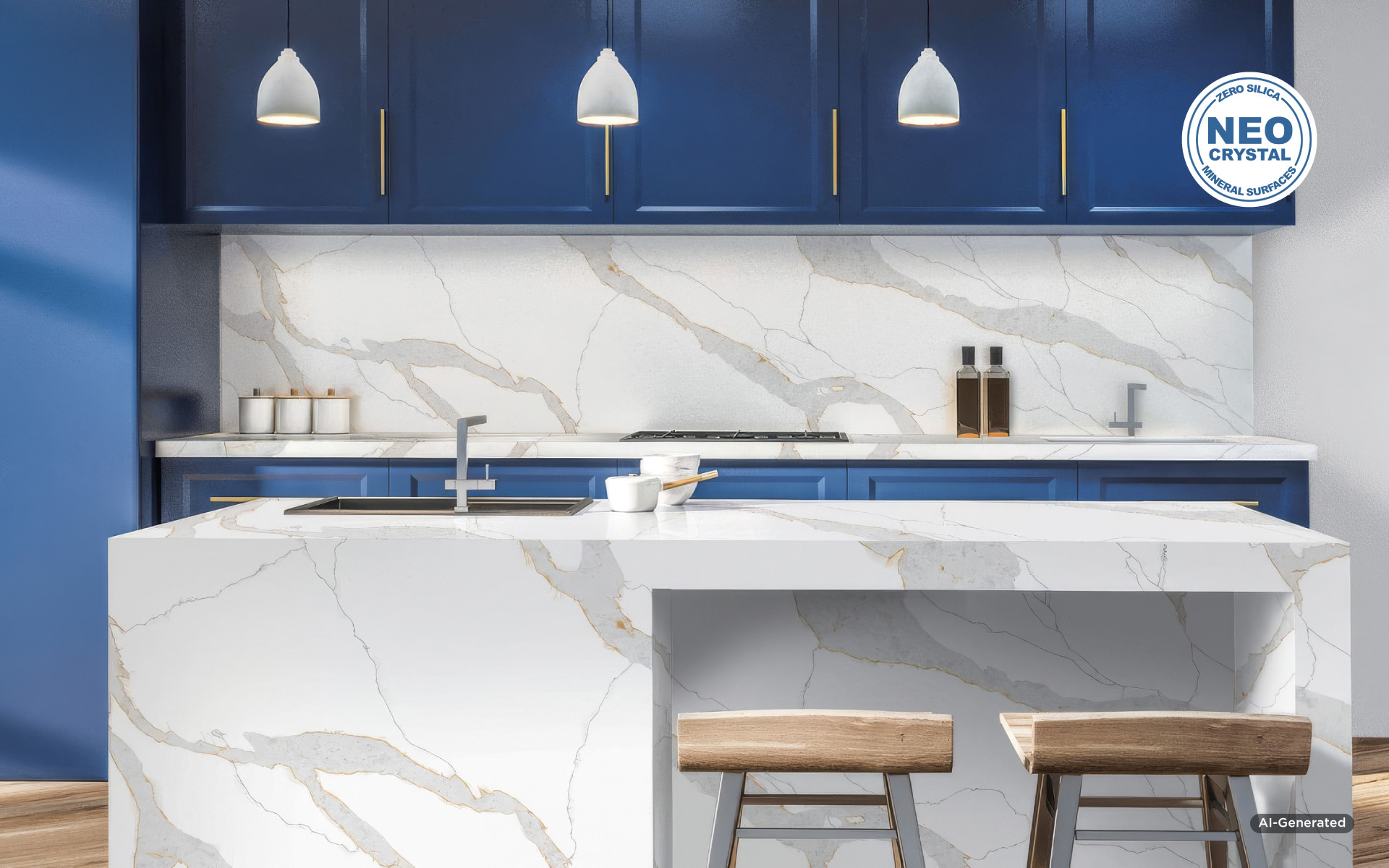
Protection at every stage
The application of Zero Silica technology is primarily a huge nod towards occupational safety. The lack of emission of hazardous silica dust makes slab processing significantly easier and healthier for stonemasons. The material complies with international regulations and stringent OSHA safety standards, relieving production facility owners of the burden of investing in complex dust extraction systems.
This aspect also extends to the direct users of residential and commercial spaces. NEO CRYSTAL slabs stand out with minimal emission of volatile organic compounds (VOCs), which is officially confirmed by the GREENGUARD Gold certification. As a result, these materials ensure the highest indoor air quality.
Avant Quartz - a combination of craftsmanship and ecology
For years, the Avant Quartz brand has provided solutions whose design draws inspiration from French architecture and craftsmanship. This manufacturer has gained recognition thanks to collections faithfully reflecting the structure and veining of natural stones, as well as high technical parameters confirmed by independent tests (including B-s2, d0 fire classification and high flexural strength). The launch of the NEO CRYSTAL collection is the first tangible step in the brand's long-term strategy aimed at transitioning to fully eco-friendly production and setting new industry standards.

Why is Zero Silica technology gaining traction in the market?
The growing popularity of this solution stems directly from the fact that the construction and design industry is making a decisive turn towards sustainable development. Transitioning to more eco-friendly production is no longer just a trend, but a necessity of modern times. The manufacturing process of these innovative surfaces is based on several key principles:
- Renewable raw materials - from 30% to 80% of the materials used in the production of NEO CRYSTAL slabs are recycled raw materials.
- Water consumption optimization - factories operate in a closed loop, meaning 99% of the water is recycled and reused on the production lines.
- Clean energy - the entire material creation process is powered 100% by renewable energy sources.
For architectural firms and interior designers, this means the ability to incorporate these materials into advanced sustainable development projects and apply for international ecological certificates for entire investments.
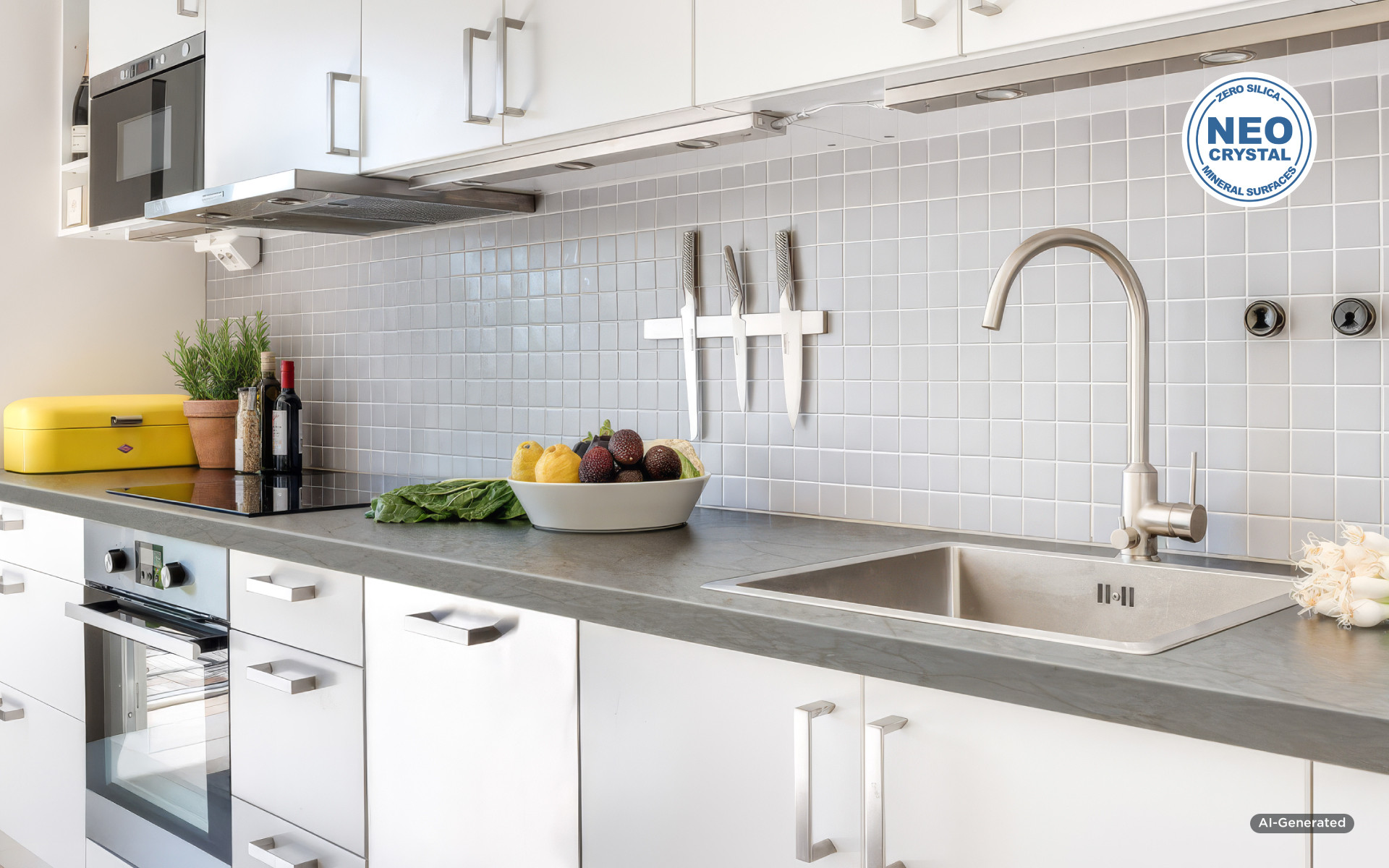
Performance and aesthetics without compromise
One of the most important achievements of the Zero Silica technology is the fact that the innovative, ecological composition does not lower the technical parameters of the finished product. NEO CRYSTAL surfaces continue to offer top-class durability, water resistance, and resistance to mechanical damage. They maintain their original appearance for many decades, and confidence in their reliability is confirmed by a standard 10-year warranty.
The new production standard goes hand in hand with excellent design, offering architects a broad palette of visual solutions. Advanced technology allows for the creation of stunning, diverse decors within the new collection - from expressive and dynamic structures (e.g. 9060 Patagonia Martinica), through classic interpretations of light marble (7070 Calacatta Versailles), to subtle, neutral backgrounds (9030 Royal Beige).
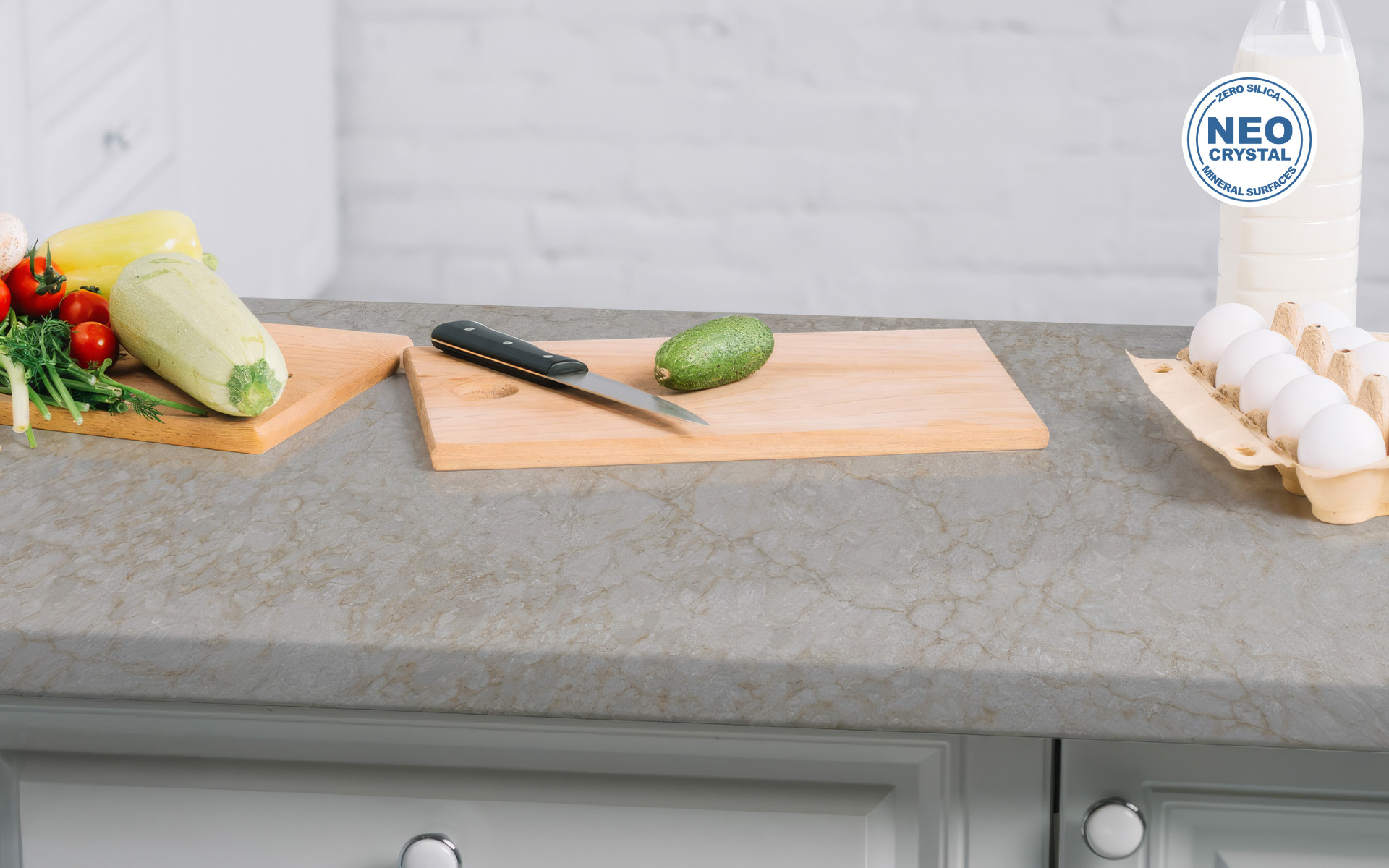
Zero Silica technology is not just a new product, but a clear direction in which the entire industry is heading. It combines the long-appreciated reliability of quartz stone with responsibility for human health and the state of our planet.
Share:


Other publications
All publications
Architype at Marmomac 2026. Backlit novelties, the return of travertine, and a look at the trends
References
Where to buy large-format sintered stone for the bathroom with high stain and water resistance? A guide to selection and purchase
References
White, cream, or beige? Choosing light large-format sintered stone available instantly
References