



From ventilated facades to the shipbuilding industry. The most interesting applications of Puricelli HPL panels
References
Designing advanced commercial, public, and outdoor spaces requires materials that can meet rigorous technical standards. Although HPL (High-Pressure Laminate) is primarily associated with kitchen cabinetry, its actual capabilities reach much further. Thanks to advanced production technologies, HPL panels from the Italian brand Puricelli constitute a proven engineering and architectural raw material.
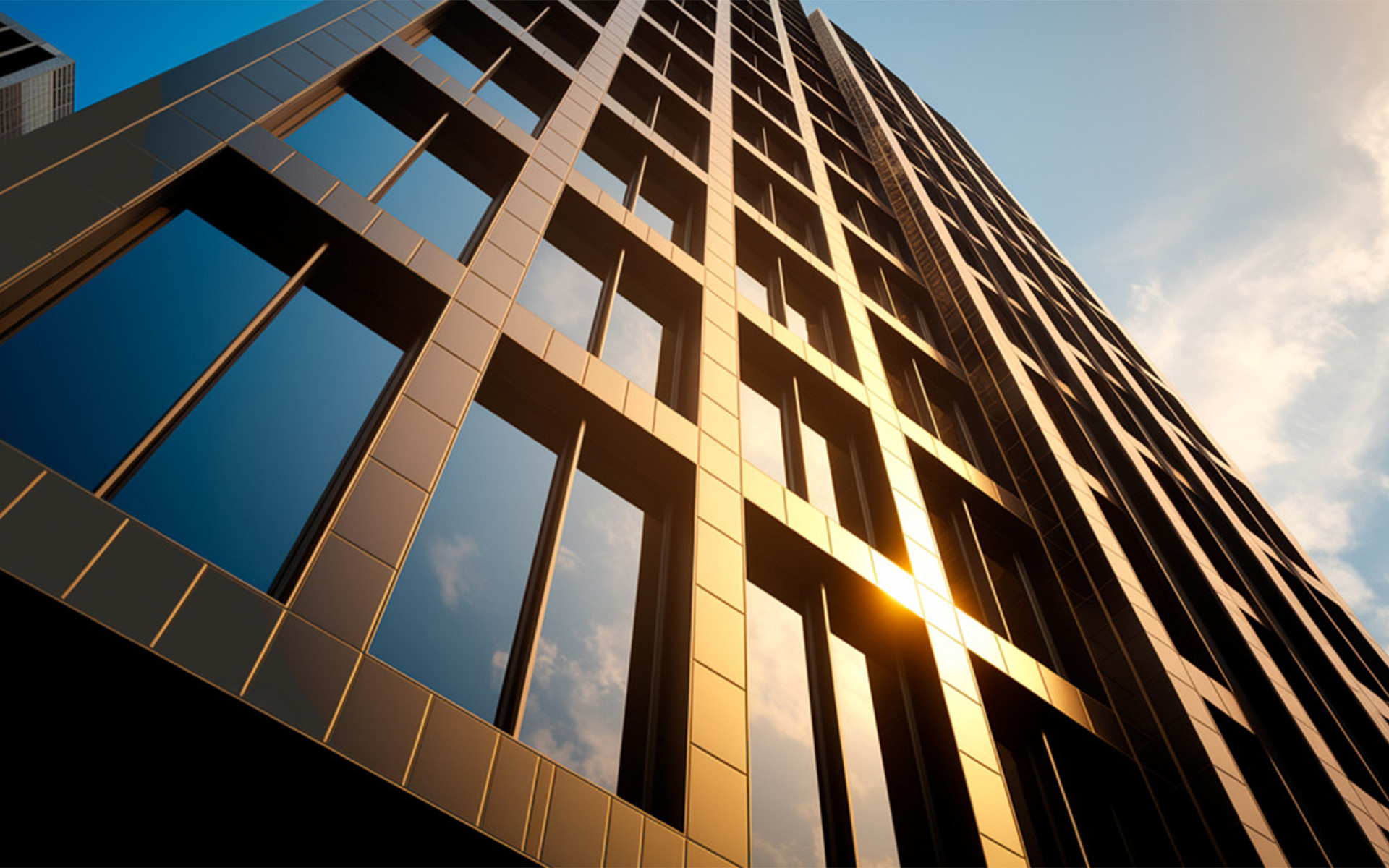
In today's article, we will present the most interesting and unusual applications of this material, which can become an inspiration for architects and designers.
1. Exterior architecture and ventilated facades
The potential of HPL panels does not end inside buildings. With exposure to weather conditions in mind, the Puricelli brand has developed a dedicated collection of exterior materials called N.EXT. Their surface is resistant to all kinds of weather conditions and UV radiation. The panels are fire-resistant and antistatic.
Where are N.EXT exterior panels used?
- Ventilated facades - compact HPL panels are widely used as facade claddings of residential buildings, schools, office buildings, factories, or warehouses. Depending on the specifics of the project, they can be mounted traditionally on the substructure using an adhesive system or by riveting.
- The material works perfectly as balcony and terrace claddings, as well as a finish for modern fences and entrance gates.
- Outdoor furniture - due to their exceptionally low water absorption (according to the EN 438 standard), Puricelli N.EXT HPL panels constitute an ideal raw material for building outdoor benches, garden, and terrace furniture. They do not absorb moisture from precipitation and are very easy to clean.
2. The shipbuilding industry and marine equipment
One of the most rigorous sectors in terms of material certification is the marine industry. Puricelli HPL panels hold certificates allowing them to be used in the construction of large passenger ships and other watercraft. This is due to the fact that this material combines a relatively low weight with high mechanical resistance to a difficult, saline, and humid environment.
Crucial in this sector are also rigorous fire safety norms. Standard Puricelli panels possess a D-s1,d0 classification (according to EN 13501-1), and for zones with elevated safety requirements (e.g. ship cabins and passageways), a fire-retardant version with class B-s1,d0 is available on request.
3. Laboratories and sanitary zones
Public spaces and medical facilities require an uncompromising approach to hygiene and resistance to very intensive use, frequent cleaning, and disinfection. Where, then, can the material from our offer be used?
The application of Puricelli HPL in this sector includes, among others, laboratory and medical furniture, as well as sanitary cubicles and toilets - in spaces where sterility and cleanliness are an absolute priority, a key role is played by the innovative A.BAC technology (antibacterial coating). Laboratory tests prove that it reduces the presence of microorganisms by 99.9%, effectively counteracting the multiplication of dangerous bacteria, such as Staphylococcus aureus or E. coli. This technology works perfectly not only in a rigorous medical and laboratory environment but also in intensively used public toilets, blocking the risk of contact infections. Additionally, the completely non-porous structure of the material ensures that countertops, wall claddings, and partitions do not degrade upon continuous contact with water and disinfectants. At the same time, these panels maintain a fully safe emission class E1 according to the EN 717-1 standard.
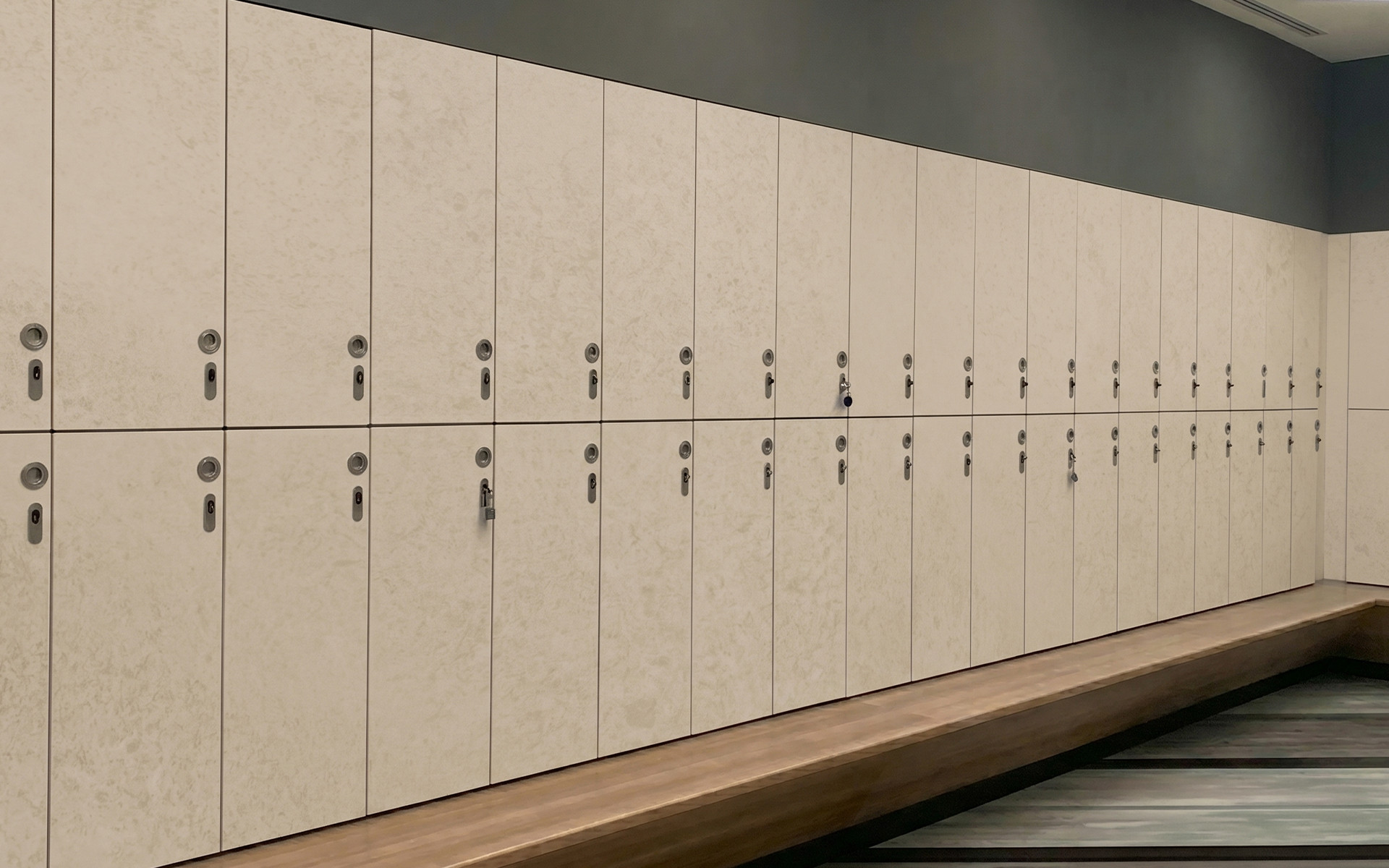
4. Pool, school, and staff lockers
The use of HPL panels for building locker-type cabinets is an effective response to specific operational challenges. Unlike traditional furniture boards or sheet metal, high-pressure laminate is completely resistant to corrosion, rusting, and swelling, thanks to which it is an unrivalled solution in a humid pool environment. In turn, in schools and workplaces, its robustness and resistance to impacts, scratches, and other mechanical damage are crucial, which is why it can ensure the safety of items stored in the lockers.
5. Doors with a hidden frame and partition walls
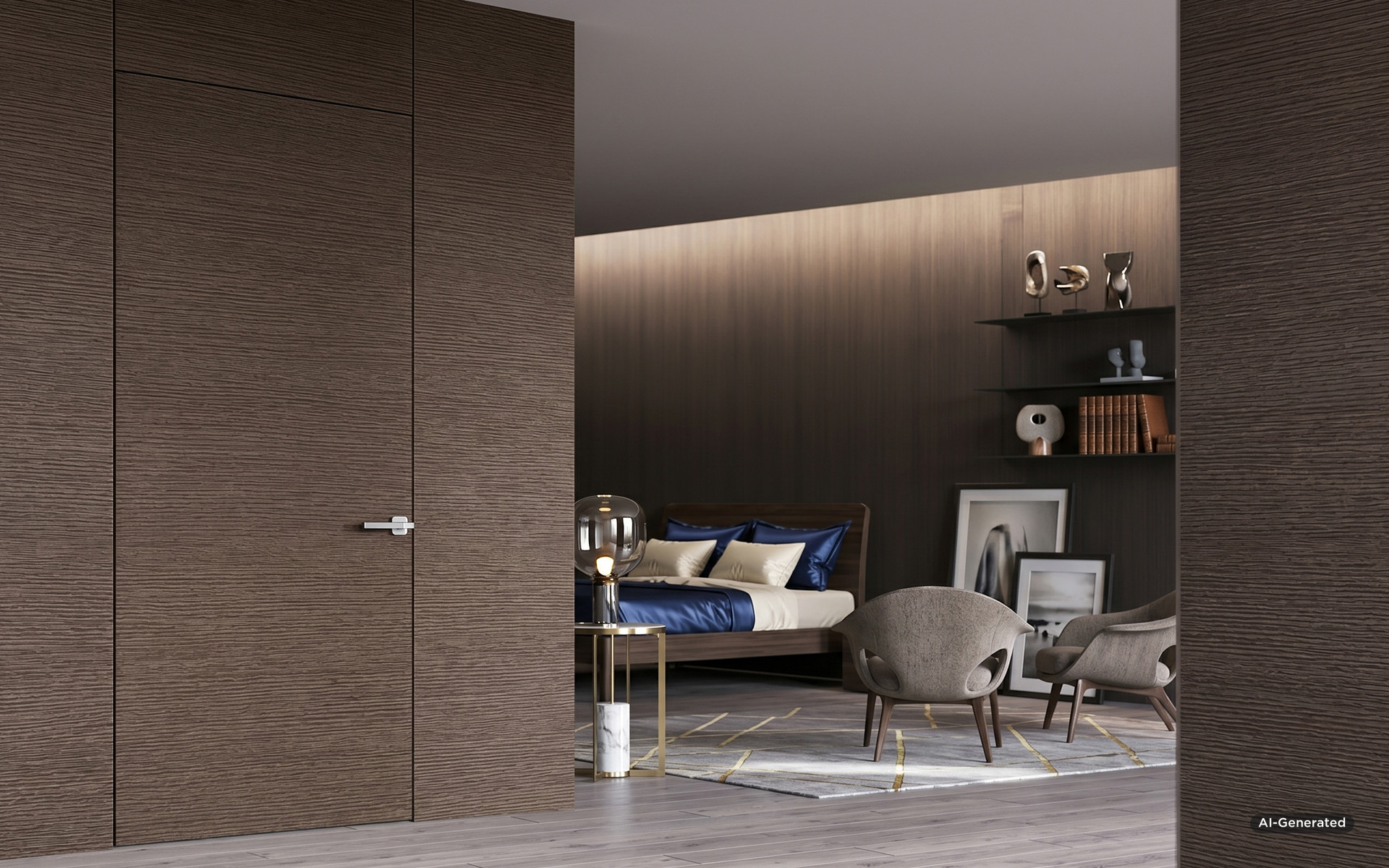
Visual consistency is an appreciated and desired architectural measure. The availability of the same decors on thin and thicker panels allows for the finishing of the entire interior in a monolithic way. Among larger projects, Puricelli HPL panels can be used to make not only wall cladding but also doors with a hidden frame. A door leaf finished with the same decor as the internal wall cladding allows for the perfect "losing" of the door within the wall plane. A similar effect is achieved when designing elegant partition walls.
Universal application - we invite you to consult!
When discussing such advanced projects as facades, ships, or laboratories, it is also worth remembering the typical applications of HPL panels. Puricelli remains a perfect, proven, and aesthetic choice for, among others, kitchen countertops and islands, wall claddings, tables, or designer furniture fronts, bringing a touch of Italian design to homes and commercial spaces.
The above overview, however, clearly shows that thanks to unique physical parameters and a rich palette of decors, the potential of this material is much wider. In the case of ideas for the unusual use of compact panels or with technically difficult projects, it is worth taking advantage of a direct consultation. The Architype team will gladly advise and check whether Puricelli HPL laminates or other available materials will meet the technical assumptions of the planned investment.
Share:


Other publications
All publications
Architype at Marmomac 2026. Backlit novelties, the return of travertine, and a look at the trends
References
Where to buy large-format sintered stone for the bathroom with high stain and water resistance? A guide to selection and purchase
References
White, cream, or beige? Choosing light large-format sintered stone available instantly
References