



Compact HPL in sanitary facilities, locker rooms, and high-traffic areas – a specification guide for architects and investors
References
Sanitary facilities in public buildings, locker rooms, schools, shopping malls, train stations, and sports facilities place special demands on finishing materials. Moisture, frequent cleaning, intensive use, and the risk of mechanical damage mean that not every material that looks good in a project will perform equally well after several years of operation.
This is particularly important in investment projects carried out through tendering procedures. Material selection often takes place as early as the documentation preparation stage by the architect, and is subsequently verified by the general contractor. An overly generic description such as “HPL board” or “waterproof board” leaves wide room for interpretation. A precise specification, on the other hand, allows defining the parameters that the finished solution should actually meet.
So how should HPL for locker rooms and public toilets be properly specified? What thickness should a compact HPL board have, how to approach fixings, hardware, hygiene, and reaction to fire, and what information should be included in tender documentation?
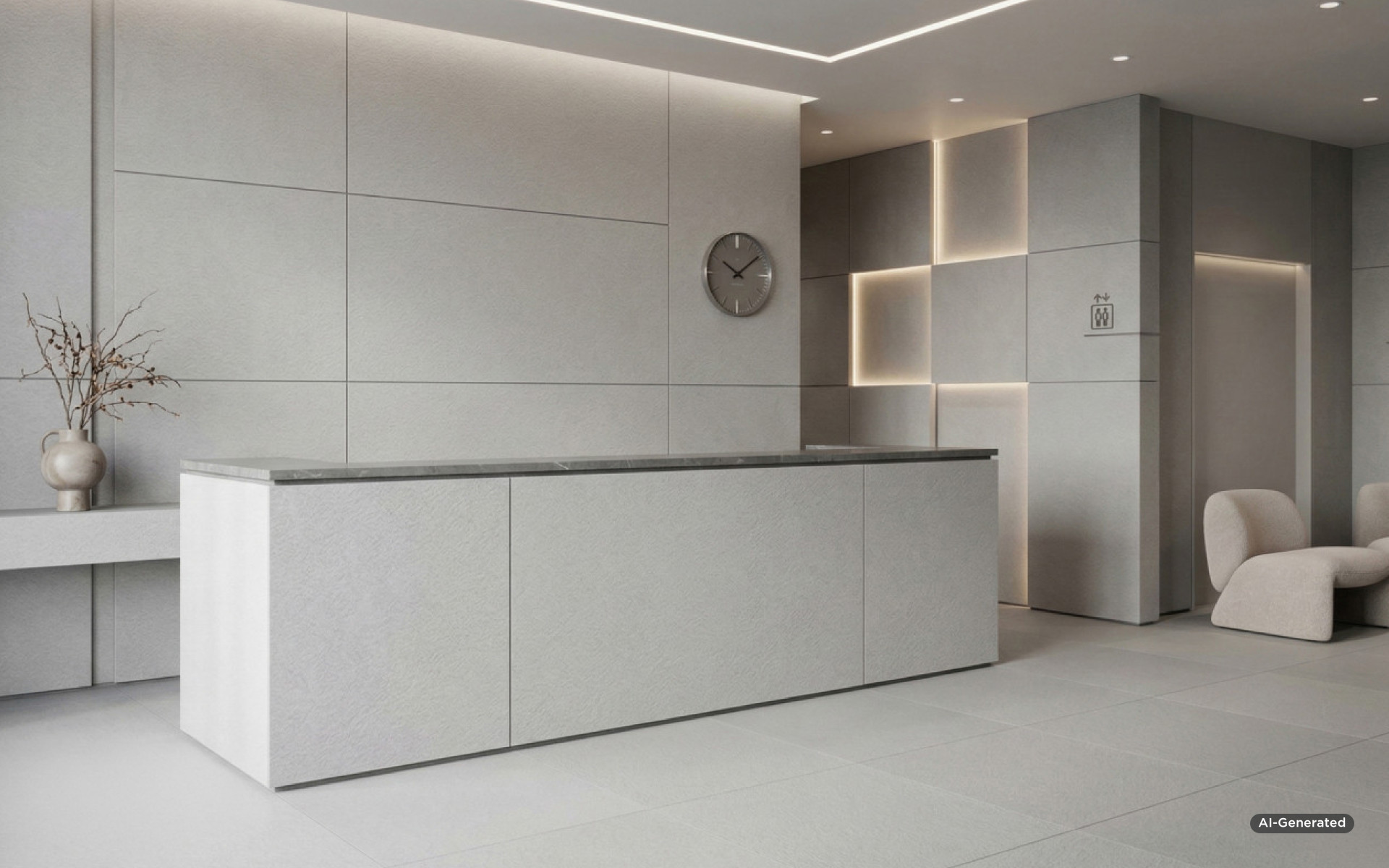
What Is Compact HPL?
HPL, or High Pressure Laminate, is produced by pressing layers of kraft and decorative paper saturated with resins under high pressure and temperature. In the case of compact HPL, the result is a homogeneous, dense board that, unlike thin laminates, does not require an additional substrate.
It is precisely this self-supporting nature that is one of the most important characteristics of compact HPL. Classic thin laminate (below 2 mm, per EN 438-3) requires bonding to a particleboard, MDF, plywood, or another substrate. Compact HPL, however, can form a partition, cabinet front, or built-in element on its own.
According to EN 438-4 and ISO 4586-4, a material with a thickness of 2 mm and above is considered compact. In the case of sanitary facilities, locker rooms, and similar spaces, 8 and 12 mm variants are most commonly considered.
The density of the material is also important, being at least 1350 kg/m³. Thanks to its dense structure, the board is homogeneous throughout its cross-section, and its edge does not require edge banding protection like materials based on a particleboard core.
In practice, this gives the designer considerable freedom. Compact HPL can be used, among other things, for HPL toilet cubicles, partitions, locker room cabinets, countertops, claddings, and other equipment elements in heavily used spaces.
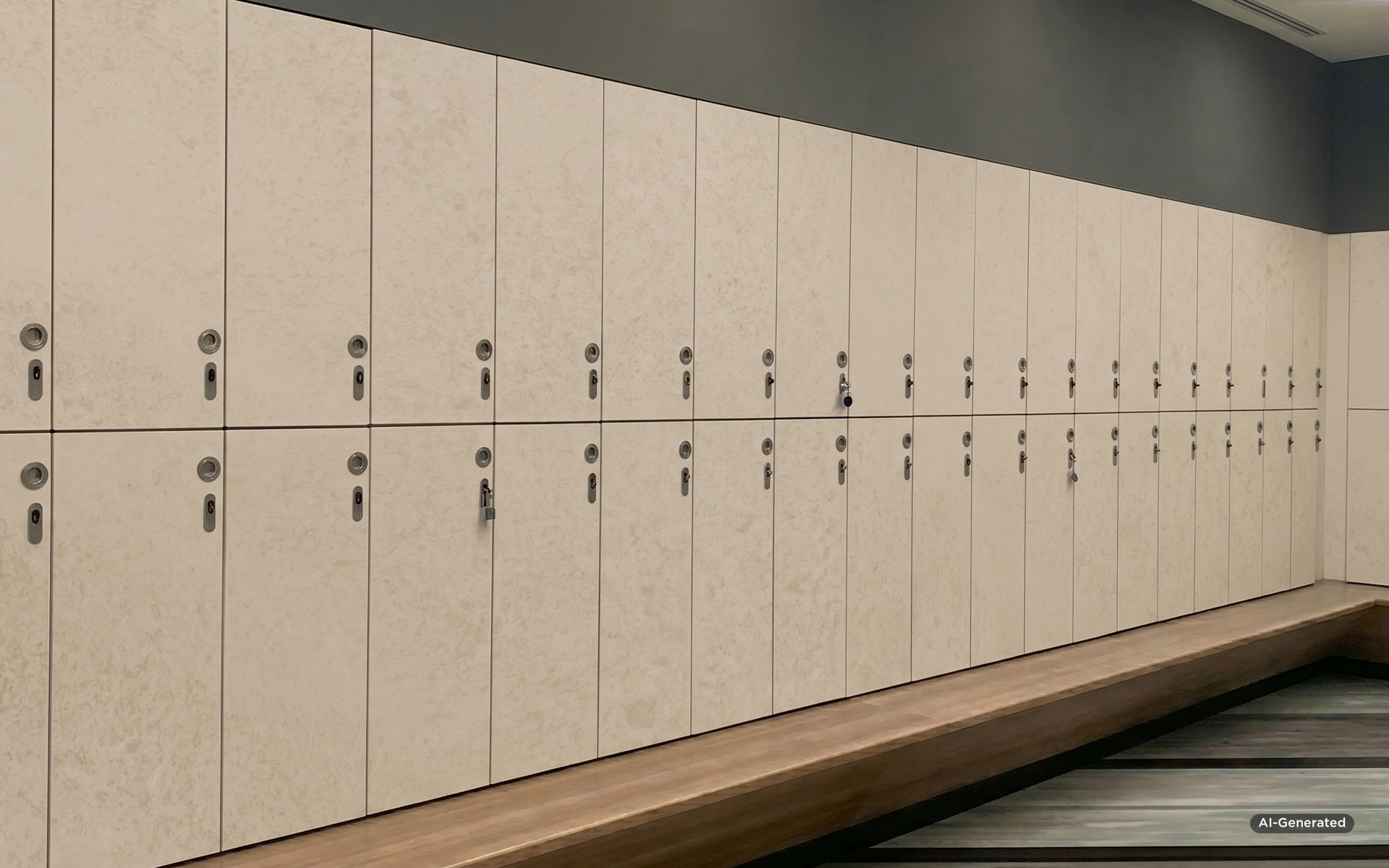
Compact HPL or Moisture-Resistant MDF and Particleboard?
This distinction is particularly important in wet zones. Describing a board as “moisture-resistant” does not automatically mean that the material can be treated the same as compact HPL.
In the case of MDF or particleboards, the resistance of the finished element depends not only on the surface but also on effective protection of edges, cut sites, and mounting holes. If water penetrates the core, it can lead to swelling and permanent deformation. In heavily used sanitary facilities, this problem can be further exacerbated by regular washing and mechanical damage to the edges.
Compact HPL does not have a separate particleboard core. Its structure is homogeneous throughout its cross-section, which is why an exposed edge does not constitute a similar weak point.
This does not mean that MDF or particleboard have no application in interior furnishings. However, the design must distinguish between increased moisture resistance and a material intended for work under conditions of regular water exposure. In toilet cubicles, sports locker rooms, pool areas, or public toilets, this difference can directly impact the durability of the installation.
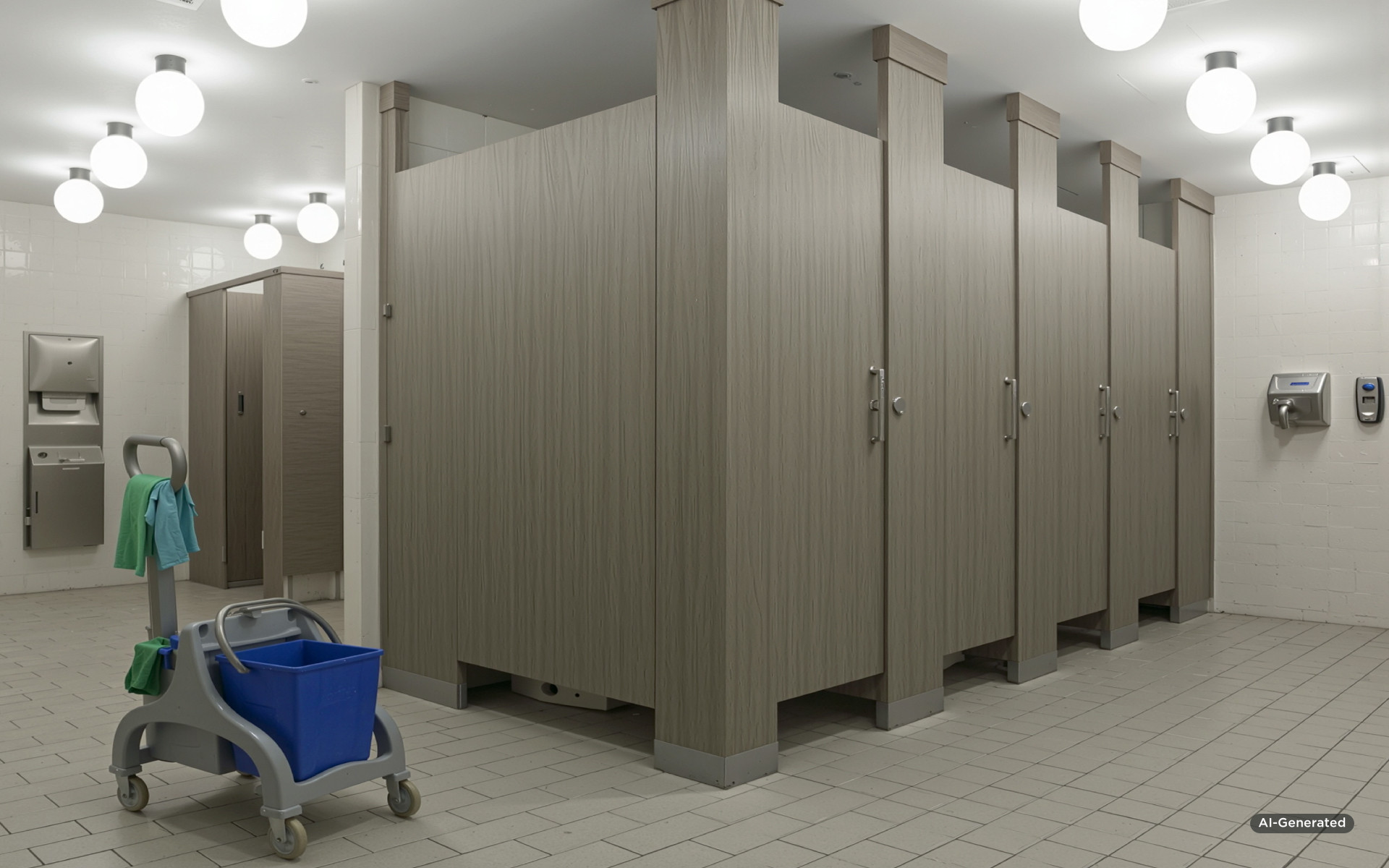
8 or 12 mm? Selecting Thickness for the Application
In sanitary and locker room projects, compact HPL with a thickness of 8 or 12 mm is most commonly encountered. The difference, however, does not come down to a “thicker means better” rule.
A 12 mm board is a natural choice for elements where greater rigidity and self-supporting properties are expected, e.g., WC cubicles, partitions, or locker cabinets. An 8 mm variant can work well for smaller spans and elements whose structure provides adequate support.
The Architype offer includes Puricelli and KRAFFTEN boards. Puricelli K&B is a 12 mm compact intended, among other things, for kitchen and bathroom spaces, available in formats of 4200 × 1300 mm, 4200 × 1620 mm, and 3050 × 1300 mm. Puricelli N.EXT (a line for exterior and interior applications) is also offered in an 8 mm variant.
KRAFFTEN, on the other hand, is available as a 12 mm compact in formats up to 4300 × 1830 mm. A single sheet thus has an area of approximately 7.9 m². For large built-ins, the ability to use a larger format can mean fewer joints, easier element planning, and more efficient installation.
Format should be analysed as early as the design stage. This allows optimising cutting layouts, reducing the number of joints, and better planning the layout of cubicles, partitions, or fronts.


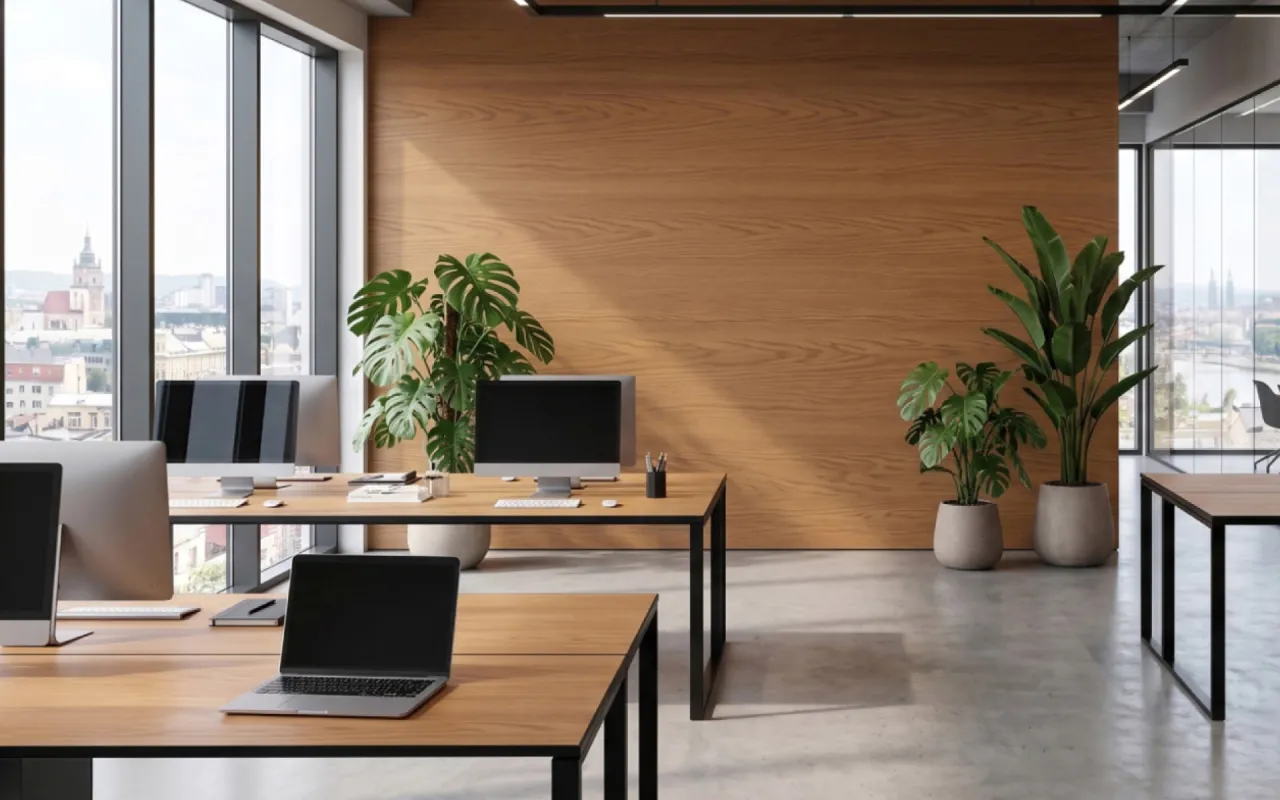
Hygiene in High-Traffic Spaces
Sanitary facilities and locker rooms require regular cleaning and disinfection. In healthcare facilities, gastronomy, or kitchen backrooms, hygiene requirements can be even higher. Therefore, when choosing a material, it is worth paying attention not only to ease of cleaning, but also to documentation confirming the declared properties.
The surface of compact HPL is non-porous, which facilitates dirt removal. Chemical resistance of the surface is also important, allowing for regular use of properly selected cleaning and disinfectant preparations.
In the case of the Puricelli K&B line, A.BAC antibacterial technology is additionally available. According to tests conducted in accordance with JIS Z 2801:2010 and ISO 22196:2011, the surface reduced the bacteria tested by more than 99.9% (strains and contact time as stated in the test report). Non-porosity and antibacterial action are not the same thing, however. The first feature facilitates maintaining cleanliness, while the second constitutes an additional surface property confirmed by a specific test method.
For healthcare, HoReCa, or other facility projects with special hygiene requirements, it must always be checked which documents are required for a specific application and whether they apply precisely to the specified product. Certificates relating to one material should not automatically be transferred to another product group.
Resistance to Vandalism and Graffiti – Important in Public Spaces
In a school, train station, shopping mall, or public toilet, the material is exposed not only to normal wear and tear. The designer should also take into account impacts, scratches, and intentional surface staining.
The dense structure of compact HPL and its mechanical resistance make the material well suited for heavily operated spaces. For boards with a thickness of at least 6 mm, EN 438-4 specifies resistance to impact from a ball falling from a height of 1800 mm (tested according to the method in EN 438-2).
In the context of graffiti, the ability to clean the surface is primarily what matters. Traces of markers, paints, or other substances should be removed according to manufacturer recommendations, using agents approved for the given surface. In facilities particularly exposed to acts of vandalism, it is worth verifying the resistance of the selected decor and finish to required cleaning methods as early as the specification stage.
In practice, “resistance to vandalism” should not function as a general slogan in a project. It is better to define specific requirements: resistance to impacts, scratches, intensive cleaning, and the ability to remove typical stains.
Reaction to Fire – Not Just the Board Itself Matters
The reaction to fire classification of compact HPL can depend on the entire assembly, including the installation method and the substructure used. Therefore, it is not enough to enter only the expected material class into the project.
According to the Puricelli PURICOMPACT data sheet, the CGS variant mounted on a timber substructure can achieve a D-s2,d0 class, and the CGF variant in an appropriate assembly with a metal substructure – a B-s1,d0 class.
The required class should always result from the purpose of a specific zone and the regulations applicable to it. Evacuation routes, among others, require a special approach. Therefore, project documentation should specify not only the reaction to fire class, but also the assembly for which it was confirmed.
HPL Toilet Cubicles – The Board Is Only Part of the System
When designing toilet cubicles, the board alone is not the only thing specified. The durability of the entire solution is also determined by profiles, feet, hinges, locks, handles, and the method of fixing partitions to walls and floors.
Hardware should be selected for the intensity of use and the conditions prevailing in the room. In high-humidity zones, corrosion resistance of metal elements is of particular importance. In public facilities, it is additionally worth taking into account the mechanical resistance of the hardware and the possibility of its easy replacement during operation.
The mounting method should simultaneously allow for the natural movement of the board. Holes for fasteners are made with appropriate tolerance, for example 2–3 mm larger than the fastener diameter, if such a solution is provided for by the documentation of a specific system.
When designing an HPL toilet cubicle system, the board, hardware, and structure should therefore be viewed as a single solution. Even a very good material will not compensate for poorly selected hinges, overly rigid mounting, or elements not adapted to a humid environment.
Compact HPL or Another Material?
HPL is not the only material that can appear in sanitary facilities or locker rooms. Depending on the character of the project, melamine-faced boards, laminates on substrates, large-format sintered stone, quartz composites, or other compact materials are also considered.
| Material | Behaviour in contact with moisture | Key features in the context of sanitary facilities and locker rooms |
| Compact HPL | waterproof, without a core susceptible to swelling | self-supporting, relatively low weight, easy processing, wide selection of decors |
| HPL on a substrate | depends on the type and protection of the substrate | requires proper edge sealing |
| MDF / particleboard | increased resistance possible in selected variants, but core requires protection | proper sealing of edges, holes, and cut sites is essential |
| Large-format sintered stone | extremely low water absorption | very good fire performance ratings, higher requirements for processing and installation |
| Quartz surface | extremely low water absorption | high durability and weight, requiring an adequate supporting structure |
One of the advantages of HPL in lightweight partitions is mass. For comparison, a 12-millimeter compact on an area of 6.8 m² weighs about 110 kg, while a 20-millimeter quartz composite on the same area can weigh about 320 kg.
Selection should therefore result from the conditions of a specific project, and not solely from the price of the material per square meter.
HPL Installation – Details That Matter
Even a properly selected material may fail to perform its function if installed incorrectly. Therefore, execution details should be included in the documentation rather than resolved only on site.
Depending on the system used, adequate ventilation of the space behind the board, movement joints, and installation tolerances must be provided. For example, in wall cladding (ventilated façades/cladding), guidelines may specify ventilation gaps of a minimum of 30 mm. Specific values should always be confirmed in the documentation of the selected system.
The arrangement of fixing points, maintaining required distances from edges, and selecting adhesive for environmental conditions are also important. A different solution may be appropriate for an office toilet compared to a constantly humid pool area.
How to Write Compact HPL in Tender Specifications
A good specification should not end with the term “compact HPL board”. It should indicate those properties that are relevant to a specific implementation and verifiable on the basis of product documentation.
A sample entry may take the following form:
Compact HPL board compliant with EN 438-4 / ISO 4586-4, self-supporting, 12 mm thick, with a density ≥1350 kg/m³, intended for use in rooms with increased humidity. Non-porous surface, with properties verified by testing to EN 438-2 (including resistance to abrasion, impact, scratching, and staining) and meeting the requirements for compact laminate to EN 438-4. Required reaction to fire class compliant with EN 13501-1, confirmed for the planned mounting assembly. In the case of antibacterial property requirements, efficacy confirmed by testing compliant with ISO 22196 or equivalent. Format, mounting method, tolerances, and hardware type per design documentation and manufacturer recommendations.
Such an entry can then be supplemented with parameters resulting from the specific application: expected decor, texture, core color, antibacterial properties, increased fire resistance, or required certificates.
Checklist before closing specifications
Before handing over documentation, it is worth checking whether the following have been defined:
- board type, class, and thickness,
- requirements regarding moisture, hygiene, and intensity of use,
- reaction to fire class for the correct mounting assembly,
- board format and cutting layout,
- fixing system, movement joints, and execution tolerances,
- hardware requirements in the case of cubicles and cabinets,
- required tests, declarations, and certificates,
- decor, texture, and aesthetic requirements.
This is a relatively short list, but it reduces the risk that during implementation, a solution significantly deviating from the designer’s assumptions will appear under the term “HPL”.
Purchase price is not everything
In large investment projects, it is easy to reduce material comparison to purchase price. Meanwhile, for heavily used spaces, what happens to the material over subsequent years is equally important. Life Cycle Cost (LCC) can be used for analysis. It takes into account not only the purchase itself, but also transport, installation, maintenance, and potential material replacement.
In the case of compact HPL, relatively low weight compared to mineral materials, ease of cleaning, and the lack of a core susceptible to swelling are significant. For large projects, all these elements can affect the total cost of execution and subsequent operation. Therefore, in public investments, it is worth looking not only at the price of the material per square meter, but at the cost of the entire solution over the assumed period of use.
From texture to finished solution
Technical specification does not mean giving up on aesthetics. Compact HPL provides the ability to combine performance parameters with a wide selection of decors and textures, making the same material usable in a neutral office toilet as well as in an extensive interior concept for a school, fitness club, or shopping mall.
When selecting, materials available in the Architype Textures section, catalogs, and technical documentation of Puricelli and KRAFFTEN can be used. At the project preparation stage, however, combining aesthetics with technical requirements, thickness, format, reaction to fire class, mounting method, and surface properties, is particularly important.
Architype technical support allows verifying these elements before closing documentation and selecting a solution for a specific investment. In the case of tender projects, this is also the moment to check material availability, documentation required by the investor, and execution possibilities.
A well-prepared specification ensures that HPL ceases to be merely a general material category. It becomes a precisely described element of the project whose parameters can later be verified at the bidding and implementation stages.
FAQ – Compact HPL in practice
1. Is compact HPL waterproof?
Compact HPL has a dense, homogeneous structure and does not possess a particleboard core susceptible to swelling. Thanks to this, it performs well in places exposed to moisture and contact with water. However, the resistance of the entire installation also depends on proper design and mounting.
2. What HPL thickness works best in toilet cubicles?
In toilet cubicle systems, 12 mm compact HPL is frequently used due to its rigidity and self-supporting properties. However, selection should take into account element dimensions, fastener spacing, and solutions provided by the system manufacturer.
3. Is compact HPL suitable for sports locker rooms?
Yes. Moisture resistance, ease of cleaning, and good mechanical properties make HPL used for cabinets, partitions, and other locker room equipment elements. Detailed parameters should be selected for the intensity of use and conditions prevailing in the facility.
4. Is HPL resistant to graffiti?
The surface of compact HPL allows removing many typical stains, but the ability to use a specific cleaning agent depends on the surface type and manufacturer recommendations. For projects exposed to acts of vandalism, it is worth considering this issue as early as decor and finish selection.
5. What hardware to use in HPL cubicles?
It should be adapted to the intensity of use and environmental conditions. In humid rooms, corrosion resistance is essential, and in public spaces, mechanical durability and the possibility of subsequent element replacement are also important.
Share:


Other publications
All publications
White, cream, or beige? Choosing light large-format sintered stone available instantly
References

Architype at Marmomac 2026. Let's meet in Verona!
References
The application of Puricelli HPL panels in commercial interiors - where does this material have an advantage over other solutions?
References